

On January 6, the Greek Orthodox Church celebrates the Feast of the Holy Epiphany, which commemorates John the Baptist's baptism of Christ in the River Jordan and the divine revelation of the Holy Trinity.
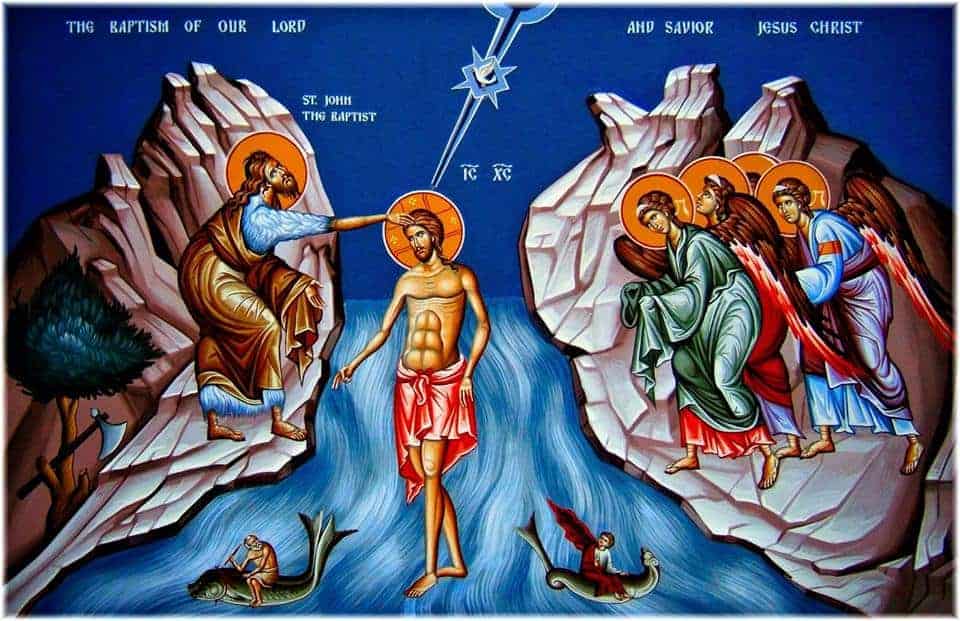
At the Baptism of Christ, all three Persons of the Holy Trinity—Father, Son, and Holy Spirit—were made manifest. Thus, the name of the Feast is Epiphany, meaning manifestation, or Theophany, meaning manifestation of God.
The Biblical story of the Baptism of Christ is recorded in all four of the Gospels: Matthew 3, Mark 1:1-9, Luke 3:21-22, and John 1:31-34.
John the Baptist, Jesus' cousin and the one chosen by God to proclaim His coming was preaching in the wilderness and baptizing all who responded to his message calling for repentance. As he was doing this, John was directing the people toward the one who would baptize them with the Holy Spirit (Matthew 3:11).
The Scriptures tell us that Jesus came from Galilee to John at the Jordan to be baptized by him. Initially, John would not do this, saying that Jesus should baptize him. Jesus said to John, “Let it be so now; for it is proper for us in this way to fulfil all righteousness (3:15). John consented and baptized Jesus.
When Jesus came up from the water, the heavens opened suddenly, and the Holy Spirit descended upon Him. The Bible records that the Spirit descended like a dove and alighted on him. When this happened, a voice came from heaven and said, “This is my Son, the Beloved, with whom I am well pleased.” This was the voice of God the Father.
Christ’s baptism in the Jordan was “theophany,” a manifestation of God to the world because it was the beginning of our Lord’s public ministry. It was also a “theophany” in that the world was granted a revelation of the Holy Trinity. All three Persons were made manifest together: the Father testified from on high to the divine Sonship of Jesus; the Son received His Father’s testimony; and the Spirit was seen in the form of a dove, descending from the Father and resting upon the Son.
Scripture also expresses the theme of “manifestation” or “revelation” with the symbolism of light. In the hymn of the Feast, we sing, “Christ has appeared and enlightened the world.” Thus, January 6 is also known as the Feast of Lights. The Church celebrates on this day the illumination of the world by the light of Christ.
On January 6, the day of the Feast, the Divine Liturgy of Saint John Chrysostom is conducted, preceded by Matins and followed by the second Blessing of the Waters.
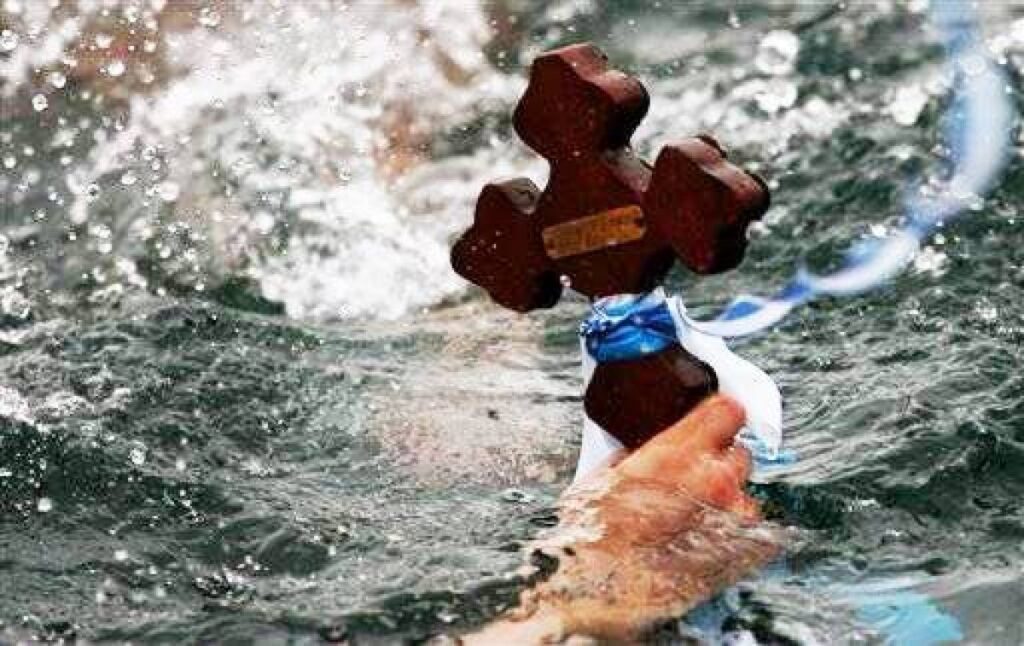
The Blessing of the Waters is conducted in the church; however, in many places throughout the world, services are conducted near open bodies of water. As a sign of blessing, as Christ blessed the Jordan, holy water is poured into the body of water. An associated tradition has been the tossing of a cross into the water to be retrieved by divers.
Holy water from the church is given to the faithful to consume and to use to bless their homes.
On January 6, the Greek Orthodox Church celebrates the Feast of the Holy Epiphany, which commemorates John the Baptist's baptism of Christ in the River Jordan and the divine revelation of the Holy Trinity.
Fotios, Fotis, Foteinos, Fotini, Foteini, Fani,
Fenia, Foto, Fofi, Fotoula, Fotoulla, Fai, Faye, Fofo, Theofanis, Fanis, Theofania, Fania, Fani, Fanoula, Iordanis, Jordan, Danny, Danis, Iordana, Jordan, Ntana, Dana, Ourania, Rania, Peristera, Theopoula, Theopi.
Χρόνια πολλά σε όλους και όλες που γιορτάζουν σήμερα! Σας ευχόμαστε αγάπη, ευτυχία και υγεία πάνω απ’όλα!
Φώτιος, Φώτης, Φωτεινός, Φώτις, Φωτεινή, Φανή, Φένια, Φώτω, Φώφη, Φωτούλα, Φαίη, Φωφώ , Θεοφάνης, Φάνης, Θεοφανία, Φάνια, Φανή, Φένια, Φανούλα, Ιορδάνης, Ντάνης, Δάνης, Ιορδάνα, Ντάνα, Δάνα Ουρανία, Ράνια , Περιστέρα Θεοπούλα, Θεόπη.
Kala Theofania and Xronia Polla! ☦︎
Kala Agia Theofania and Xronia Polla!
*More Religion on GCT
Stay updated with the latest news from Greece and around the world on greekcitytimes.com.
Contact our newsroom to share your updates, stories, photos, or videos. Follow GCT on Google News and Apple News.

