

May 29, 1453, marks a dark chapter in the history of our people and the world, the dramatic fall of the Queen of Cities, Constantinople. This day is not merely a historical event; it is a spiritual turning point, a wound that still bleeds in the hearts of the Romioi (Greek Orthodox Christians), and a pivotal moment in the course of history and divine providence.
The fall of Constantinople to the Ottoman Turks under Mehmed II the Conqueror was the culmination of prolonged geopolitical and spiritual developments. The Byzantine world, weakened by internal strife, political disputes, theological divisions, and external pressures, could not withstand the Ottoman onslaught. The City stood alone, betrayed by the West, abandoned by former allies, yet its defenders wrote the final epics of Byzantium with their blood and sacrifice.
The City of Saints and doctrines, of Emperors and Patriarchs, the queen of cities, stood as the last bastion of Christendom in the East. Emperor Constantine XI PalaiologosRio, like another Leonidas, remained at the walls until his final breath. His words, “There is no time for further discussions, only for war,” echo through eternity.
The siege began in April 1453 and lasted 53 days. Mehmed employed every means at his disposal: artillery, massive cannons crafted by the Hungarian Orban, siege towers, and even naval support by transporting ships overland to the Golden Horn. The City, with its few defenders led by Constantine and the Italian Giustiniani, fought to the end.
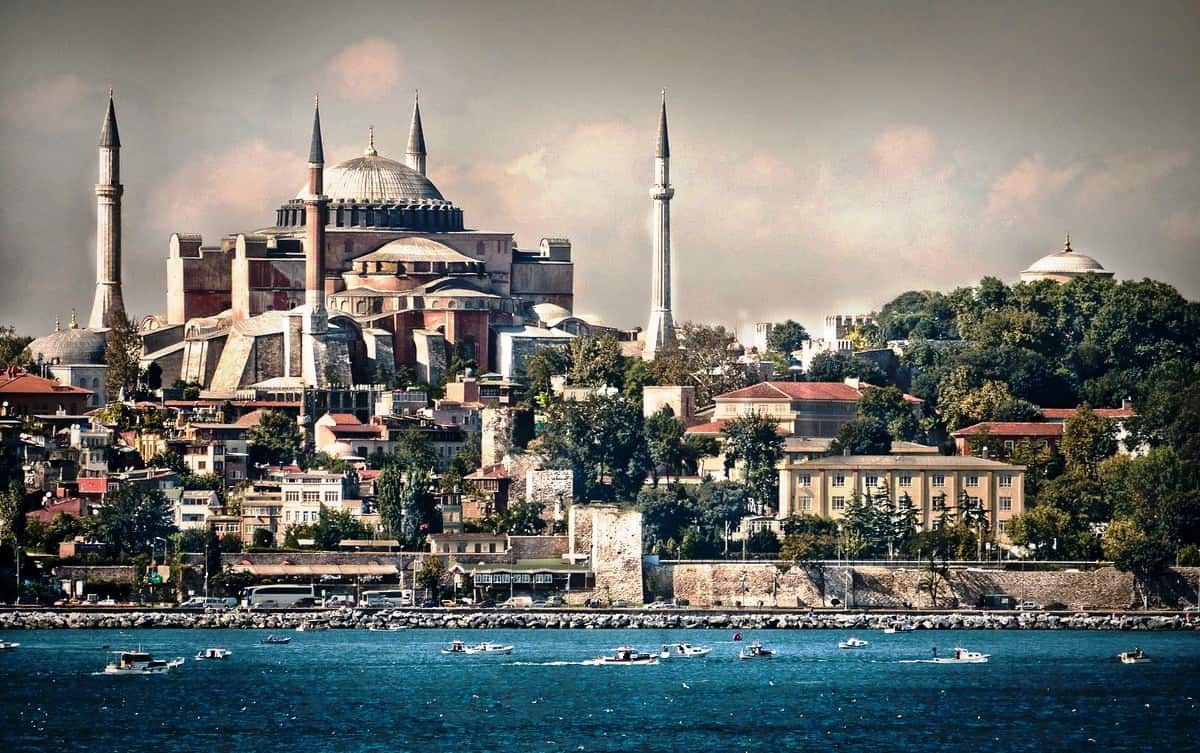
At dawn on May 29, the final assault began. The Roman Gate was breached, and the Turks stormed in. After eleven centuries, the City fell. Hagia Sophia was converted into a mosque, and the lament of the Romioi spread far and wide: “The City has fallen!”
The image of Hagia Sophia filled with people on their knees, chanting the Akathist Hymn just before the conquerors entered, is more powerful than any historical account. At that moment, the City became a Holy Mountain, a heaven, a catacomb. The fall was not a defeat but a martyric victory, a sacrifice that carried the scent of incense.
Beyond the military tactics and diplomatic failures lies a spiritual undercurrent: the division among Christians. Yet, even in this darkness, light emerged. Though the City fell, a new Hellenism rose from the ashes. Byzantine scholars fled to the West, carrying the language, education, and thought of Byzantium, planting the seeds of the Renaissance. The spirit of Orthodoxy was reborn, stronger, in the robes and garments of the new martyrs under Ottoman rule.
The Fall of Constantinople is a symbol—not only of what was lost but of what was resurrected. It is the flame of hope rising from the ashes, the belief that “we will take the City back,” not as a territorial reconquest but as a spiritual reclamation of unity, faith, and humility.
The Church views the Fall with tears but also with hope. Just as Christ was led to the Cross for the Resurrection, so too did the Greek people pass through the bloodied City to reach the light of 1821 and freedom.
The memory of the Fall is not about vengeance but repentance, a call to unity, a beacon in times of decline. The Romiosyne does not die, for its foundations rest on faith and the blood of its martyrs.
To summarize these reflections on this day, let us remember three key points:
- The Fall of Constantinople is a historical event of global significance, marking the end of the medieval Christian world and the beginning of a new era.
- The City’s fall underscores the need for unity and spiritual vigilance. Internal divisions were catastrophic.
- The Fall is not only a lament but also the dawn of a spiritual Renaissance. The sacrifice became fertile ground for new fruits of faith, education, and culture.
May the 29th of May be for us not only a day of remembrance but also a promise to stand firm at our own walls, defending the Light of Faith, with our gaze fixed not on the lost City but on the eternal Kingdom of God.
Metropolitan Irenaios of Florina, Prespes, and Eordaia
Bibliography and References:
- Dionysios Zakythinos, Byzantium and the Fall of Constantinople, Athens: Estia, 1973.
- Steven Runciman, The Fall of Constantinople 1453, trans. A. Fragoulis, Athens: Govostis, 1992.
- Archimandrite Ioil Giannakopoulos, The City Has Fallen – A Theological Interpretation of the Fall, Thessaloniki: Orthodox Kypseli.
- Giorgos Stamatopoulos, “1453: The Fall of the Light,” Kathimerini, May 29, 2013.
- Monk Moses of Mount Athos, Athonite Flowers, Mount Athos, 2000.
Stay updated with the latest news from Greece and around the world on greekcitytimes.com.
Contact our newsroom to share your updates, stories, photos, or videos. Follow GCT on Google News and Apple News.
