
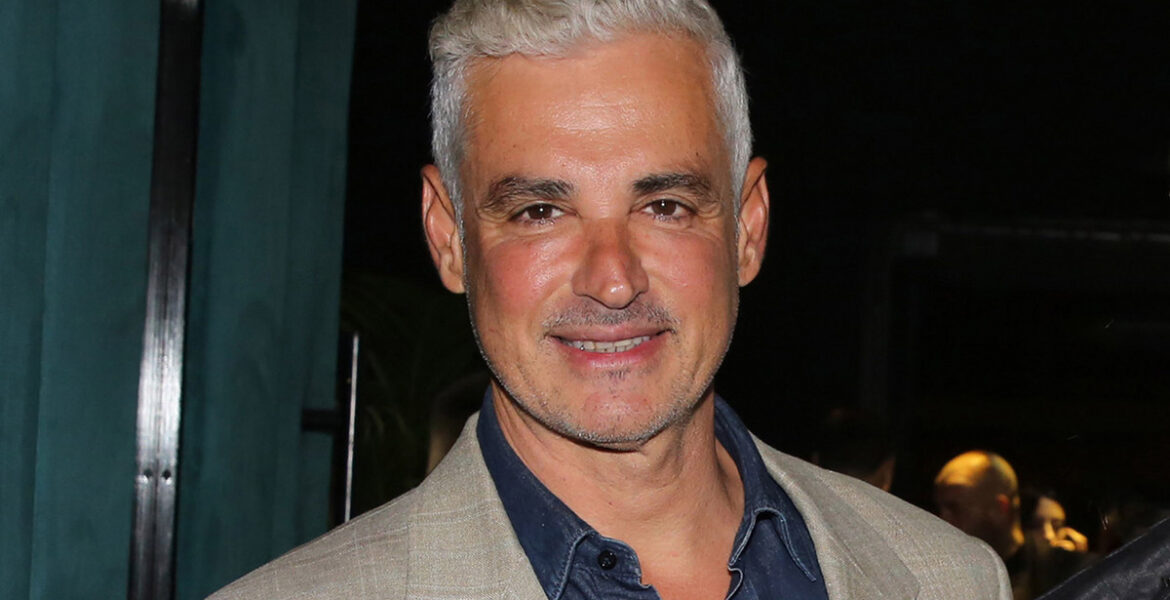
Aris Spiliotopoulos is a notable Greek politician, born in Patras on October 28, 1966. As a member of the New Democracy party, he has played a significant role in Greece’s political scene, serving as Minister for Tourism from 2007 to 2009 and later as Minister for National Education and Religious Affairs in 2009. Spiliotopoulos was first elected to the Hellenic Parliament in 2000 on the nationwide ticket and has since represented the Athens B constituency through repeated electoral successes. Known for his work in both government and party strategy, he remains an influential public figure in Greek politics.
You have served as Minister for Tourism and Minister for National Education and Religious Affairs. What were the most significant achievements during your tenure in these roles?
We moved beyond the traditional “sun and sea” model and developed new tourism products, diversifying Greece’s offering. We introduced niche tourism segments including hiking, nautical, rock climbing, and engagement tourism.
Our strategy was highly targeted—each market was approached with a specific product. For example, we promoted Santorini as a top engagement destination in China and Japan. Additionally, we opened new markets, such as China, which had not been a significant source of tourists before.
All these initiatives contributed to a remarkable increase in tourism revenue, making Greece a more competitive and diversified destination.
As Minister of Education, for the first time, we established an era of “educational peace” through meaningful national dialogue. By engaging all stakeholders, we developed a long-term education strategy with a ten-year horizon. This inclusive approach fostered consensus among political parties, allowing us to pass crucial reforms with broad bipartisan support.
These initiatives ensured stability in the education system, aligning it with national development goals and modern societal needs.
As a member of New Democracy, you have been elected multiple times to the Greek Parliament. How have your priorities evolved over the years in response to Greece's changing political landscape?
I want to contribute to the modernization of the political system, which remains outdated and anchored in past ideological fixations. Even today, we see obsolete structures and ideological references to the left and right, often rooted in post-Civil War mentalities.
I aim to demonstrate that for democracy to be strengthened, it must be participatory and truly progressive. We need to focus on contemporary challenges and developments, recognizing that major and critical issues require dialogue, consensus, and synthesis of ideas and perspectives.
Could you elaborate on your transition from being a spokesperson for New Democracy to running for Mayor of Athens in 2014? What motivated this shift in focus?
For me, politics is the art of offering, not a means of professional advancement. It requires inspiration and inner strength.
After years of serving in political strategy, acting as a spokesman, holding ministerial positions in key ministries and serving as an MP for many years, I had given a lot. But I also had the experience of the national stage to serve the city I live in and love—Athens, every neighbourhood of it.
I believed I could deliver tangible results to make Athens a more participatory, green and technologically smart city with a better quality of life. Unfortunately, I was undermined from within and narrowly lost. I resigned as an MP because I had given everything to the fight for Athens. That’s how selflessly I acted, but my party did not appreciate it.
I lost my inspiration and strength. So, I took a step back to reflect. But now, I am here again—an active citizen and a political analyst. I have placed a semicolon on politics, but not a full stop.
You have supported constitutional changes, such as the establishment of private non-profit universities. How do you view the balance between public and private education in Greece today?
I am a strong supporter of constitutional changes and reforms to modernize an outdated system that has disappointed citizens and fallen into inefficiency and weaknesses that frustrate and dishearten the public.
For example, what is the point of having the President of the Republic elected by the government majority? Can such a partisan selection truly unite the Greek people? I propose the direct election of the President by the citizens.
Regarding education, I advocate for a constitutional revision to allow the establishment of non-state, but also non-profit, universities. However, this must be done through a proper constitutional amendment—not through indirect means, as was recently attempted by labeling colleges as universities, in clear violation of the Constitution.
Only through a serious and well-structured approach can we achieve a balance of quality in both public and non-public higher education.
During your parliamentary career, you advocated for the de-criminalization of drug use and controlled state distribution to addicts. What inspired these progressive stances within a traditionally conservative party?
That is a great question because it encapsulates my fundamental disagreement with the outdated political system.
The system remains trapped in outdated, self-referential distinctions rooted in the past—between left and right. However, I believe this traditional, horizontal divide no longer functions effectively. It has been replaced by a vertical distinction that cuts across all political parties: the divide between culturally conservative and culturally progressive forces. I have always been a democrat and a centrist progressive. Even during my time in New Democracy, these were the values I stood for and defended.
You have expressed support for environmental policies like waste management through incineration. How do you reconcile these views with broader sustainability goals?
Technological advancements are evolving rapidly. They enable new, closed-loop methods with zero emissions while simultaneously converting waste into alternative green energy sources.
However, this does not serve the entrenched interests that the current government is protecting.
Growing up in Patras, how did your upbringing influence your political values and career choices?
I think it would be fair to note that I have been away from Patras since I was 17.
However, I was actively involved in the student movement, always driven by concerns and a deep sense of engagement. I grew up in a politically diverse environment where right-wing, centrist and centre-left views coexisted.
My family had an active involvement with the Center Union. With all these influences, I learned to seek synthesis rather than remain rigid or dogmatic. I understood that democracy requires recognizing that what unites us is greater than what divides us.
Your academic background includes studies in communications policy and mass media. How has this expertise shaped your approach to political campaigns and public engagement?
It is important that the experience I have gained is built on a solid academic background. Because I have come to understand two key things:
First, political communication has nothing to do—either theoretically or practically—with commercial communication. You don’t sell a political party the way you sell a detergent. Political communication is complex and requires both deep understanding and technocratic expertise.
Second, all politicians believe they know how to communicate. But as history has shown, you can have the best ideas and the noblest intentions, but if you don’t master the art of political communication, you simply won’t “sell”—in the positive sense.
Considering Greece's polarized political environment, how would you approach campaigning across ideological divides, from right-wing voters to leftist constituencies?
I have already answered this. It’s not difficult to engage with them if you avoid a linear approach and instead use a triangular one.
What I mean is that the majority of citizens go beyond the traditional left-right divide. Instead, they converge in the middle of a triangle, seeking solutions to modern challenges.
For example, they want a strong public healthcare system—once considered left-wing policy. At the same time, they also demand security and public order—traditionally seen as a right-wing priority.
Does wanting both mean they are confused? Of course not. It means they belong to the middle ground.
If given the opportunity to lead a coalition government bridging New Democracy with leftist parties, what compromises or shared goals would you prioritize to ensure effective governance?
That’s a very challenging question. New Democracy must embrace a fairer redistribution of income, stronger institutional safeguards, greater protection of rights and sustainable policies.
At the same time, the centre-left must acknowledge the need for more security, public order and a more controlled approach to migration.
Both sides must also accept coexistence. For example, public education is valuable, but it becomes even better when complemented by competition from private institutions.
Stay updated with the latest news from Greece and around the world on greekcitytimes.com.
Contact our newsroom to share your updates, stories, photos, or videos. Follow GCT on Google News and Apple News.

