
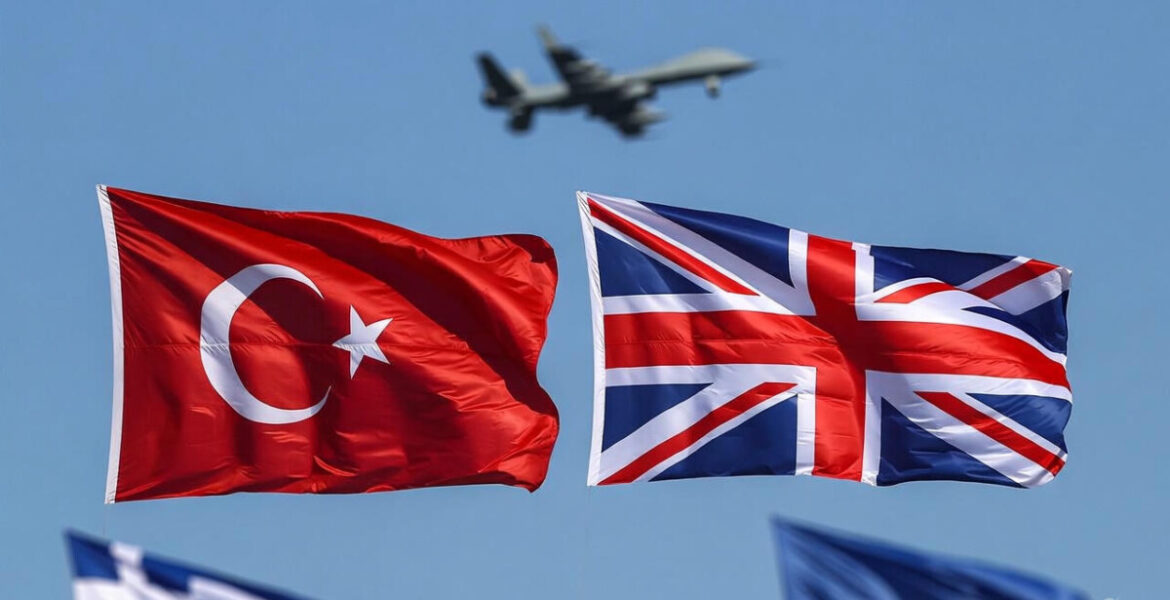
In a move that further strengthens Turkey’s rapidly expanding defence industry network, Turkish Aerospace Industries (TAI) has signed a Memorandum of Understanding (MoU) with British giant BAE Systems to collaborate on the development of next-generation unmanned aerial vehicles (UAVs).
The agreement, announced earlier this month, focuses on joint research, technology sharing and the exploration of new business opportunities in the fast-growing drone sector. While still at the cooperation-framework stage and not a binding contract, the deal marks the latest step in Ankara’s aggressive push to position itself as a major player in global aerospace and defence.
This is the second high-profile European partnership for TAI in just a few weeks. In October 2025, the Turkish company signed a similar MoU with Airbus, signalling a deliberate strategy to integrate Turkish platforms and know-how into Western supply chains.
TAI is the lead contractor behind several flagship Turkish programmes, including:
- The KAAN fifth-generation fighter jet (formerly TF-X)
- The Hürjet advanced jet trainer and light attack aircraft
- A range of indigenous helicopters (T629 attack helicopter, T925 utility helicopter)
- Combat-proven drones such as the Anka series and the Akinci heavy UCAV
These projects form the backbone of President Erdoğan’s vision for full strategic autonomy in defence production and have dramatically reduced Turkey’s historical dependence on foreign suppliers.
The BAE Systems deal comes at a time when the United Kingdom is actively seeking international partners for its own future combat air and unmanned programmes, including the Tempest sixth-generation fighter ecosystem and various loyal-wingman drone initiatives.
Defence analysts note that, despite occasional diplomatic tensions between Ankara and some Western capitals, Turkey’s growing technological capabilities and large-scale domestic production base make it an increasingly attractive partner for European and British firms looking to share costs and access new markets.
Greek defence circles are watching these developments closely, as Turkey continues to invest billions of euros annually in its national aerospace industry while simultaneously expanding ties with NATO allies.
In a contrasting move, Greece has recently taken steps to bolster its own unmanned capabilities through a strategic partnership with Ukraine. Earlier this month, Athens signed an agreement with Kyiv for the joint development and co-production of long-range combat drones, leveraging Ukrainian expertise in low-cost, battle-tested UAV systems. The deal, described by Greek officials as a “force multiplier” for the Hellenic Armed Forces, is expected to accelerate Greece’s indigenous drone programme and further strengthen bilateral defence ties amid the ongoing war in Ukraine.
Stay updated with the latest news from Greece and around the world on greekcitytimes.com.
Contact our newsroom to share your updates, stories, photos, or videos. Follow GCT on Google News and Apple News.
