
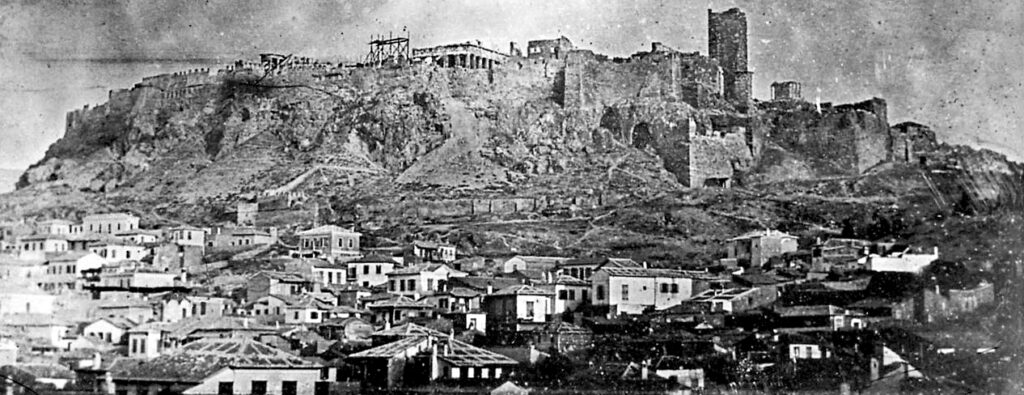
Athens, 1842. The Acropolis looms over the city, inspiring Joseph-Philibert Girault de Prangey (1804-1892), who captured the oldest existing photograph of the monument. This photograph was taken on a morning from the Hill of the Nymphs.
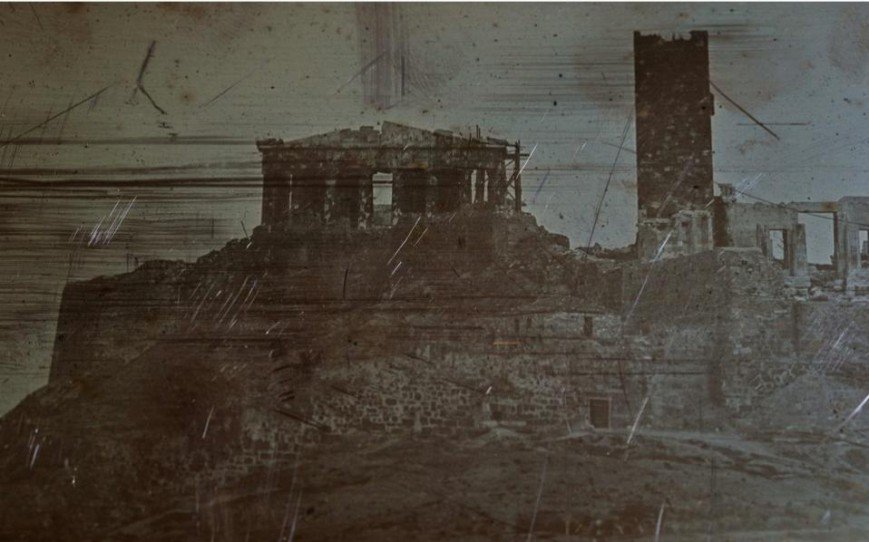
The photograph is considered the oldest surviving image of the Acropolis, from 1842 by Joseph-Philibert Girault de Prangey (1804-1892).
Athens and the Acropolis at the time of the photograph
Athens has been the capital of Greece since 1834. At that time, the country had a population of around 850,246 in 1840. Athens was a small city that had been nearly completely destroyed during the Greek War of Independence from 1821 to 1829. Throughout this conflict, both the city and the Acropolis endured multiple sieges.
The city suffered significant damage, particularly during the eleven-month siege led by Reşid Mehmed Pasha (also known as Kütahı), which took place from June 1826 to May 1827. After regaining control of the city in 1827, the Ottoman forces maintained their presence until March 31, 1831, when the Acropolis was officially returned to the Greek State.
It is important to note that, a few years before Girault de Prangey's visit to the Parthenon, Thomas Bruce, also known as Lord Elgin, the British ambassador to Istanbul, removed several significant artifacts between 1801 and 1815. These removed items included 12 pediment statues, 156 frieze plaques, 13 metopes, the frieze of the Temple of Athena, and one Caryatid from the Erechtheion. The Caryatid was later replaced with a plaster copy.
Girault de Prangey’s “Grand Tour”
The story of the first photograph of the Acropolis begins in early 1842, when 38-year-old artist and scholar Joseph-Philibert Girault de Prangey embarked on his “grand tour” of Palestine, Egypt, Syria, Italy, Turkey, and Greece, utilizing a daguerreotype camera. Prior to this journey, he had already published two books about the Arab and Moorish monuments of Sicily and Spain. Although artists such as Horace Vernet, Frédéric Goupil-Fesquet, and Gaspard-Pierre-Gustave Joly had made similar travels before him, none of their daguerreotypes survived.
Girault de Prangey first arrived in Marseilles and Rome, and then travelled to Greece, Cairo, Alexandria, Istanbul, before reaching the archaeological sites of Asia Minor, “straying as far away as possible from the roads commonly used”. He continued his three-year-long trek by visiting the Holy Land, Baalbek, Damascus, and Aleppo.
His daguerreotypes are the oldest existing photographs of Greece, Palestine, Egypt, Syria, and Turkey. Surprisingly, his work was discovered in the 1920s in a storage building of his estate and was made public only 80 years later.
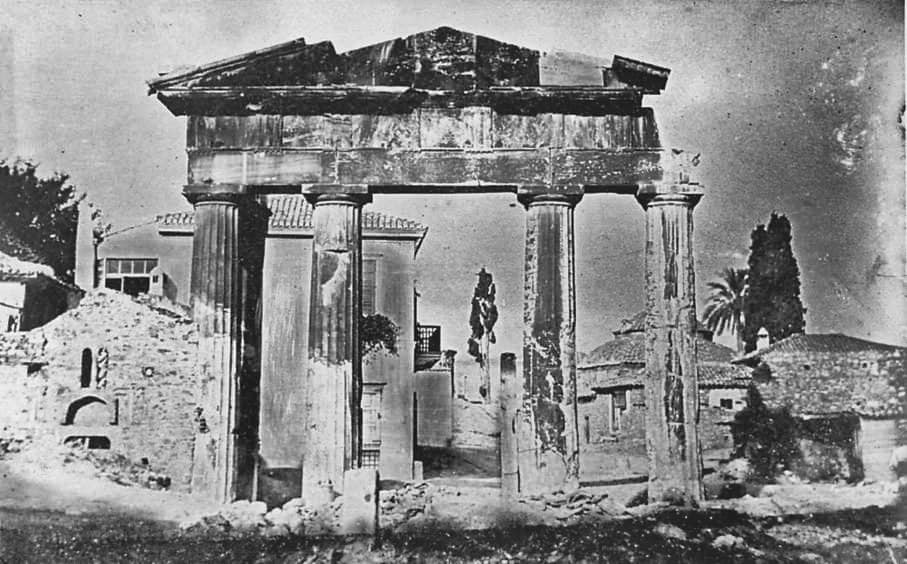
The birth of photography coincided with the tradition of the "grand tour," a type of journey undertaken by Westerners in search of knowledge and exotic experiences. This voyage often included travels to Italy and later to the so-called Orient. The "grand tour" (for a history of the term, see Towner 1985) was an aesthetic experience that influenced many generations of painters and scholars, both British and French (Bustarret 1993).
19th-century Orientalism was inextricably linked with photography in France: following the invention of the fixed-image process by Niépce (1765-1833) and Daguerre (1787-1851), François Arago (1786-1853) would recommend its use for Egyptology at the outset (Millet 2003).
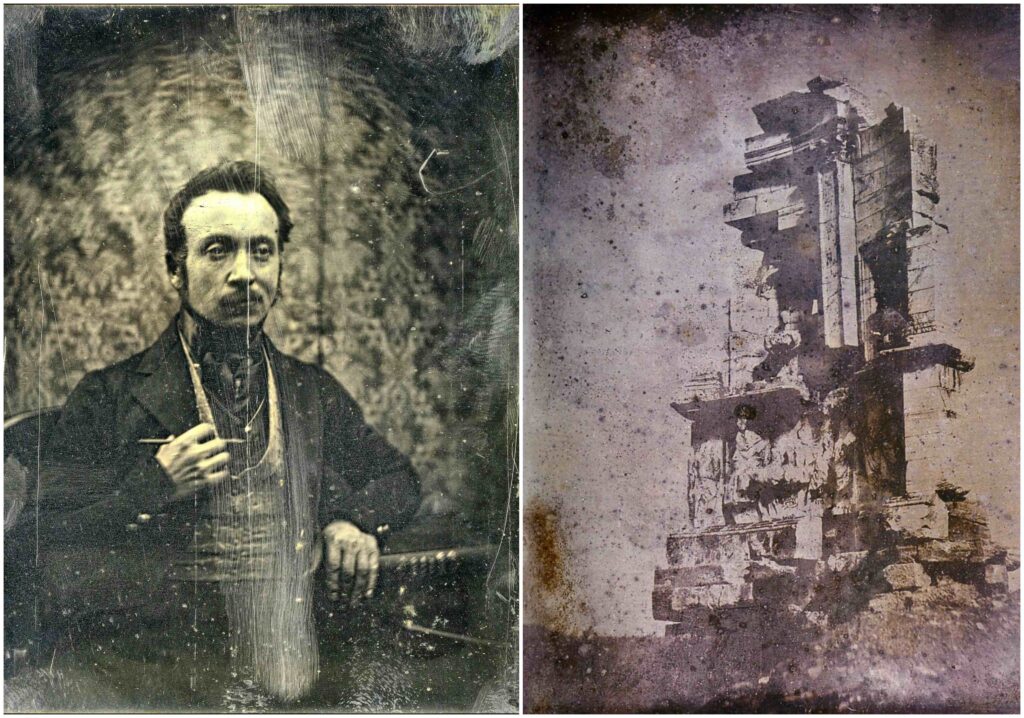
Joseph-Philibert Girault de Prangey: an unsung pioneer of the daguerreotype
Joseph-Philibert Girault de Prangey (1804-1892) was an heir to a significant fortune who devoted his life to traveling, botany, drawing, architecture, and a passion that captivated him: photography. In 1842, he captured a striking photograph of the Temple of Olympian Zeus in Athens, with a dark sky looming over its ruins. This shot was regarded as bold by experts in the field.
Interesting facts about the Acropolis, the crowning jewel of Greece’s capital
Stay updated with the latest news from Greece and around the world on greekcitytimes.com.
Contact our newsroom to share your updates, stories, photos, or videos. Follow GCT on Google News and Apple News.
