
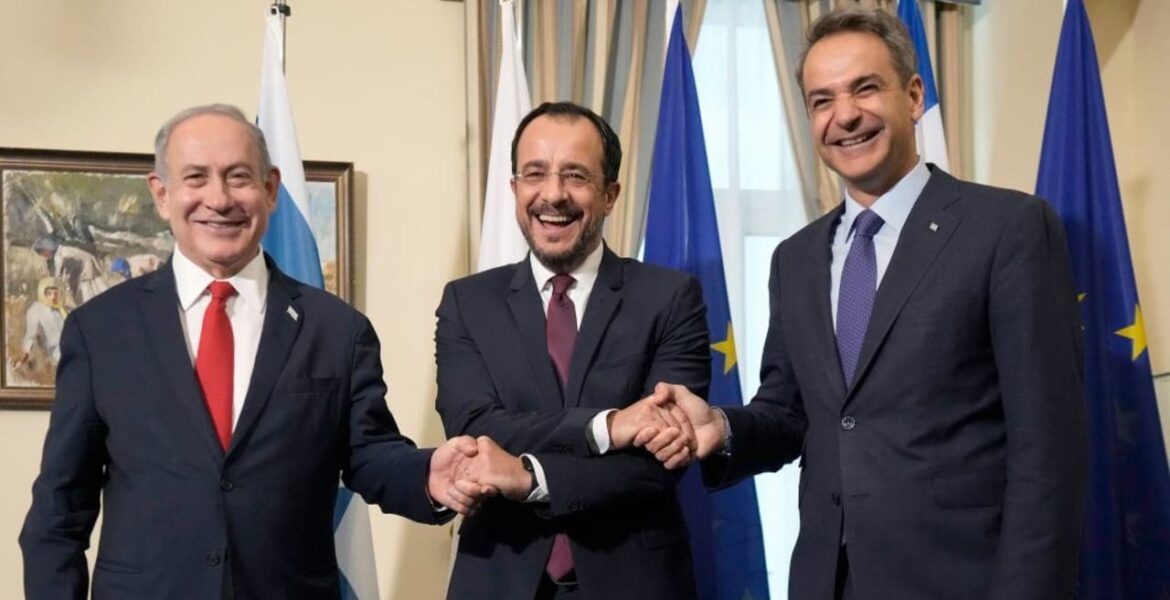
On December 22, 2025, Israeli Prime Minister Benjamin Netanyahu hosts Greek Prime Minister Kyriakos Mitsotakis and Cypriot President Nikos Christodoulides in Jerusalem for the 10th trilateral summit, underscoring a partnership increasingly defined by shared concerns over Turkey's regional ambitions.
Origins Rooted in Deteriorating Israel-Turkey Ties
The alliance emerged about 15 years ago following the sharp decline in Israel-Turkey relations under President Recep Tayyip Erdogan, highlighted by incidents like the 2010 Mavi Marmara flotilla clash.
Greece and Cyprus, longstanding rivals of Turkey, became natural partners for Israel, initially framed around energy cooperation to connect Israeli gas fields to Europe while bypassing Turkish routes.
The ambitious EastMed pipeline project provided a neutral cover for deepening ties, allowing the three countries—once politically distant—to build common interests without overtly positioning against Ankara.
Shift from Energy to Security Focus
As the EastMed pipeline stalled due to high costs, technical challenges, and the 2022 U.S. withdrawal of support, energy's role diminished. Alternatives, like gas exports via Egypt and the advancing Great Sea Interconnector electricity cable (linking Israel, Cyprus, and Greece), persist, but security has become the core pillar.
Military cooperation has flourished: Israeli pilots train in Greek airspace, joint exercises are routine, intelligence sharing is deep, and Cyprus hosts IDF training. Long-term defense deals and coordinated air, naval, and ground forces are now institutionalized.
Turkey's Actions Drive Closer Alignment
Recent Turkish assertiveness—Aegean airspace violations, Mediterranean maneuvers, influence in Libya and Syria—has heightened shared threat perceptions. While concerns differ (escalation risks for Greece, divided island for Cyprus, operational constraints for Israel), they overlap significantly.
Ahead of the Israel Greece Cyprus trilateral summit 2025, reports surfaced of discussions on a joint rapid-response force (potentially 2,500 troops: 1,000 each from Israel and Greece, 500 from Cyprus), though officials quickly denied any formal standing unit. The denials themselves signal evolving candor about contingency planning.
This summit highlights the irony: energy was the public foundation, but Turkey has always been the unspoken catalyst—and now the explicit driver—of this resilient strategic partnership in the Eastern Mediterranean.
Stay updated with the latest news from Greece and around the world on greekcitytimes.com.
Contact our newsroom to share your updates, stories, photos, or videos. Follow GCT on Google News and Apple News.

