
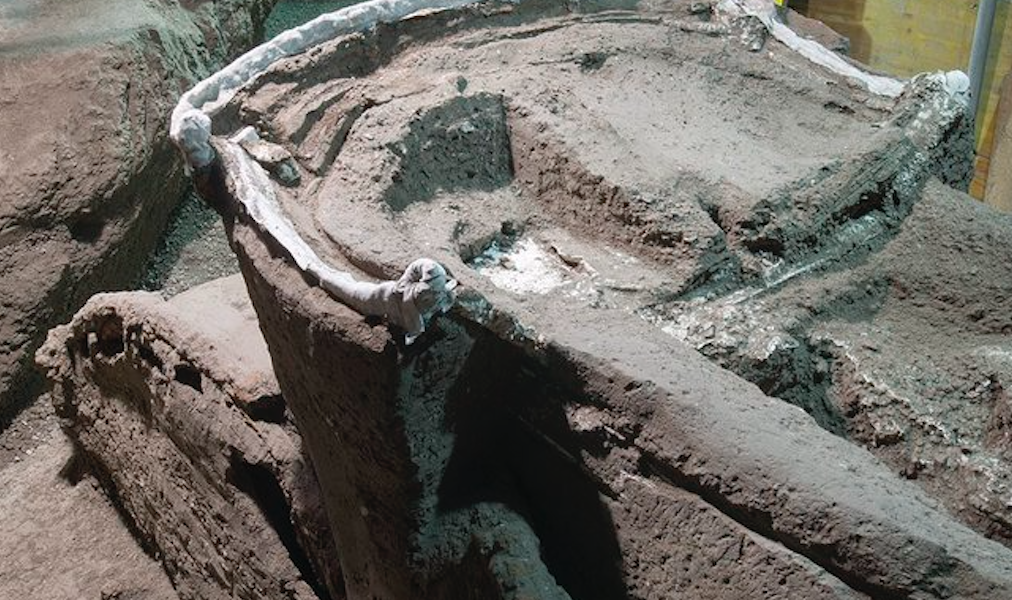
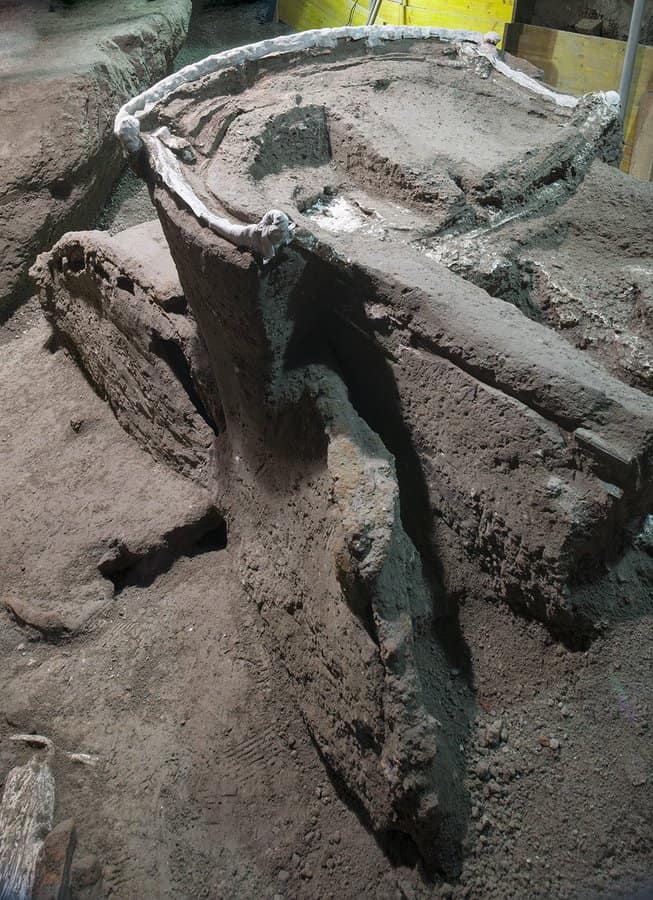
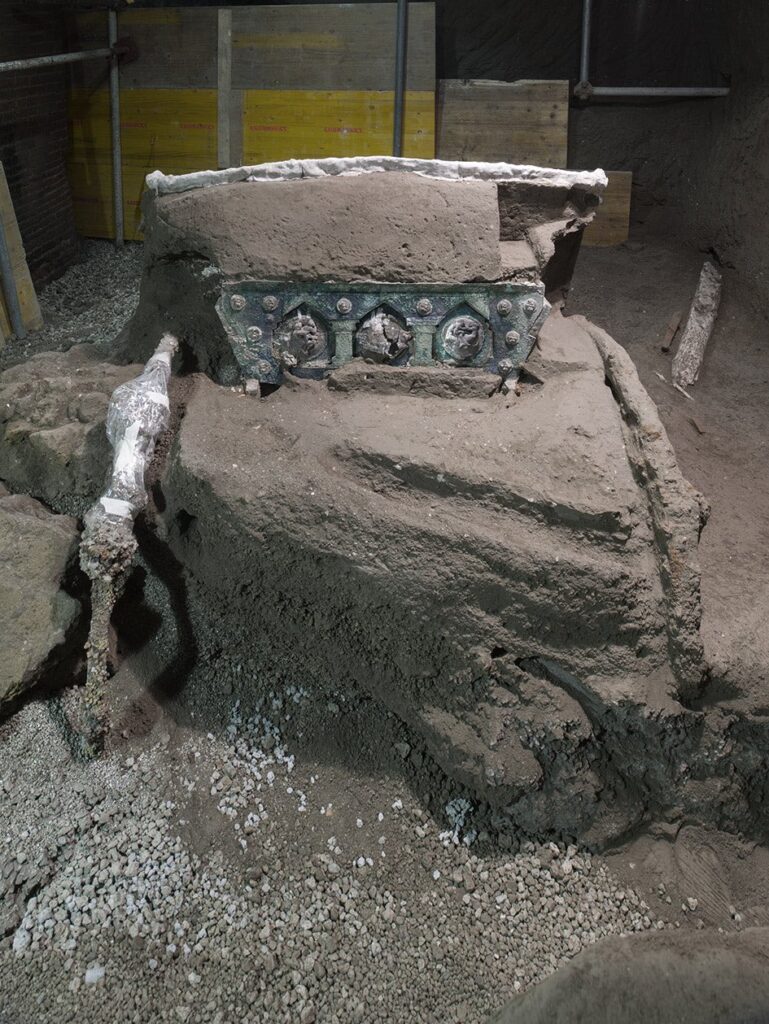
Last week, archeologists discovered a large four-wheel ceremonial chariot at a villa near Pompeii, an ancient city in southern Italy.
According to an announcement from the Archaeological Park of Pompeii, they found the bronze and tin chariot almost fully intact, with wooden remains and the imprint of ropes.
Massimo Osanna, the outgoing director of the Pompeii archaeological site, said the carriage was the first of its kind discovered in the area.
“This is an extraordinary discovery that advances our understanding of the ancient world,” Osanna said, adding that the carriage would have accompanied festive moments for the community, such as parades and processions.
On his part, Italy's culture minister, Dario Franceschini said: "Pompeii continues to amaze with all of its discoveries, and it will continue to do so for many years to come, with twenty hectares still to be excavated."
"But above all, it demonstrates that valorisation can occur, and tourists can be attracted from all over the world, whilst at the same time research, education and studies are being conducted..."
This ceremonial four-wheeled chariot is unique for Italy, but not for Greece, where five similar carriages have been excavated in Thrace’s Mikri Doxipara.
The similarities were confirmed by Evros Antiquities Curator Domna Terzopoulou, who told AMNA that work to showcase the burial mound will begin immediately.
The ancient city of Pompeii is a UNESCO World Heritage site and one of Italy's top tourist attractions.
*More on GCT: New archaeological treasures discovered at Santorini’s Akrotiri, also known as the “Minoan Pompeii”
Stay updated with the latest news from Greece and around the world on greekcitytimes.com.
Contact our newsroom to share your updates, stories, photos, or videos. Follow GCT on Google News and Apple News.

