
According to new evidence, the ancient Minoan civilization was not killed off due to a natural disaster, such as an earthquake, tsunami, or volcano. Archaeologists have found new evidence on ancient tablets that suggests they may have been taken over rather than wiped out.
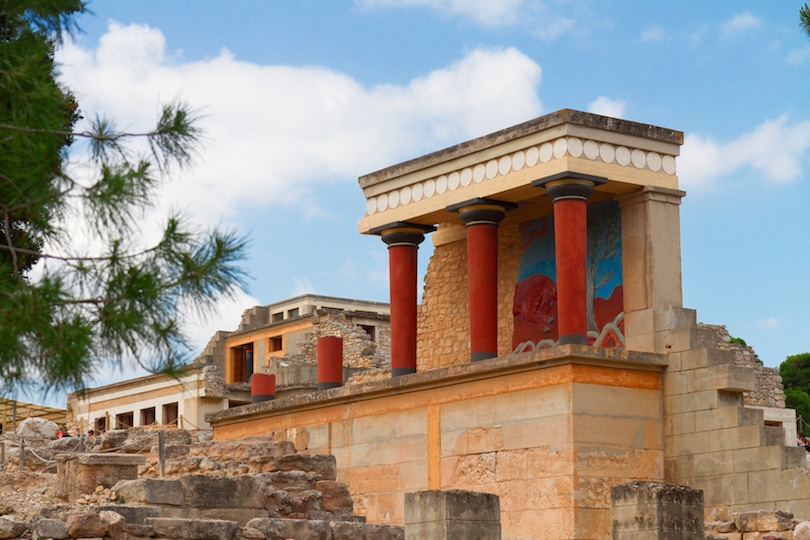
Archaeologists say the ancient tablets discovered on Crete, where the Minoans lived, suggest people from the Greek mainland may have taken over. These writings have been studied for decades and prove there was still life in Minoan settlements for years after they were thought to have died out.

The Minoans thrived between 2700 B.C. and 1450 B.C., and scientists had not found any evidence of their existence after 1100 B.C. It has long been believed that the volcanic eruption in Thira wiped them out around 1600 B.C.
Colin MacDonald, an archaeologist at the British School in Athens, told Haaretz, “Thira’s eruption did not directly affect Knossos. No volcanic-induced earthquake or tsunami struck the palace, which, in any case, is 100 meters above sea level.”
Evidence suggests that in 1450 B.C., the island of Crete experienced significant destruction, possibly due to an earthquake, although MacDonald argues it was insufficient to destroy the civilization. “Earthquakes were not ‘game changers’ but often spurred the authorities to try something new. The earthquakes were important regarding architectural change, but not cultural discontinuity.”
The new research suggests it’s possible the Minoans were taken over by another civilization and may have been attacked by the Mycenaeans. The Mycenaeans were the first people to speak the Greek language and flourished between 1650 B.C. and 1200 B.C.
Archaeologists believe that the Minoan and Mycenaean civilisations gradually merged, with the Mycenaeans becoming dominant, leading to a shift in the language and writing system used in the ancient city.
This new evidence also suggests that the Mycenaeans established their trading hubs, like the large settlement at Phylakopi, on the island of Milos and made the Greek language the common tongue of the Aegean economy.
*Source: Haaretz
Read more Antikythera Wreck and Minoan Art Take Center Stage
Stay updated with the latest news from Greece and around the world on greekcitytimes.com.
Contact our newsroom to share your updates, stories, photos, or videos. Follow GCT on Google News and Apple News.
