
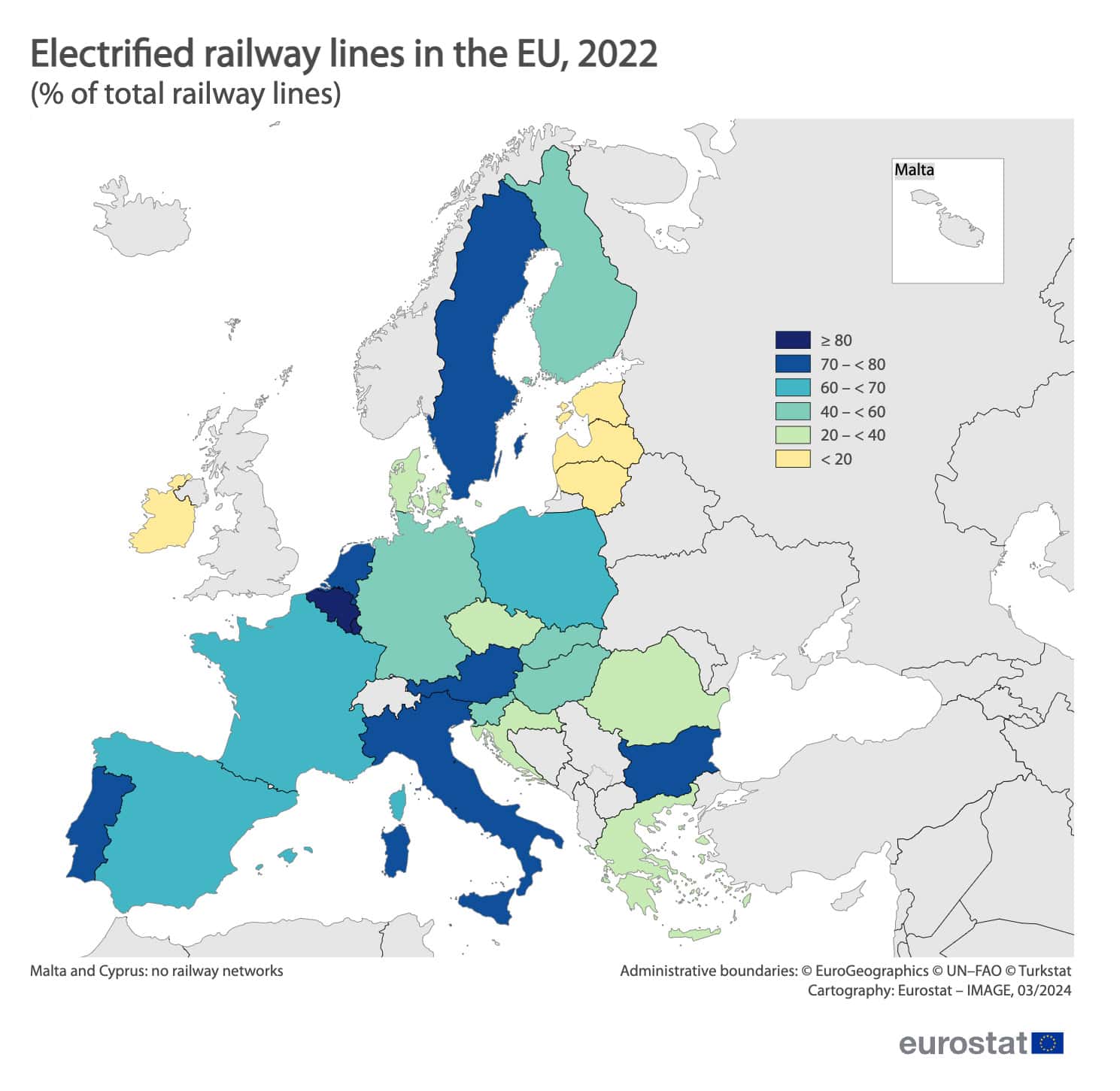
Electrified railway lines in the European Union increased by 31% since 1990, with Luxembourg having nearly all of its railway lines electrified (97%) followed by Belgium (88%), Bulgaria and Sweden (both 75%) and in the Netherlands (74%). Whilst on the lower end is Greece at 37%, joined by other countries such as Ireland (3%) and the Baltic States of Lithuania (8%), Estonia (12%) and Latvia (13%).
In 2022, the length of electrified railway lines in EU countries reached 115 000 kilometres (km), a 31% increase compared with 1990, when it totalled 88 000 km.
The entire EU railway network had a length of 202 000 km, with the share of electrified lines amounting to nearly 57%. Electrification is a key element of the modernisation of railway networks, lowering the negative environmental impact of railway transport and making it a favourable mode compared with road and other transport modes heavily dependent on fossil fuels.
Whereas the share of electrified railway lines showed an upward trend at EU level, the total length of railway lines decreased by 7.5% since 1990, when they totalled 219 000 km. Considerably less railway lines in use were reported by Poland, Latvia, France, and Germany. At the other end of the spectrum, the rail network increased considerably in Spain, Estonia and the Netherlands, in part due to the construction of dedicated high-speed lines.
Stay updated with the latest news from Greece and around the world on greekcitytimes.com.
Contact our newsroom to share your updates, stories, photos, or videos. Follow GCT on Google News and Apple News.
