
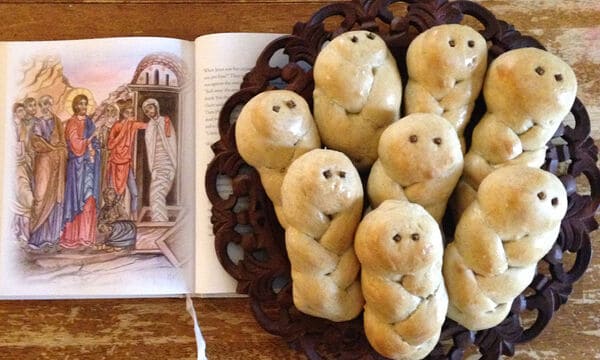
Celebrate Easter with this simple and fragrant Lazarakia recipe—traditional Greek Lazarus breads that blend history, flavor, and family fun. Create lasting memories as you bake these delightful treats together!
The Tradition of Lazarakia Bread
Lazarakia, or "little Lazarus breads," are small, spiced breads enjoyed on Lazarus Saturday, the last Saturday before the start of Holy Week and Pascha (Easter Sunday) in the Greek Orthodox tradition. In 2025, Lazarus Saturday falls on April 12, the day before Palm Sunday, leading into Orthodox Easter on April 20. Shaped like a shrouded figure, these breads symbolize the resurrection of Lazarus, as depicted in biblical accounts. Popular in Greece and Cyprus, these sweet, Lenten-friendly breads omit eggs and dairy, distinguishing them from the richer Greek Easter bread, tsoureki.
Ingredients for Lazarakia Dough
- 500g all-purpose flour (or bread flour)
- 1 tbsp dry yeast (or 3 tbsp fresh yeast)
- 200ml warm water
- 100g sugar
- 1 tsp ground cinnamon
- 1/4 tsp ground cloves (use sparingly to avoid bitterness)
- 1 tsp mahleb (optional, for a unique aroma)
- Pinch of salt
- 2 tbsp olive oil
- Whole cloves (for eyes)
- Optional: raisins and chopped walnuts (for dough or stuffing)
Preparing the Dough
This versatile dough can be customized to your taste, but this recipe leans toward a sweet, aromatic profile with cinnamon and cloves. If you have mahleb—a traditional Greek spice—add it for an authentic, distinctive flavor. Be cautious with ground cloves; a little goes a long way, and too much can turn the dough bitter.
- In a large bowl or stand mixer, combine flour, dry yeast, sugar, salt, cinnamon, cloves, and mahleb (if using).
- Gradually add warm water and olive oil, mixing until a soft dough forms. If adding raisins or walnuts to the dough, knead them in now.
- Knead by hand (about 10 minutes) or with a mixer (5-7 minutes) until smooth and elastic.
- Cover the dough and let it rise in a warm place until doubled in size—about 1-2 hours, depending on the temperature.
Tip: Fresh yeast can replace dry yeast; simply triple the amount (e.g., 3 tbsp fresh for 1 tbsp dry). Warmer environments speed up rising time.

Shaping the Lazarakia Breads
Lazarakia are traditionally shaped to resemble a small figure wrapped in a shroud, representing Lazarus. Get creative with your designs—this is a perfect activity for kids or family helpers! Here’s a simple method:
- Pinch off a golf-ball-sized piece of dough.
- Roll most of it into an oval for the body.
- Take a smaller portion, roll it into a thin rope, and place it under the body as arms. Fold the ends across the belly to mimic crossed hands.
- Press two whole cloves into the head area for eyes.
Feel free to experiment with shapes—the process is as fun as the result!
Optional Stuffing
For extra flavor, stuff the breads with a mix of finely chopped walnuts and raisins. Prepare the filling separately, place a spoonful in the center of the dough, and seal it before shaping. Alternatively, mix raisins and walnuts directly into the dough before rising.
Baking Instructions
- Preheat your oven to 180°C (350°F).
- Place the shaped Lazarakia on a lined baking sheet.
- Let them rest for 20-30 minutes for a second rise (optional, for fluffier breads).
- Bake for 20-25 minutes or until golden brown.
- Cool slightly before serving.
More Greek Easter Favorites
Round out your Easter celebration with these traditional Greek recipes:
- Tsoureki (sweet Easter bread with eggs and butter)
- Koulourakia (crisp Easter cookies)
- Magiritsa (Easter lamb soup)
Enjoy the process of making Lazarakia with your loved ones, blending tradition with the joy of baking. These aromatic breads are a delicious way to honor Lazarus Saturday on April 12, 2025!
Stay updated with the latest news from Greece and around the world on greekcitytimes.com.
Contact our newsroom to share your updates, stories, photos, or videos. Follow GCT on Google News and Apple News.

