
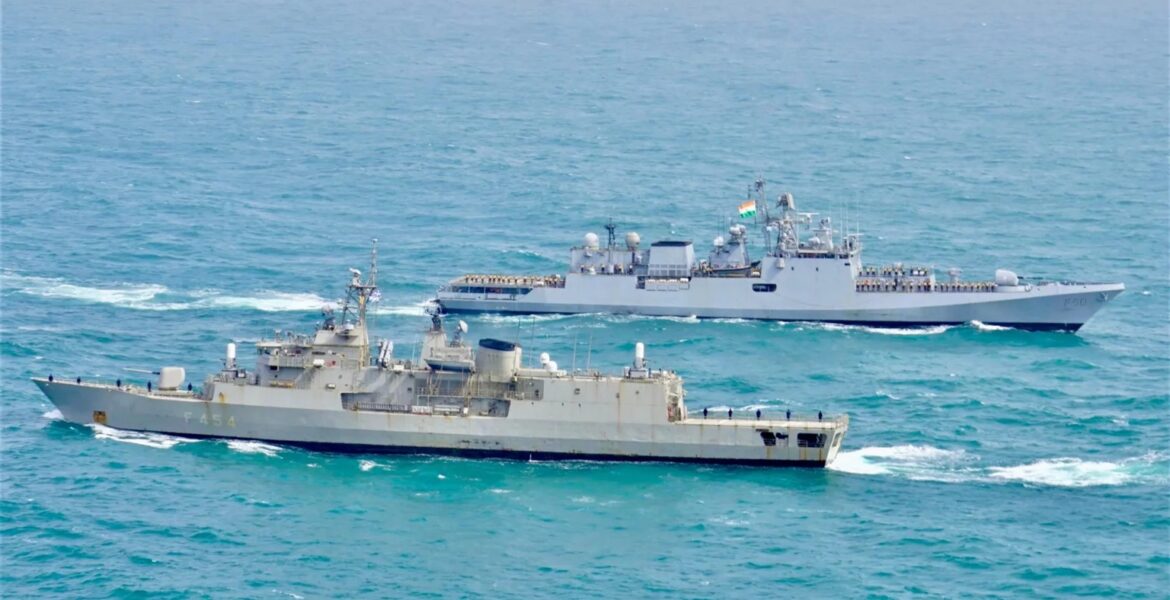
From the frigate "Psara" in Mumbai to defense cooperation with the UAE - How Greece's geopolitical role is shaping up in the Middle East and Asia.
Greece is strengthening its military and diplomatic cooperation with India, Israel, and the United Arab Emirates (UAE), consolidating its strategic presence in critical areas from the Eastern Mediterranean to Asia.
The frigate Psara is in Mumbai undergoing joint training with the Indian Navy; there are consultations with Israel; and, military training with the Emiratis in Attica is underway, all of which contribute to a multi-level cooperation that extends to defense, energy, and transport.
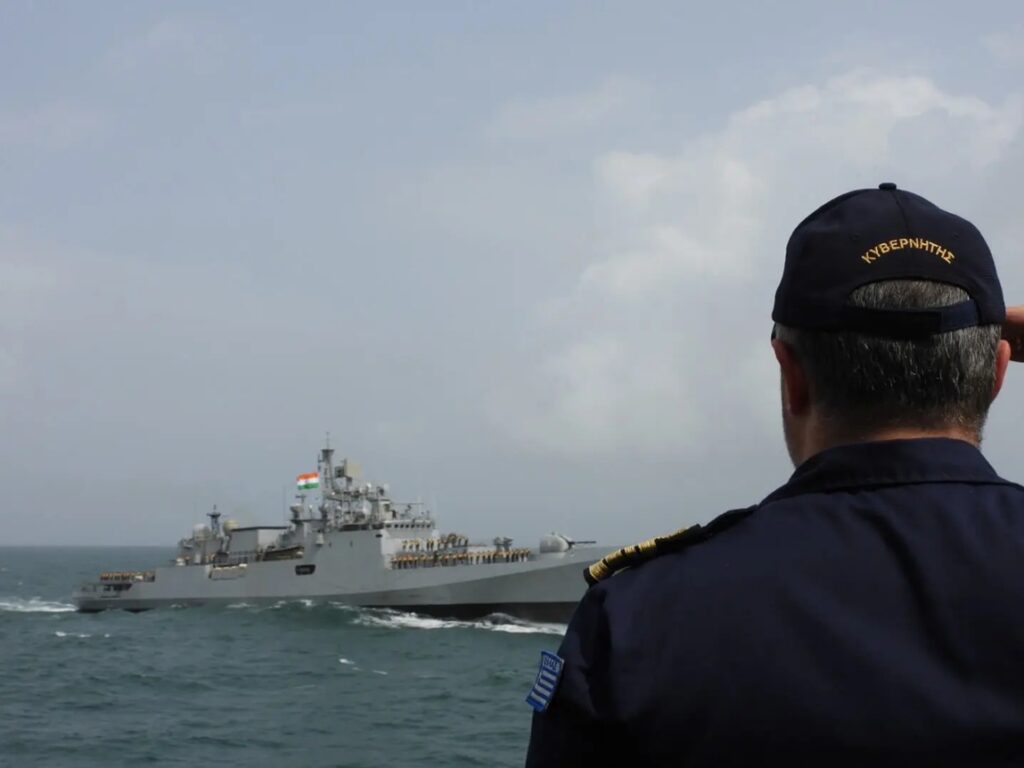
Greece is strategically investing in creating strong ties with key countries outside the traditional Euro-Atlantic structures.
The recent deployment of the Greek Navy frigate Psara to Mumbai marks the first official Greek naval presence in India in over two decades.
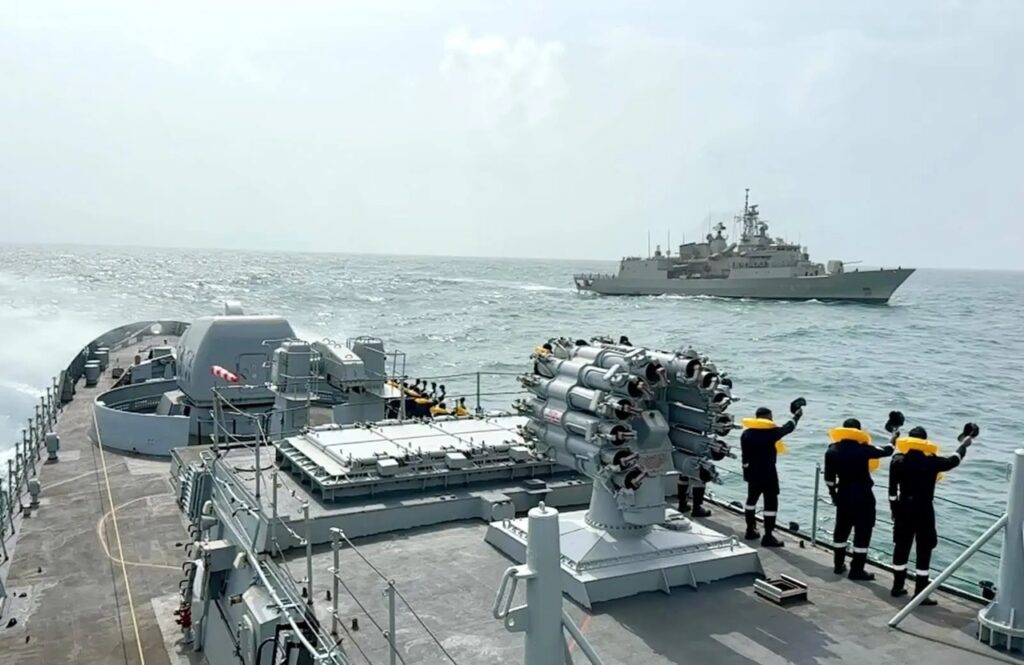
There, a joint Passex training exercise was held with the Indian frigate Tarkash, consolidating military cooperation with the rapidly growing Asian power.
Air and sea transport
Strengthening Greek-Indian relations is only one aspect of the broader strategy. At the same time, in Athens, Israeli Transport Minister Miri Regev met with Greek ministers and airlines, with air and maritime transport as the main topic.
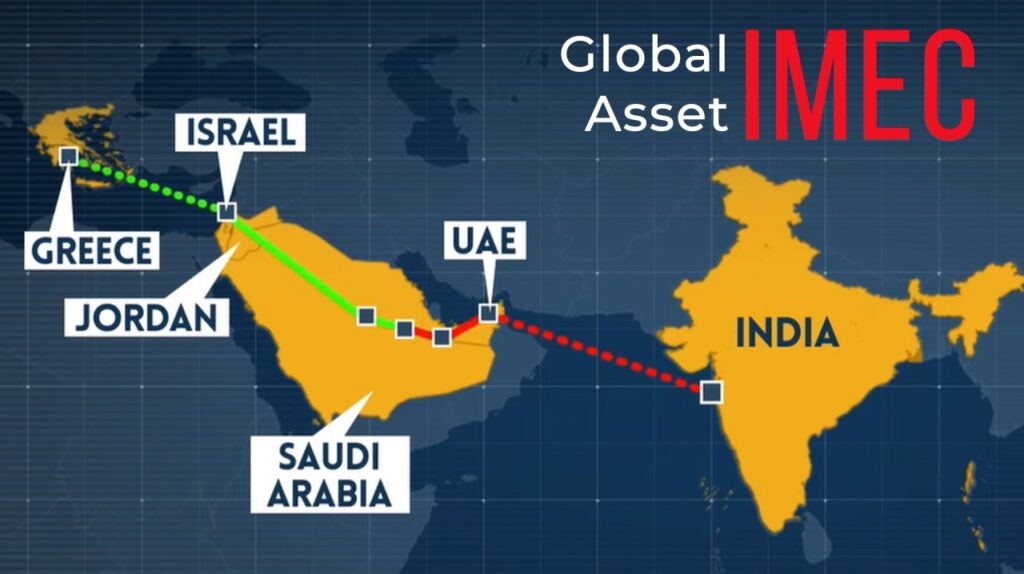
The discussions focused on the India-Middle East-Europe Corridor (IMEC), an ambitious project led by Greece, Israel, Cyprus, Saudi Arabia, the UAE, and India, which aims to bring the East closer to Europe through combined transport and energy networks.
On the same geopolitical chessboard, Foreign Minister George Gerapetritis is planning a visit to Tripoli, Libya, on July 15, while immediately afterwards, he will participate in the new informal five-party meeting on the Cyprus issue in New York.
Despite the political instability in Libya, Greek diplomacy is seeking an active role in developments in North Africa and the Mediterranean, putting the Cyprus issue back on the table for discussion, even if unofficially, before the upcoming “elections” in the Turkish-occupied territories.
At the same time, in Avlona, 207 UAE Armed Forces personnel graduated from the Hellenic Aerospace Industry (HAI) specialization program.
This cooperation, which includes the training of up to 2,875 personnel, further strengthens the military relationship between Greece and the UAE, with joint investments and upgraded infrastructure in Tanagra.
At the level of energy policy, Minister of Environment and Energy Stavros Papastavrou highlighted Greece's progress in delignitization, reaching 90%, and the transition to Renewable Energy Sources (RES), which now cover 60% of the country's energy needs.
As he noted, Greece remains committed to the fight against climate change, despite the economic challenges of the past 20 years.
The national strategy
Geopolitics, defense, transportation, and energy compose a comprehensive national strategy that makes Greece an indispensable link between Europe, the Middle East, and Asia, strengthening its position in an ever-changing global map of power.
READ MORE: Israeli media: “Turkey is the new Iran.”
Stay updated with the latest news from Greece and around the world on greekcitytimes.com.
Contact our newsroom to share your updates, stories, photos, or videos. Follow GCT on Google News and Apple News.
