

The Greek government has launched an innovative social housing program aimed at addressing the housing needs of vulnerable groups by utilizing public real estate through a novel "social exchange" mechanism.
This initiative, detailed in a draft law by Minister of Social Cohesion and Family, Domna Michailidou, titled “Social Exchange, Social Rental, Third Child Status and Other Provisions,” is set to transform Greece’s housing policy landscape. The public consultation for the draft law began on 30 July 2025 and will conclude on 20 August 2025.
Strategic Framework for Social Housing
The newly established Government Housing Policy Committee has outlined a strategic 18-month plan to prioritize the development of public properties for social housing. Key actions include identifying suitable properties and launching initial tenders for the construction project. Each ministry is tasked with contributing three to five properties, each with a minimum built area of 1,500 square meters, with exceptions for island and tourist regions.
Social Exchange Mechanism
The social exchange program utilizes both developed and undeveloped public properties from state or local authorities. Implementation may involve:
- Construction of new multi-story or independent buildings
- Renovation or repair of existing structures
- Demolition or change of property use
- Regularization of incomplete land registry registrations
All projects are managed and funded entirely by private contractors, ensuring no direct cost to the State.
Property Availability and Targets
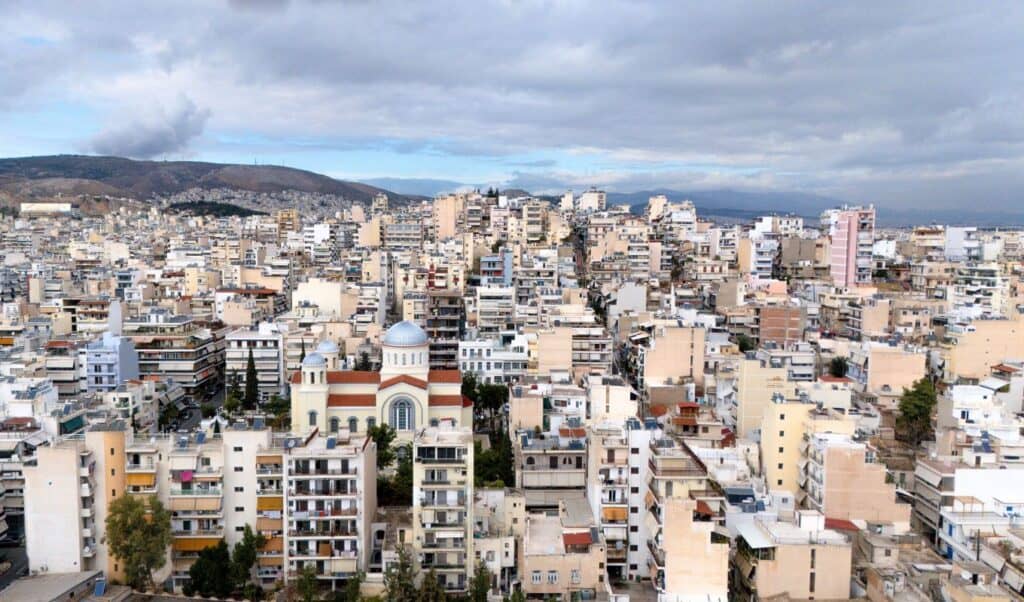
The Hellenic Republic Asset Development Fund (HRADF) and the Superfund have identified 6,500 suitable properties, with 1,000 ready for immediate market entry. The program aims to deliver 25,000 homes, with 10,000 to be completed within a short timeframe. Approximately 60% of these homes will be located in Athens and Thessaloniki, aligning with a broader public property management policy.
Contractor Compensation Models
Private contractors participating in the program can choose from various compensation options:
- Ownership of a portion of the constructed housing
- Exploitation rights for a defined period
- Management fees
- Revenue from resale or rental
Contractors undertaking full construction or reconstruction must allocate at least 30% of the housing to the State for social policy purposes, with the remaining 70% available for their use.
Beneficiaries and Social Criteria
The Organization of Welfare Benefits and Social Solidarity (OPEKA) will select beneficiaries based on social criteria, including income, family status, property ownership, and children’s ages. Beneficiaries will not receive additional housing allowances during the rental period. A unique feature allows tenants to purchase their home after ten years through a “rent-to-own” contract, which is executed via a notarial deed without registration fees. Rents will be significantly lower than market rates for comparable properties.
Each project’s maturation process includes an economic-technical study to determine optimal property use, minimum social housing allocation (at least 30%), management duration, contractor transfer percentages, and investment viability. Tender documents will specify property details, rental terms, technical requirements, accessibility for individuals with disabilities, and the range of ownership transfer options.
Strategic Contracts and Transparency
The program operates under strategic importance contract frameworks, adhering to public investment legislation. An electronic Registry of Social Exchange Contracts, maintained by the General Secretariat for Demographic and Housing Policy, will track project progress, housing distribution, rental status, and beneficiary details.
Social Rental and Funding
In addition to social exchange, the draft law introduces “social rental,” which allows for the direct leasing of public properties to vulnerable groups without the involvement of private contractors or construction. These rentals will also feature low rates and centralized beneficiary selection. Funding opportunities from European programs are included, alongside exemptions from standard State property rental regulations.
Priority Properties
The first list of properties for immediate utilization includes:
- Former HROPEI Industrial Complex (EOF-owned), 62 Piraeus Avenue, Piraeus: 17,893 sq m, including listed buildings with strong redevelopment potential.
- EFKA Plots in Argyroupoli, Cyprus Avenue: 2,375 sq m.
- Former Anatolia Factory, Nea Ionia: 18,000 sq m, owned by HRADF.
- YFANET, Toumba, Thessaloniki: 19,500 sq m, currently under occupation.
A New Era for Housing Policy
This initiative represents a pioneering approach to housing production and distribution, combining the utilization of public assets with private sector participation to address social needs. If successful, it could usher in a transformative era for Greece’s social housing policy, providing affordable homes to thousands while optimizing dormant public resources.
Stay updated with the latest news from Greece and around the world on greekcitytimes.com.
Contact our newsroom to share your updates, stories, photos, or videos. Follow GCT on Google News and Apple News.
