
Secret airlifts, the Turkish refinery in Çorum, and the geopolitical background of a precious metal that is being turned into a strategic weapon.
The gold of the Nicolas Maduro regime has become one of the darkest and most sensitive geopolitical issues. A precious reserve that, as Venezuela sank into economic collapse and international sanctions, was quietly moved abroad, through airlifts that had only one goal: to liquidate, survive, and maintain power.
Today, the United States is seeking this gold and focusing on Turkey specifically.
According to diplomatic assessments and information from American sources, Turkey has been at the center of investigations and behind-the-scenes pressure, as it is estimated that some of Venezuela's gold reserves may have ended up in the country.
Washington's interest is not accidental, according to the same sources. About a year and a half ago, just before Donald Trump's return to power in January 2025, the Maduro regime allegedly ordered the secret takeoff of aircraft headed to various parts of the world, carrying, according to reports, loads of gold. The flights were intended to disperse and obscure the tracks. Some of these aircraft reportedly landed in Turkey.
In this context, Ankara is not just another geographical location but a potential hub for the processing, exchange, and political control of a valuable metal that, for Venezuela, serves as the ultimate reserve of power—and for the US, as a red line for violating sanctions.
The question is no longer whether there were talks, visits, or scenarios. The real question is where Maduro's gold ended up, and Turkey is expected to provide answers.
The background is highlighted by a report in the Turkish newspaper Sözcü, which states that the focus of the investigations was the gold refinery in Çorum, owned by businessman Ahmet Ahlatcı. The question was clear and politically charged: did this refinery ever process gold originating from Venezuela?
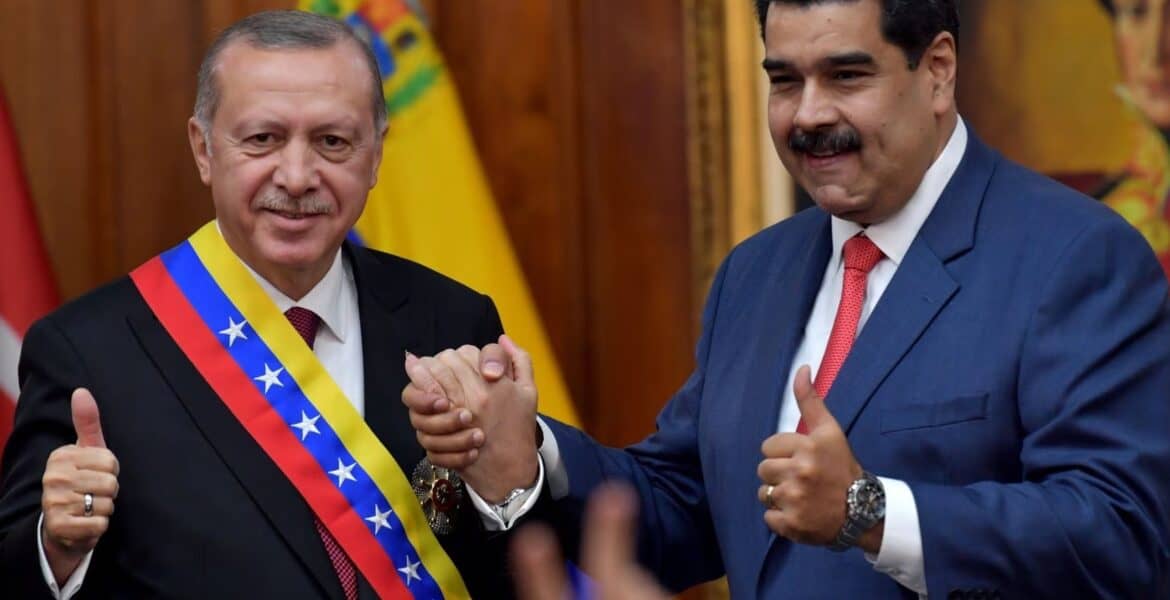
Ahlatcı recounts a revealing conversation between Maduro and Recep Tayyip Erdoğan. According to his account, the Venezuelan president said that his country produces about 270 tons of gold annually, which are traditionally sent to the US, Switzerland, and Britain for processing, without Venezuela gaining the economic benefits they deserve.
Maduro reportedly proposed setting up a system to produce and sell gold bars in exchange for Turkish goods – from food to construction supplies. Ankara’s response, according to Ahlatcı, was that gold processed inside Venezuela would not be accepted internationally. A counter-proposal suggested that the gold be transported to Turkey, processed in Çorum, and the proceeds deposited with the Central Bank of Turkey as prepaid export revenue.
About 45 days later, the refinery was visited by then-Venezuelan Vice President Tareck El Aissami for an on-site inspection. However, according to Ahlatcı, the case never advanced.
"Not a single gram of gold came from Venezuela to our refinery, nor did any gold leave here for Venezuela," he stated, adding that there was no transaction with Venezuela, Iran, or Sudan and that he is not involved in cases related to international sanctions.
Officially, then, the “gold of Venezuela” never passed through Çorum. Politically, however, the question remains open – and highly explosive.
This is not the first time Maduro has transferred gold out of his country. During Maduro's early years in power, between 2013 and over five years, Venezuela airlifted 127 tons of its central bank gold to Swiss refineries to secure liquidity and collateral as the debt crisis worsened.
According to Swiss public broadcaster SRF, the transfer was described as an “act of desperation,” with some of the gold sold and some used as collateral for loans. But when sanctions tightened after 2018, such routes were cut off.
Many analysts believe Turkey has now become an alternative hub—less transparent, more politically flexible, and capable of bilateral exchanges outside the traditional financial system.
Amid Maduro's arrest and rising tensions between Washington and Caracas, the US is demanding answers: where did the gold reserves go, who managed them, and through what mechanisms were they liquidated?
Turkey is not officially accused, but it is not exempt. That alone is enough to place it at the heart of a geopolitical game where gold is more than just a precious metal—it's a tool of power, influence, and conflict.
READ MORE: Russia Attributes Drone Strikes on Greek-Managed Tankers in Black Sea to Ukraine.
Stay updated with the latest news from Greece and around the world on greekcitytimes.com.
Contact our newsroom to share your updates, stories, photos, or videos. Follow GCT on Google News and Apple News.
