
With Judgment Sunday (Meatfare Sunday) observed on February 15, 2026, and Forgiveness Sunday (Cheesefare Sunday) approaching on February 22, Orthodox Christians prepare to enter Holy and Great Lent. This sacred season invites reflection on the guidance offered by His All-Holiness Ecumenical Patriarch Bartholomew in his message for Holy and Great Lent 2025.
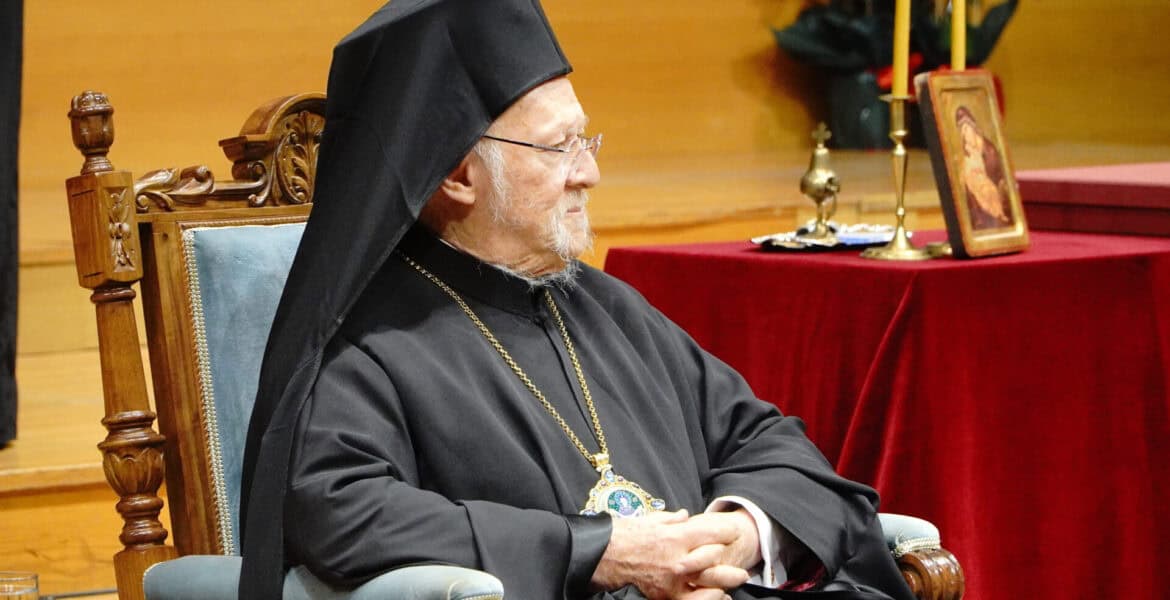
![In his message for Holy and Great Lent 2025, His All-Holiness Ecumenical Patriarch Bartholomew reminds us that this is a time of “fasting and repentance, of spiritual vigilance and journey with the Lord,” culminating in “the veneration of His splendid Resurrection.” [...] The faithful ‘encounter, recognize, and love one and the same Christ,’ [...] our experience of faith is ‘unique’ and ‘profoundly personal’ as a freedom given to us by Christ, [...] expressed as love and applied support to our concrete neighbor [...] May all Orthodox Christians avail themselves of the opportunity to take hold of this glorious freedom now](https://greekcitytimes.com/wp-content/uploads/2026/02/142771-1024x683.jpg)
In that encyclical, the Ecumenical Patriarch describes Lent as a blessed time of “fasting and repentance, spiritual vigilance, and journey with the Lord,” leading to the joyful veneration of Christ’s Resurrection. The liturgical services and hymns link the faithful’s spiritual efforts to the anticipation of Pascha, infusing the 40-day fast with the “fragrance of paschal joy.”
The ultimate aim is for each Christian to grow worthy of passing from earthly concerns to the divine reality “no eye has seen, nor ear heard, nor human heart conceived” (1 Corinthians 2:9). Lent provides an opportunity to deepen awareness of faith as a personal encounter with Christ—profoundly individual yet never individualistic.
His All-Holiness clarifies that Christianity is “extremely personal” without becoming “individualistic.” The faithful encounter, recognize, and love the same Christ, who alone reveals the perfect human person (as noted by St. Nicholas Cabasilas). This encounter invites personal salvation rooted in shared faith, making each response both unique and communal.
Faith’s experience is thus “unique and profoundly personal” as a freedom granted by Christ, yet “essentially ecclesiastical”—a shared freedom lived in community.
This personal encounter must manifest in concrete love for others, as illustrated in the Parable of the Good Samaritan (Luke 10:30–37) and the Judgment scene (Matthew 25:31–46), alongside eucharistic care for creation. Asceticism and fasting during Lent reveal freedom in Christ as holistic: not punitive or joyless, but oriented toward resurrection and grace.
Fasting extends beyond dietary abstinence to renouncing sin, combating egotism, and turning lovingly toward those in need and all creation. It fosters a “heart that burns for the sake of all creation,” anticipating the “glorious freedom of the children of God” (Romans 8:21).
Quoting the late Metropolitan Meliton of Chalcedon, His All-Holiness reminds us: As we enter Lent, what awaits is “vision, miracle, and the experience of the Resurrection.” We must approach it not with hypocrisy or mere external observance, but with divine freedom—in spirit and truth.
May Orthodox Christians—and all seeking this freedom—embrace Lent’s call to authentic spiritual growth, humility, and joyful anticipation of Pascha.
This rewritten version preserves the original's inspirational tone and theological depth while streamlining for readability, eliminating minor redundancies, and ensuring smooth flow. It aligns closely with the 2025 encyclical text available on sites like goarch.org. If you'd like a shorter summary, full excerpt from the original 2025 message, or tags/focus phrases similar to previous requests, let me know!
Stay updated with the latest news from Greece and around the world on greekcitytimes.com.
Contact our newsroom to share your updates, stories, photos, or videos. Follow GCT on Google News and Apple News.

