
The next phase of the global artificial intelligence (AI) race will be decided not by algorithms alone, but by energy infrastructure. Data centers powering AI require reliable and cost-effective electricity, and the countries that can deliver this will likely gain a decisive edge in AI development writes Vittorio Gualione, a teaching assistant at Bocconi University and founder and publisher of MOPS, a newsletter on macroeconomics, technology, and politics.
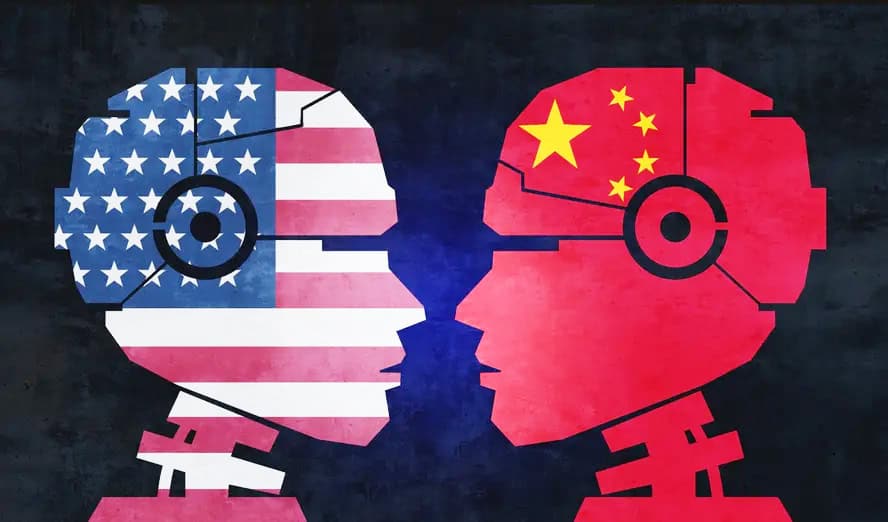
China is currently leading in this critical area. The country has invested heavily in energy supply and distribution infrastructure, giving its growing network of AI data centers a strong operational foundation. In contrast, the United States, despite being a leader in chip design and AI models, has failed to prioritize energy in its industrial policy, leaving its data centers vulnerable to bottlenecks and potentially slowing future AI expansion.
Europe, meanwhile, finds itself at a crossroads. Its energy networks could become a strategic advantage in the AI sector, as EU policy explicitly recognizes grid capacity as vital for technological autonomy and security. European manufacturing facilities producing zero-emission strategic technologies are expected to meet at least 40% of annual development energy needs by 2030.
However, high energy costs and slow execution of grid projects—averaging more than a decade per project, with half that time spent on permitting—pose significant challenges. While planning occurs at a continental level, implementation remains fragmented, limiting Europe’s ability to capitalize quickly on its potential.
The upcoming stage of the AI race, therefore, will be an energy race. Strengthening domestic chip production and upgrading electricity infrastructure, China is addressing every critical dimension of this challenge. The United States risks falling behind if it continues to focus solely on chip and model design without reforming energy policy. Europe, positioned to make AI energy cleaner and more secure, must accelerate institutional reforms to match its strategic potential.
As Vittorio Gualione notes, “The AI race is no longer just about talent and technology—it’s about who controls the energy that powers the machines.” Countries that fail to align energy strategy with AI ambitions may soon find themselves trailing in a field increasingly defined by power, watts, and infrastructure.
Stay updated with the latest news from Greece and around the world on greekcitytimes.com.
Contact our newsroom to share your updates, stories, photos, or videos. Follow GCT on Google News and Apple News.
