
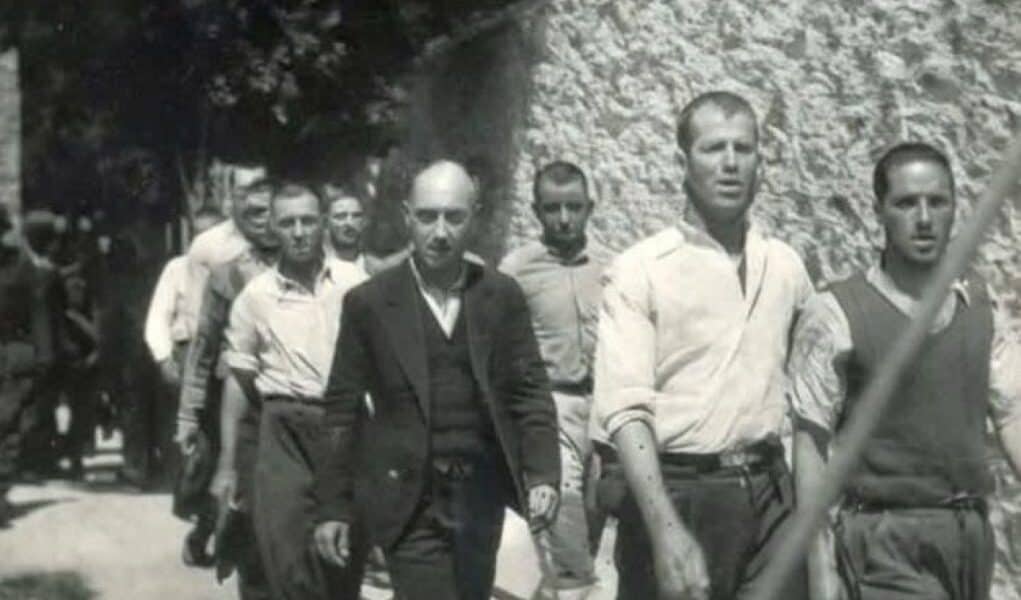
Greek Ministry of Culture experts prepare to travel to Ghent on Friday to examine the authenticity of newly revealed photographs documenting the Nazi execution of 200 Greek detainees in Kaisariani on 1 May 1944.
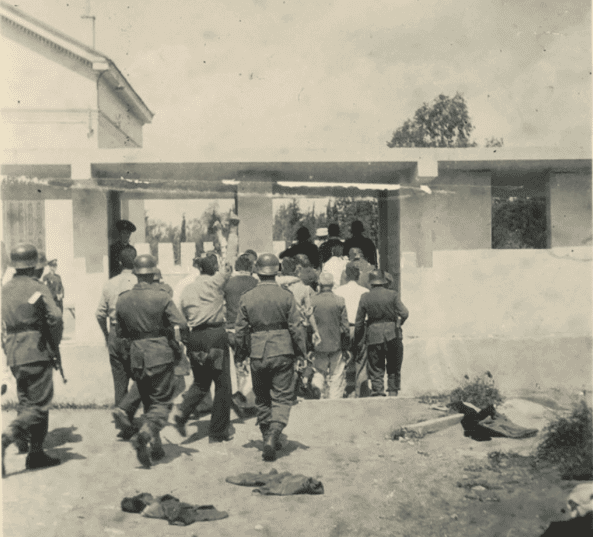
The images triggered strong emotion among relatives, witnesses, unions, municipalities, academics, and mass organisations, who called on the Greek state to acquire the material immediately. Supporters said the photographs carried priceless historical value and preserved a record of the victims’ final moments.
Relatives described the photos as a source of pride and grief, while the campaign for their acquisition gained momentum across Greece. Dimitris Kyriakoudis, a relative of one of the executed, said the photographs should be obtained by the Greek state and placed at the Resistance Museum in Kaisariani, adding that the Communist Party of Greece (KKE) held a rightful claim because most of the executed belonged to it.
Eyewitness testimony reignited public memory of the executions. Theodora Dolianitou, who witnessed the events, said people gathered in the grove after learning the execution was taking place and described how bodies were collected and thrown “like sacks”.
Relatives also recalled the moral strength of those executed. They said prisoners travelled from Haidari to Kaisariani in trucks and threw pieces of fabric carrying their final messages. Vassilis Ampeloggiannis, another relative, said one man threw a red handkerchief marked in pencil with words that included: “This is how free people die. Long live the Greek people.”
Researchers continued efforts to identify those shown in the photographs, mainly using images from the KKE archive. Investigators suggested one photo may show Thrasyvoulos Kalafatakis, executed at the age of 30, and Dimitris Papadopoulos, president of the Builders’ Federation. The newspaper Ta Nea also reported it identified Christos Kouveliotis, a leading figure in the KKE and the agricultural movement.
As public pressure grew, the Municipality of Haidari called for Block 15 of the Haidari camp—where the 200 detainees were held before their transfer—to be turned into a National Resistance museum.
The case centred on a Belgian collector who had offered the photographs for sale and who, according to reports, withdrew them from an online auction platform after the revelations. The collector told the Belga news agency he would keep his distance until he communicated with Greek authorities.
Reports said the collector studied Art History at Ghent University and had operated since 2015 through an online business specialising in Third Reich military documents and objects. The same reports said he had sold around 47,000 items to date. The Flemish newspaper Nieuwsblad reported item prices ranged from €5 to €550, with listings reaching up to 1,000 per month.
READ: Greece to Acquire Rare Photos of 1944 Nazi Execution of 200 Resistance Fighters
Stay updated with the latest news from Greece and around the world on greekcitytimes.com.
Contact our newsroom to share your updates, stories, photos, or videos. Follow GCT on Google News and Apple News.
