
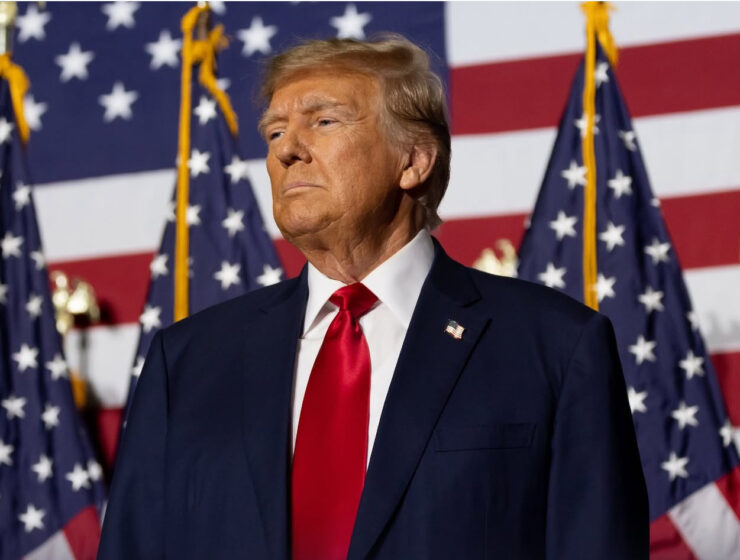
President Donald Trump described US-Greece relations as stronger than ever, praising Athens’ progress toward 5% defense spending in NATO, expanding energy cooperation, and growing strategic and economic ties.
Tag: Defense Spending
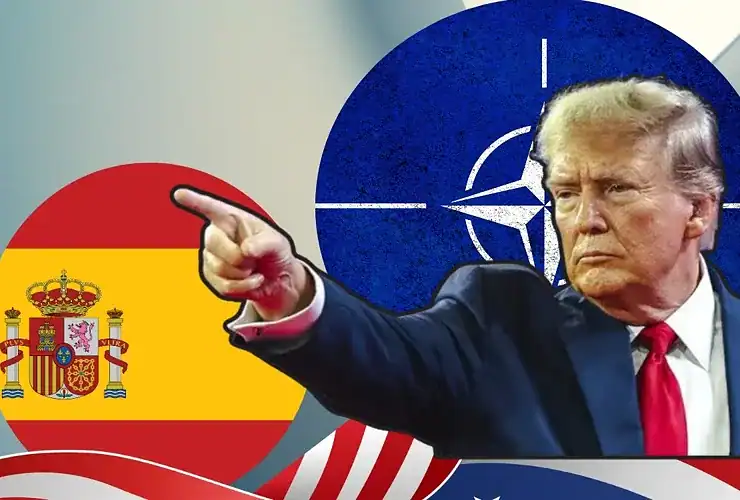
President Donald Trump on Tuesday threatened trade penalties, including tariffs, against Spain, saying he is…

Greece and the US are negotiating updates to their Mutual Defense Cooperation Agreement, focusing on new military bases. While Athens pushes for island bases like Skyros, the US prefers mainland sites like Petrochori and Dalipis, alongside maintaining strategic hubs like Souda Bay and Alexandroupoli.

Kimberly Guilfoyle, soon to be U.S. Ambassador to Greece, addressed concerns about Turkish provocations and F-35 transfers during her Senate hearing, highlighting bipartisan support for Greek-American relations and Greece’s strong NATO contributions.
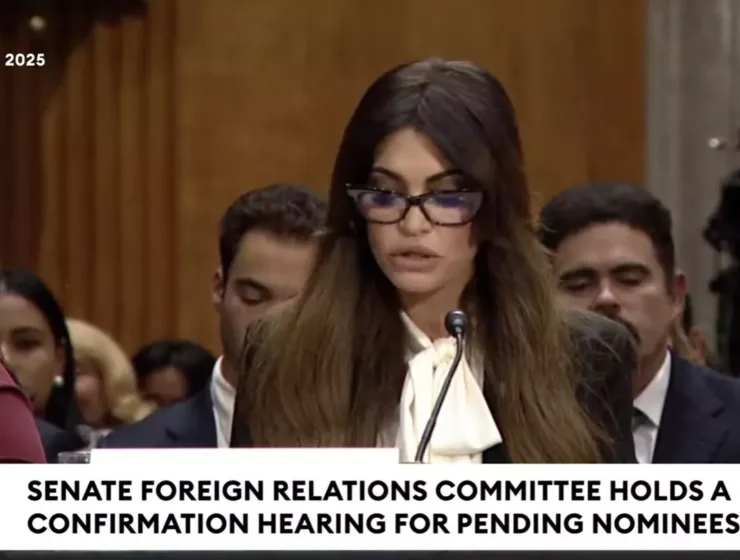
Kimberly Guilfoyle, the U.S. ambassadorial nominee, expressed concerns over Turkey’s alignment with NATO due to its acquisition of Russia’s S-400 missile systems, emphasizing that allies must align with the Alliance’s needs. During her Senate confirmation hearing, she underscored Greece’s role as a pillar of stability and a reliable NATO ally, highlighting its defense investments and emerging status as an energy hub.
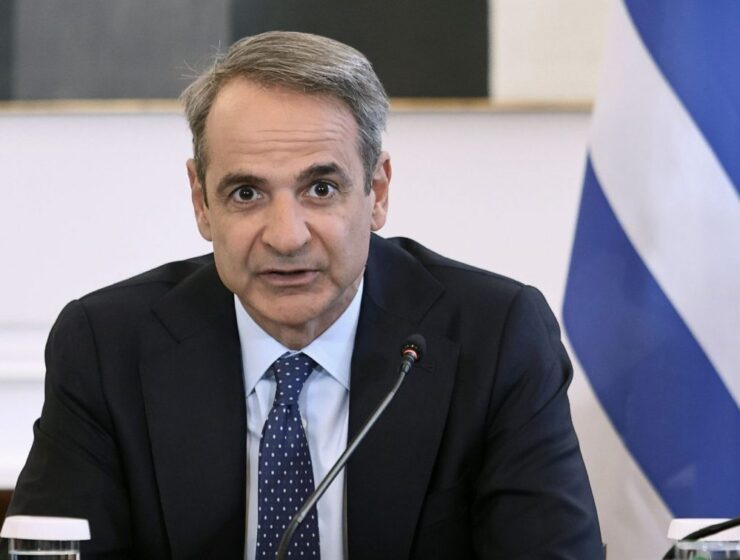
At the NATO Summit in The Hague, Prime Minister Kyriakos Mitsotakis will discuss enhancing NATO’s defense capabilities, focusing on a new 5% GDP defense investment plan by 2035. Greece, exceeding the 2% target with over 3% GDP spending, remains committed, with Mitsotakis advocating for a strong European defense pillar.
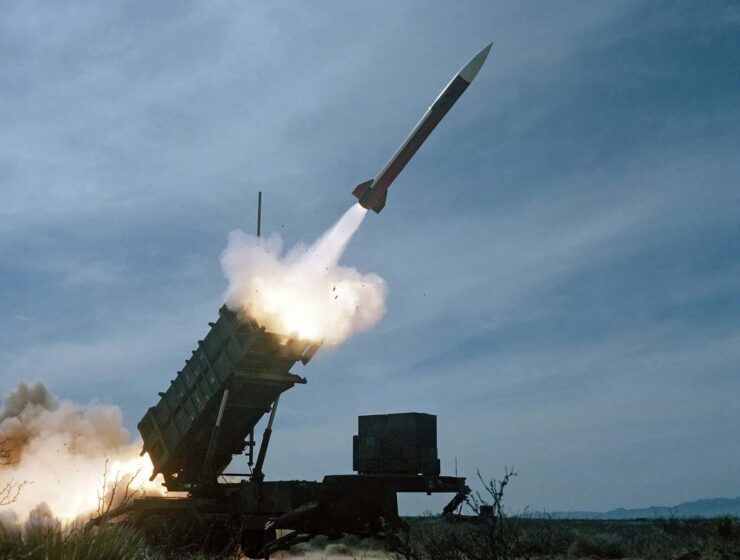
NATO urges European members to boost ground-based air defense fivefold to counter Russian threats. Defense ministers will discuss plans in Brussels, targeting 5% GDP defense spending and reduced US reliance.
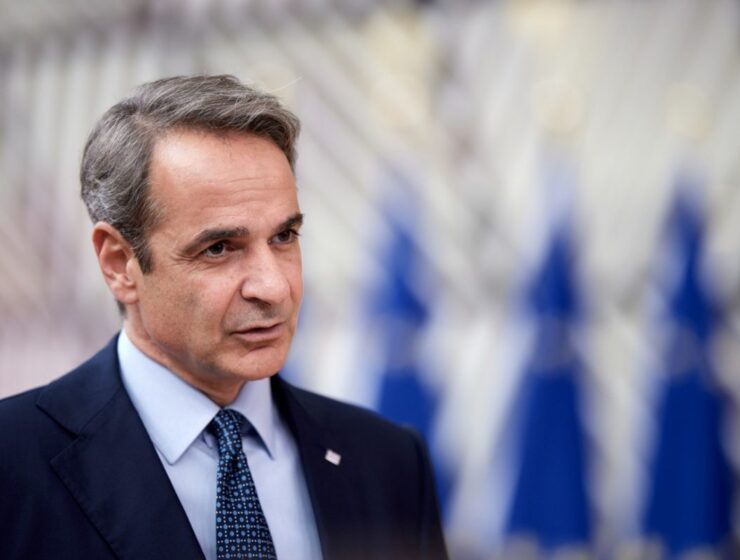
Greece’s Prime Minister Kyriakos Mitsotakis called President Trump’s 5% NATO defense spending goal “very difficult” for most members, suggesting 3.5% as a more realistic ceiling. While Greece met the current 2% target last year, Trump’s push and Russia’s war in Ukraine are driving increased defense investments across NATO, with Germany and Spain announcing significant commitments.
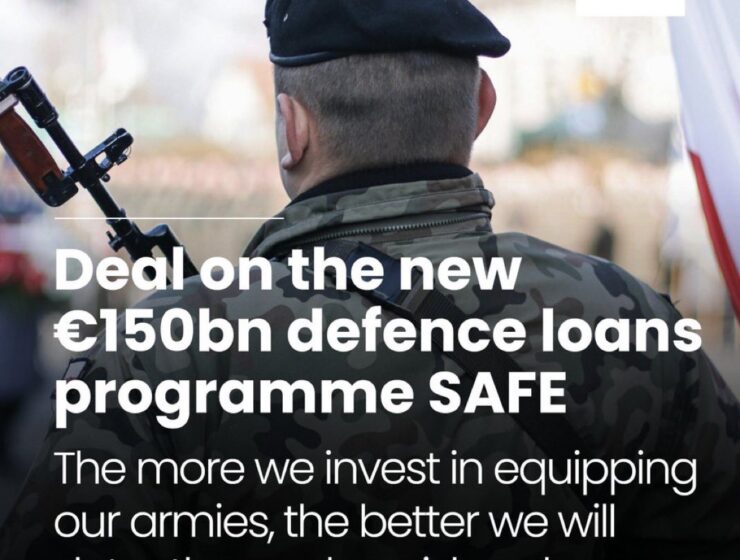
The EU has finalized the SAFE loan instrument, providing €150 billion in low-interest loans for defense spending. Poland, leading negotiations, ensured U.S. and South Korean weapon systems are included in the deal.
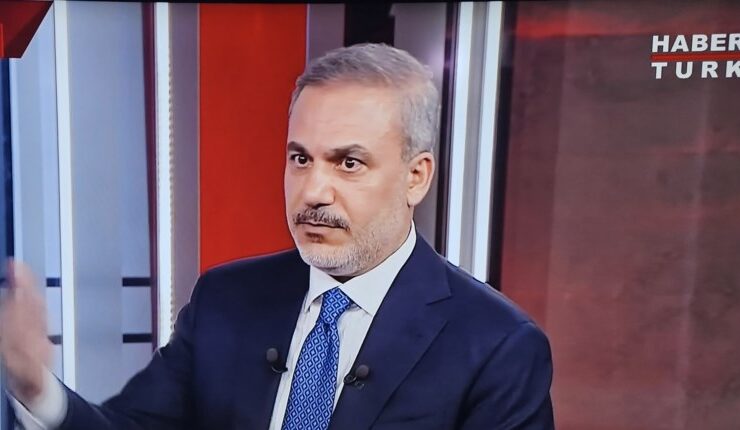
Turkish Foreign Minister Hakan Fidan will attend a NATO meeting in Brussels on April 3-4, 2025, to discuss European security, Ukraine, and collective defense, following talks in Paris with French Foreign Minister Jean-Noël Barrot. The meeting marks the first consultation with the new US administration and includes sessions with Asia-Pacific partners and the NATO-Ukraine Council.

Greece is set to unveil a major military overhaul, investing 26 billion euros by 2036 in new weapons systems, including the “Achilles’s Shield” anti-aircraft defense, as it doubles its defense budget to counter regional tensions and modernize its forces.
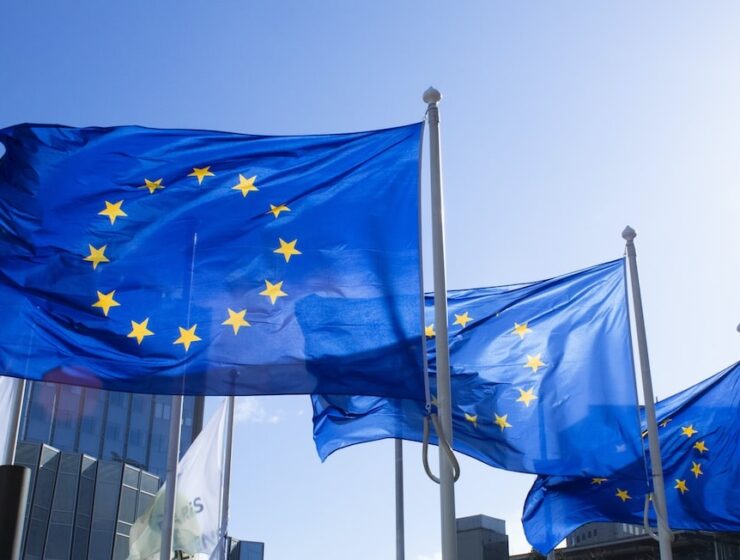
The European Union will exclude defense companies from the USA, UK, and Turkey from a new €150 billion defense fund unless their countries sign security agreements with Brussels. Open only to EU firms and third countries with defense pacts, the initiative also bans advanced weapons systems like the U.S.-made Patriot, pushing a “Buy European” approach amid concerns over U.S. reliability.

Prime Minister Kyriakos Mitsotakis addressed recent protests and the Tempi train tragedy, stating, “The majority demanded truth, justice, and modern trains—we must move faster to reform the state. This majority will judge us in 2027.” Alongside political reflections, he highlighted economic growth (2.3% in 2024), a 17-year low unemployment rate (8.7%), and new initiatives in health, housing, tourism, and energy exploration.
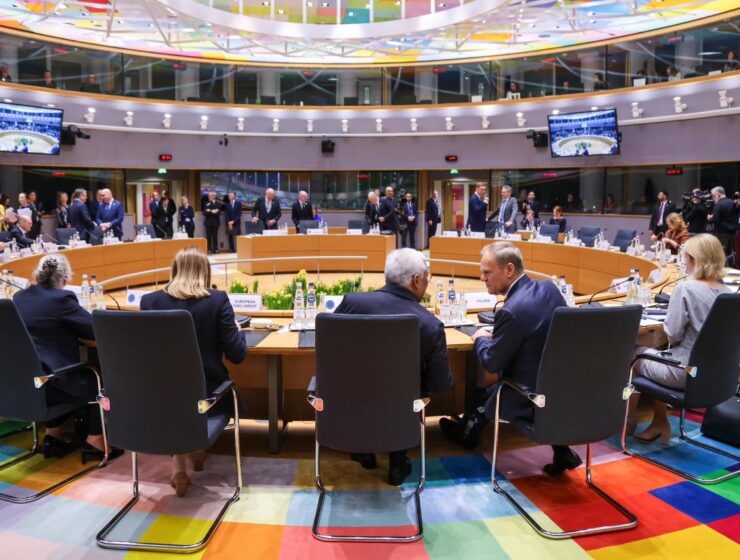
All 27 EU member states have approved the ReArm Europe program, which will allocate EUR 800 billion to enhance Europe’s defense capabilities. This move aims to strengthen military preparedness and address global security challenges.
Greek Prime Minister Kyriakos Mitsotakis emphasized on Thursday the necessity of including the United States in any security guarantees for Ukraine post-ceasefire. “Securing Ukraine’s future is crucial, and the United States must be a key participant in this security framework,” Mitsotakis stated upon arriving at a European leaders’ meeting in Brussels.

U.S. President Donald Trump’s decision to pause military aid to Ukraine challenges Europe to step up its own support. As European leaders discuss potential measures, questions arise about Europe’s readiness and political will to fill the funding gap. European Commission President Ursula von der Leyen has proposed increased defense spending, but the focus seems split between bolstering EU’s defenses and directly aiding Ukraine. Meanwhile, internal EU disagreements could further complicate efforts to provide the necessary support to Kyiv.
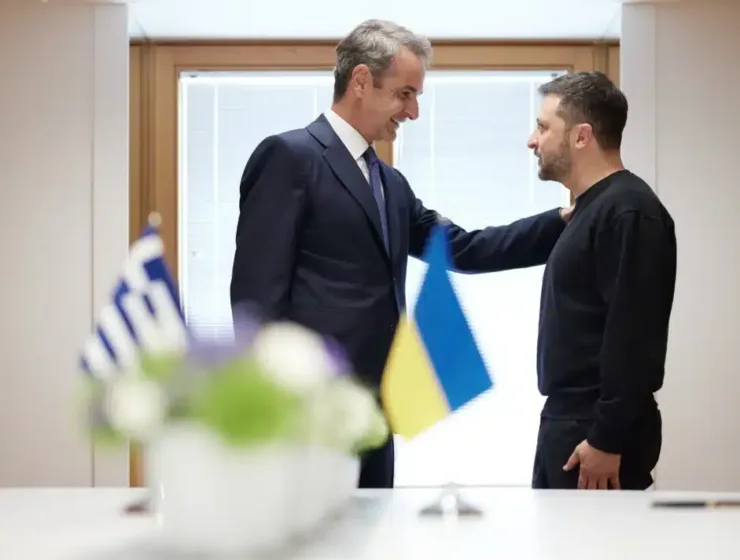
Prime Minister Kyriakos Mitsotakis had a second phone conversation within 10 days with Ukrainian President Volodymyr Zelensky, ahead of an emergency summit on Ukraine. The discussion focused on the latest developments and the EU’s commitment to peace, with Greece reiterating its support for Ukraine. European Commission President Ursula von der Leyen announced a plan to bolster Europe’s defense industry with an 800 billion euro investment, facilitating immediate aid to Ukraine.
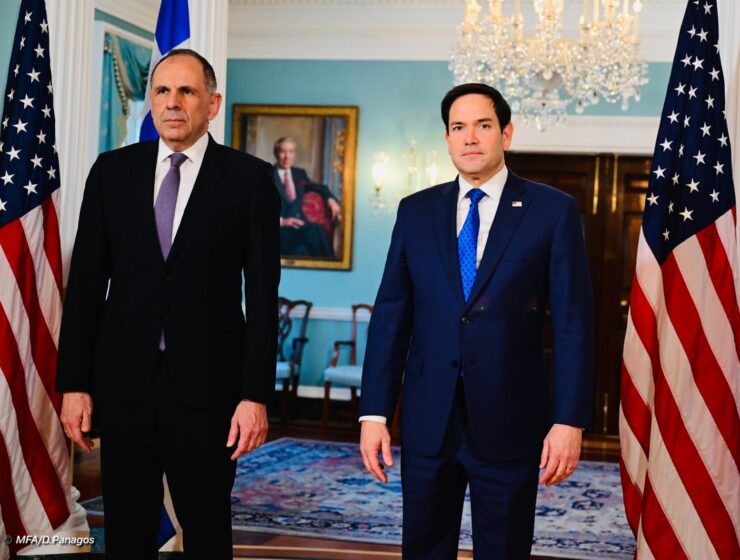
The US and Greece reaffirmed their strategic partnership, focusing on key issues like illegal migration, defense spending, and energy cooperation. The US welcomed Greece’s upcoming UN Security Council term and praised its commitment to regional stability.

NATO defense spending has surged since 2014, with countries like Poland, Hungary, and Lithuania leading the way in massive budget hikes. In 2014, only three members—including Greece, at 2.36% of GDP—met the 2% target. By 2024, that number soared to 23 out of 31, with the U.S. still dominating at $754.7 billion.

Greek Prime Minister Kyriakos Mitsotakis has endorsed European Commission President Ursula von der Leyen’s proposal to exempt defense spending from EU fiscal constraints, a move aimed at bolstering member states’ defense capabilities and enhancing Europe’s collective security. During her speech at the Munich Security Conference, von der Leyen emphasized the need for Europe to increase defense investments, proposing to raise spending above 3% of GDP, and announced plans to activate the Stability Pact’s escape clause for defense purposes.

If countries like Canada, Germany, and the Netherlands don’t contribute their fair share to NATO,…

Greek Defense Minister Nikos Dendias warned of Turkey’s neo-Ottoman ambitions, citing their pursuit of regional resources and controversial geopolitical activities in the Aegean and Middle East. He expressed concern over potential claims on Greek islands and the destabilizing impact on NATO, particularly given the ongoing Russia-Ukraine conflict. Dendias suggested that the US could play a role in urging Turkey to respect international law. He also highlighted the “Blue Homeland” military exercises as evidence of this concerning trend.
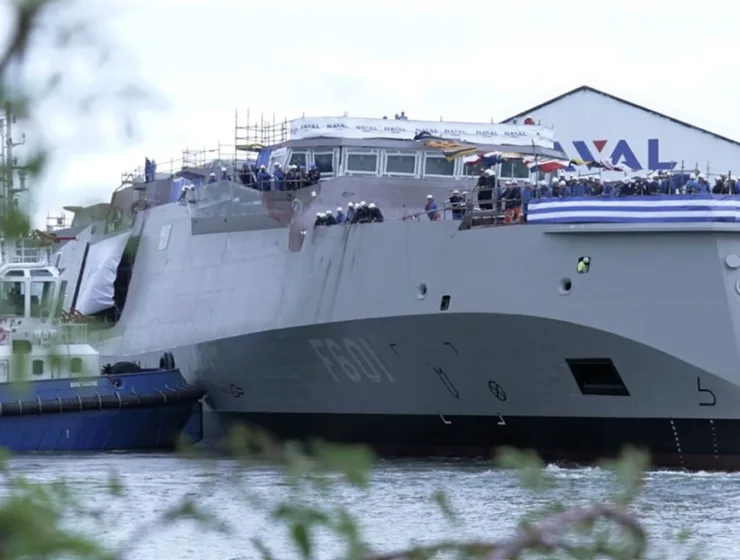
Greece’s acquisition of Belharra frigates from France faces a nine-month delay, with the first delivery now expected in late 2025. Despite this, Greece anticipates operating three frigates by the end of 2026 and is currently negotiating the purchase of a fourth.
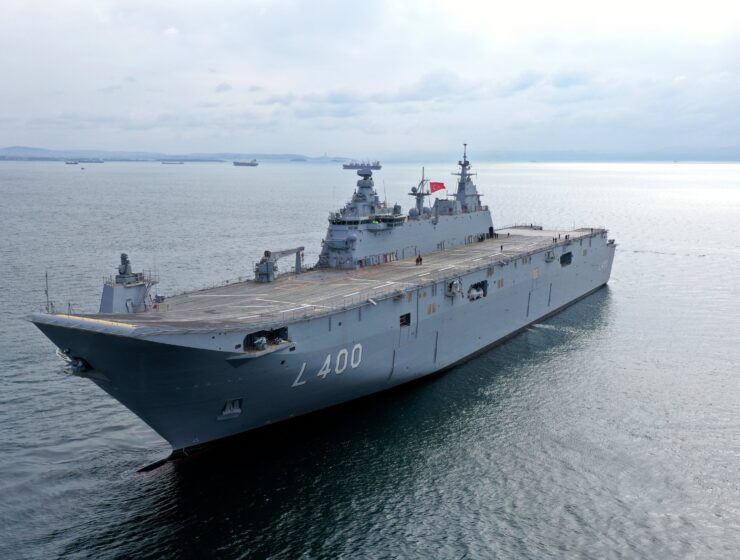
The launch of two new Turkish frigates highlights Ankara’s expanding naval ambitions in the Mediterranean, Aegean, and Black Seas, bolstered by its growing domestic defense industry. Rooted in the “Blue Homeland” doctrine, this strategy has fueled maritime disputes with Greece and Cyprus over boundaries and resources. With 29 ships under construction and a defense budget of $45 billion for 2025, Turkey aims to assert itself as a regional and global naval power, reducing reliance on Western suppliers and promoting its advanced unmanned surface vehicle programs.

Greek Prime Minister Kyriakos Mitsotakis addresses key issues with former Italian Prime Minister Enrico Letta, discussing the rise of the far right, the “woke” agenda, geopolitical challenges, and Greek-Turkish relations. Mitsotakis reaffirms traditional views on gender, critiques extremes in American universities, and outlines New Democracy’s stance against far-right influence. He calls for increased European defense spending amid potential trade tensions with the US. Greece’s strategic defense position is highlighted, as is a cautious approach to Greek-Turkish diplomatic developments.
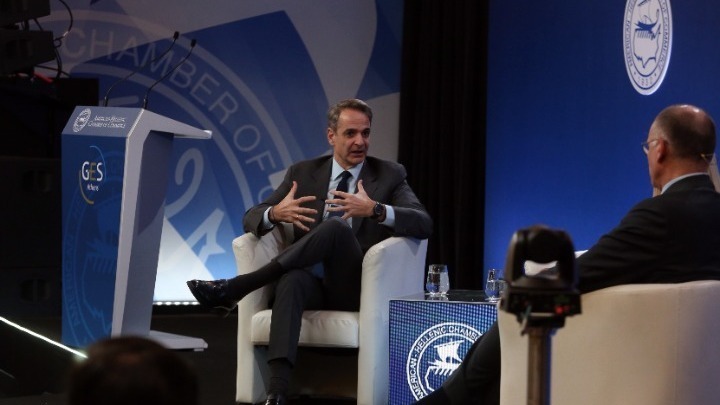
Prime Minister Kyriakos Mitsotakis discussed the future of EU-US relations and defense policy during a conversation at a Greek-American Chamber of Commerce event. He emphasized the need for greater European defense spending and a shift in NATO’s approach to security, alongside the impact of recent U.S. elections on transatlantic ties. Mitsotakis also shared insights on Greece’s strategic role within Europe and the global order.
Greek Prime Minister Kyriakos Mitsotakis expressed that Donald Trump’s election has motivated Europe to move from words to actions, particularly in defense spending and fostering stronger cooperation with the U.S. Mitsotakis emphasized the importance of Europe’s unity in facing global challenges and proposed bold initiatives for the future of the EU.
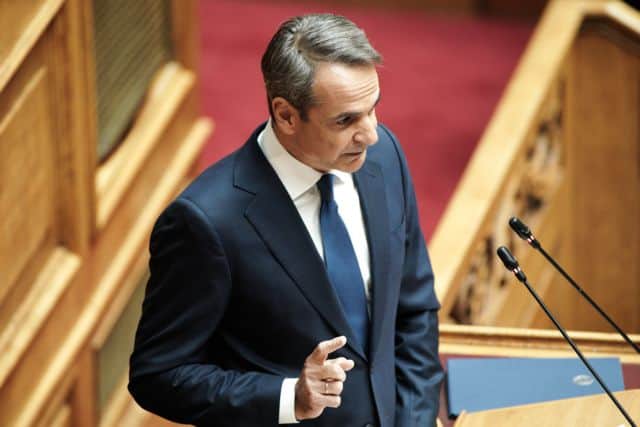
Greece’s ruling New Democracy party has approved the 2025 budget with a focus on increased defense spending, gaining strong cross-party support amid economic challenges. This decision highlights Greece’s strategic commitment within NATO, as tensions with neighboring Turkey persist. Meanwhile, social unrest grows due to rising prices of essential goods, adding to the political complexities facing the government.

Greek Prime Minister Kyriakos Mitsotakis expressed skepticism about the potential for progress in Greece-Turkey disputes over the delimitation of the Exclusive Economic Zone (EEZ) and continental shelf. Addressing criticisms, Mitsotakis reaffirmed Greece’s firm stance and criticized attempts to portray his administration as less patriotic. He highlighted recent developments in Greek-Turkish relations and urged caution in interpreting Turkey’s regional influence. Additionally, he defended Europe’s involvement in the Ukraine conflict and emphasized the need for collective security in response to shifting dynamics.

The debate on Greece’s 2025 state budget begins today in Parliament, set to conclude with a vote on Sunday evening. This year’s discussions unfold in a changed political landscape, with PASOK returning as the second-largest party after over a decade. The government is promoting the budget as a plan to boost incomes through tax cuts and economic reforms, while opposition parties are expected to challenge key aspects, including defense spending. The debate also takes place amid ongoing crises in military hospitals and allegations of corruption in urban planning authorities.
