
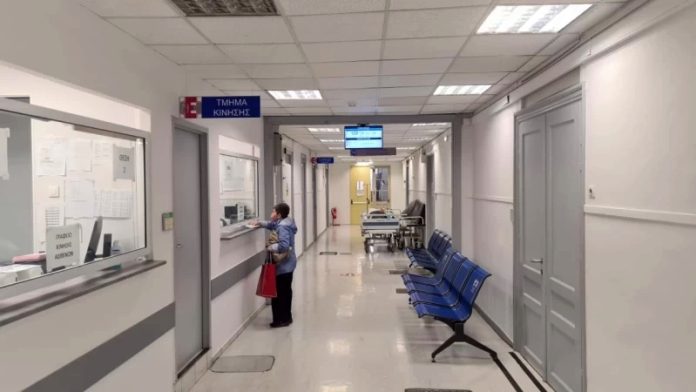
The Greek Civil Service Authority (ASEP) issued the 1K/2026 recruitment notice for the filling of…
Tag: employment
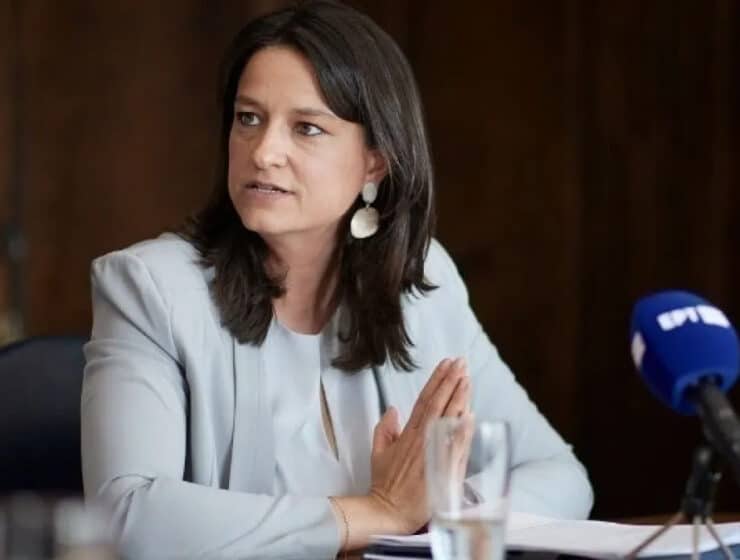
The average full-time salary in Greece’s private sector exceeded €1,500 in 2025, reaching €1,516, a…

Greece created more than 563,000 new jobs between December 2019 and December 2025, while full-time…

Greece recorded its second-best unemployment performance in the past 22 years in December, with the…

Greece’s unemployment rate fell to 8.2% in November 2025, marking a significant improvement compared with…

The presence of women in Greece’s maritime profession is growing, with the latest NAT report…
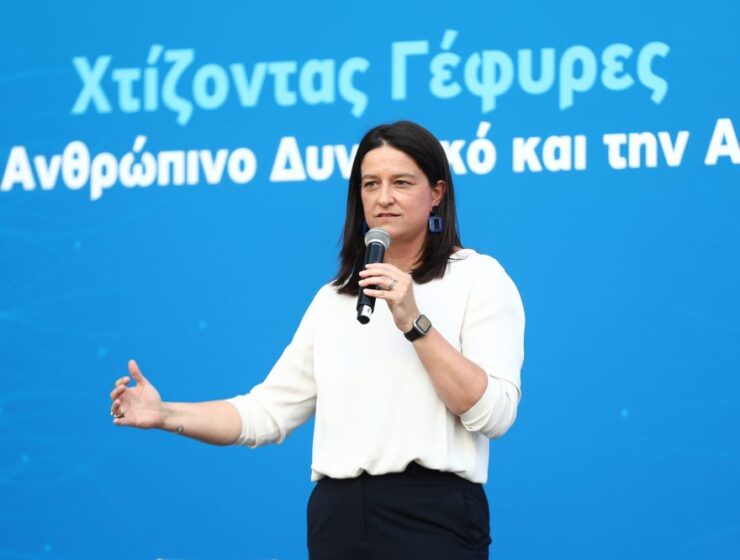
Greece has recorded an additional 1.8 million declared overtime hours compared to last year, Labour…

The Greek government and all national social partners have, for the first time, signed a…

Greek Deputy Prime Minister Kostis Hatzidakis visited the Hellenic Cables plant in Corinth to mark…

Greece ranks first in the EU for the longest working hours, with one in five employees working more than 45 hours per week, according to Eurostat data. The country also records one of the lowest rates of part-time employment, highlighting ongoing challenges in achieving work–life balance.

In Greece, people with disabilities face dire circumstances, with the country ranking second-worst in the EU for their living conditions. According to the National Confederation of Persons with Disabilities, half of those aged 16–64 live in poverty or social exclusion, while 80% cut essential expenses to afford healthcare. With only 25.3% in the workforce and soaring housing costs, many, especially the elderly, are pushed to the margins of society.
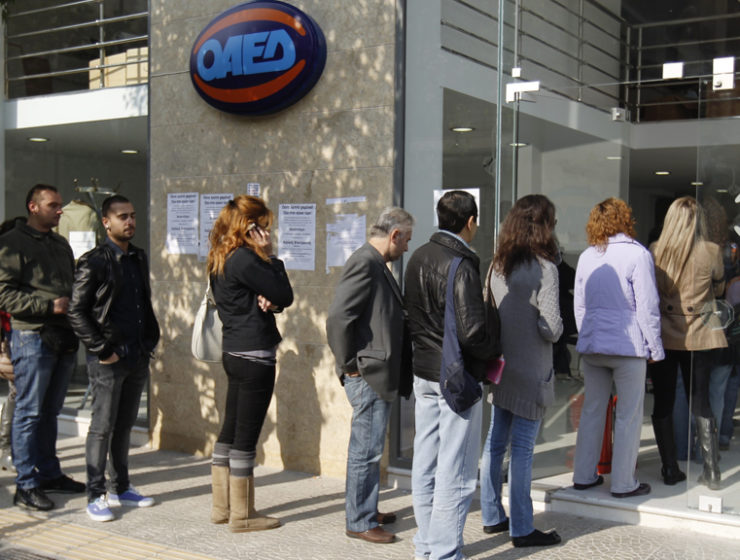
Greece’s unemployment rate dropped to 8.6% in Q2 2025, down from 10.4% in Q1 2025 and 9.8% in Q2 2024, with July 2025 at 8%. The number of unemployed fell to 411,722, a 15.7% decrease from the previous quarter, while employment rose to 4,386,832, up 4.0%.

Giannis Retsos, IOBE president, warns that 2026 could see Greece’s tourism revenue drop for the first time in years due to competitive pressures and economic challenges in key markets. He calls for strategic investments and competitive pricing to sustain the sector’s growth.

Nearly one in three Greek workers cannot afford even a small weekly personal expense, according to a new report by the Labour Institute of GSEE. Despite being employed, a significant share of Greece’s workforce lives in poverty—placing the country second in the EU for rates of working poor and highlighting deepening economic hardship and social deprivation.

Greece’s unemployment rate dropped to 8.3% in April 2025, down from 10.8% a year earlier, according to ELSTAT. The number of unemployed fell by 128,525, with women’s unemployment at 10.8% and men’s at 6.3%. Youth unemployment (15-24) also declined to 20.4%, signaling a strengthening labor market.
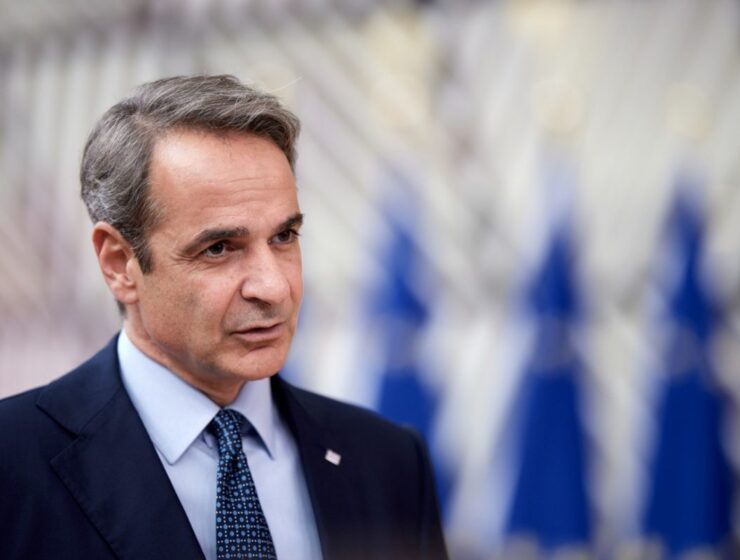
In his weekly address, Greek Prime Minister Kyriakos Mitsotakis highlighted robust economic growth projections of 2.3% for 2025, a 24% rise in incomes since 2019, and record tax declaration submissions

Greece ranks 10th globally for crypto job opportunities, joining five other European nations in the top 10. Singapore leads with 68.68 jobs per million people, nearly double Luxembourg’s 37.82. Major financial hubs like Hong Kong, UAE, and Switzerland dominate, driven by clear regulations and innovation-friendly environments, according to a LegalBison study.

Greek workers clocked the longest hours in the EU in 2024, averaging 39.8 hours per week—well above the EU average of 36.0 hours, according to new Eurostat data. Greece also topped the charts for weekend work, with 32.3% of employees regularly working Saturdays and Sundays. The findings highlight major disparities in work culture and labor conditions across Europe.

Greek Prime Minister Kyriakos Mitsotakis outlined 15 key employment reforms, highlighting record job creation, a rising minimum wage, and new worker protections, while setting ambitious targets for wage growth and labour rights by 2027.

Prime Minister Kyriakos Mitsotakis hopped on TikTok on April 1, 2025, to spotlight Greece’s minimum wage, now at 880 euros gross—or 743 euros net—revisiting a hike announced earlier this year. He underscored the rise from 650 euros in 2019, a gain of 3,000 euros annually for workers, and reaffirmed plans to hit 950 euros by 2027, keeping over 1.6 million Greeks in focus.

The National Intelligence Service (EYP) has launched its first major hiring initiative in five years, seeking 310 new staff members by 2025, including cybersecurity specialists and field operatives, to support its modernization goals and the establishment of a new Intelligence and Counterintelligence Academy

The Greek tax administration is digitizing and simplifying the process for wealthy foreigners, pensioners, and employees moving to Greece for tax benefits. Starting in June, obtaining a tax registration number will take just days instead of months, with applications submitted online and monitored through a new electronic platform.

In his weekly address on March 16, 2025, Greek Prime Minister Kyriakos Mitsotakis announced the University of York’s plans to establish branches in Greece and celebrated Moody’s upgrade of Greece to investment grade. Highlighting government initiatives in health, justice, and education, he also addressed economic progress, urban redevelopment in Mati, and a commitment to legality, including crackdowns on crime and deceptive business practices.

Greece remains one of the EU countries with the highest share of low-wage earners, with 21.7% of employees earning two-thirds or less of the median wage. Young workers, those with lower education levels, and employees in sectors like hospitality and administrative services are the most affected. While the EU’s overall share of low-wage earners has declined since 2018, Greece’s persistent wage disparities highlight ongoing labour market challenges.

Prime Minister Kyriakos Mitsotakis chaired the first meeting of Greece’s Special Committee for Autism, focusing on policies to enhance lifelong support for individuals on the spectrum. Key discussions included early diagnosis, specialized education, vocational training, and social inclusion. The government aims to implement international best practices to ensure equal opportunities and integration for autistic individuals in all aspects of society.

Microsoft’s new Data Center in Spata marks a pivotal strategic investment for Greece, promising economic growth and digital transformation. During a visit by key Ministers, CEO Gianna Andronopoulou outlined the project’s advancements and benefits, including cloud service access and local innovation support. The initiative also features a comprehensive program to enhance education, employment, and cultural heritage in the region.

The Greek Ministry of Social Cohesion and Family Affairs has doubled the funding for its “Housing and Employment for the Homeless” program to 20 million euros. The expanded initiative will provide social housing, training, and subsidized employment for vulnerable groups, while also offering support for those looking to start their own businesses. The program’s reach has grown from 42 to 89 municipalities, now including families in public housing and those in precarious living conditions.

Greece faces a critical labor shortage, urgently needing over 300,000 foreign workers to support its economy. Bureaucratic hurdles hinder recruitment efforts, while the streamlined EU Blue Card program aims to attract highly skilled professionals.
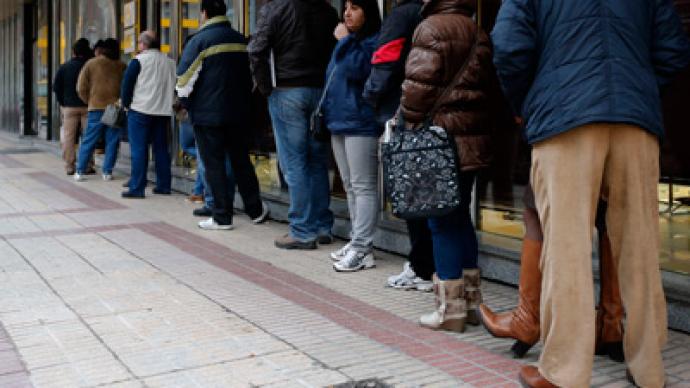
Greece’s unemployment rate fell to 9.8% in October 2024, down from 10.8% a year earlier but up slightly from September. While employment rose, concerns remain about high youth and long-term unemployment.

CQS has been named the top employer in Greece for 2024, according to Poudouleveis.gr. The list, based on employee reviews, highlights companies excelling in career advancement, compensation, and workplace culture, with CQS leading the rankings.
