

The average full-time salary in Greece’s private sector exceeded €1,500 in 2025, reaching €1,516, a…
Tag: labour-market

Greek employers submitted requests to hire 4,200 unemployed women within the first week of a…

Greece created more than 563,000 new jobs between December 2019 and December 2025, while full-time…

Greece’s unemployment rate fell to 8.2% in November 2025, marking a significant improvement compared with…

The total number of registered unemployed in Greece reached 894,065 in November 2025, according to…

Greek employees are set to benefit from a triple increase in earnings in 2026, driven…

The Greek government and all national social partners have, for the first time, signed a…

Greece ranks first in the EU for the longest working hours, with one in five employees working more than 45 hours per week, according to Eurostat data. The country also records one of the lowest rates of part-time employment, highlighting ongoing challenges in achieving work–life balance.
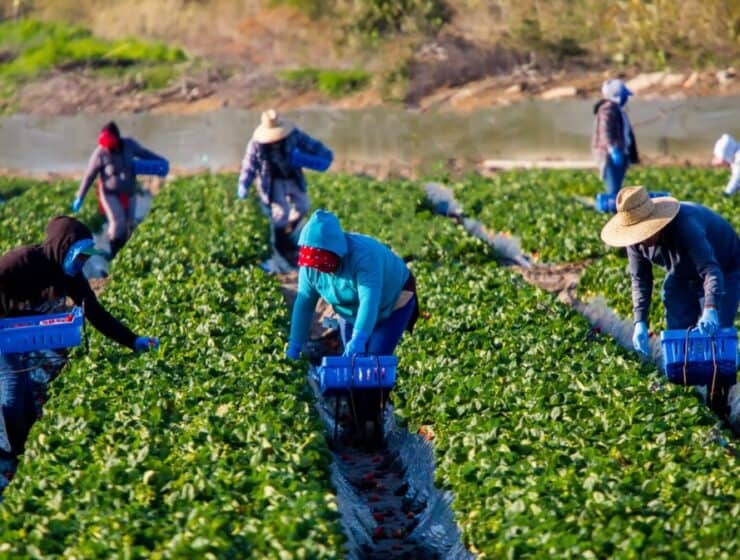
Greece has launched a new training scheme for refugees and migrants with residence permits, supported by the International Organization for Migration (IOM). Funded by the EU’s Recovery and Resilience Facility, the programme focuses on key sectors such as agriculture, construction and tourism, while also offering tailored opportunities for women to boost employment and social inclusion.

A transformative labour bill set to hit the Greek Parliament this September promises sweeping changes to the workplace, introducing up to 13-hour workdays with overtime pay and expanding flexible scheduling. Alongside, the Ministry of Labour is pushing for stronger collective bargaining, aiming to increase worker coverage from 25-30% to 80% by year-end. As social partners submit proposals, debates intensify over balancing flexibility with worker protections in Greece’s evolving labour market.

Nearly one in three Greek workers cannot afford even a small weekly personal expense, according to a new report by the Labour Institute of GSEE. Despite being employed, a significant share of Greece’s workforce lives in poverty—placing the country second in the EU for rates of working poor and highlighting deepening economic hardship and social deprivation.

In 2023, the EU reached a historic low in unemployment, with the overall rate for individuals aged 15-74 dropping to 6.1%. However, Greece faced higher-than-average challenges, recording the highest long-term unemployment rate in the EU at 6.2%, as well as a notable youth unemployment rate of 9.8%. While countries like Denmark and Czechia saw much lower unemployment levels, Greece continues to struggle with integrating young people and long-term jobless individuals into the workforce.
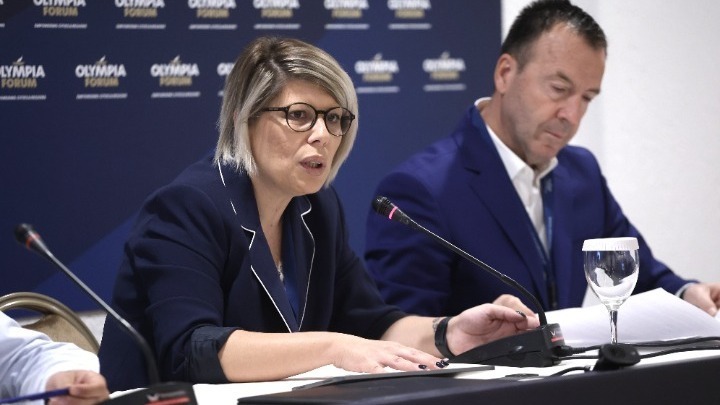
Migrants could play a vital role in addressing Greece’s severe labour shortages, according to Dimitra Lygoura, Secretary General for the Reception of Asylum Applicants. Speaking at the 5th Olympia Forum, she highlighted significant gaps in key sectors like agriculture and tourism, with nearly 200,000 workers needed. Lygoura also emphasised the importance of early social integration for migrants, noting that 750,000 legal migrants are already employed in Greece, contributing to the economy and gaining financial independence through supportive policies.

The employment rate in Greece saw a notable increase of 0.9 percentage points in the first quarter of 2024, contributing to the overall EU employment rate of 75.7%. This rise highlights Greece’s improving job market amidst a generally stable EU labour market, as reported by Eurostat.

Nearly 5,000 applications have been submitted for a new type of work permit designed for…
