
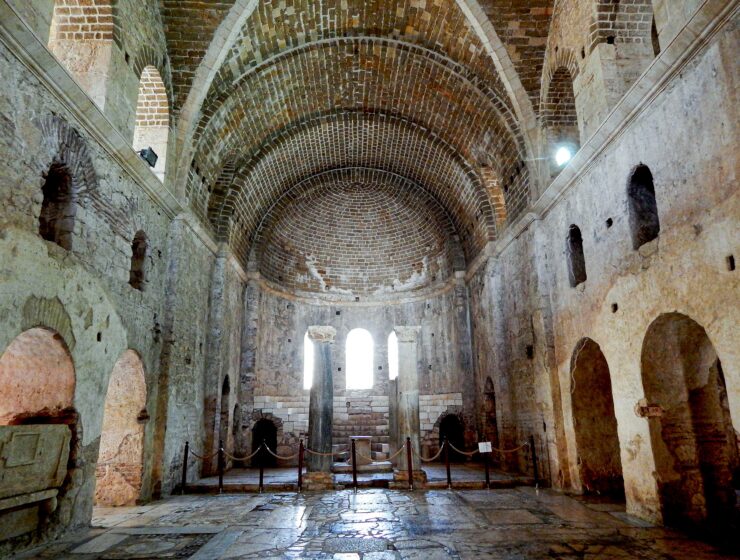
Archaeologists in Turkey have uncovered a limestone sarcophagus near the original burial site of Saint Nicholas at the historic Byzantine Church of St. Nicholas in Antalya Province. The discovery may provide the strongest physical evidence yet of the real figure who inspired Santa Claus.
Tag: sarcophagus

Archaeologists in Caesarea, Israel, uncovered a 2,000-year-old Roman-era marble sarcophagus depicting a wine-drinking contest between Dionysus and Hercules. This unique find, featuring intricate reliefs of mythological figures, expands the known boundaries of the ancient city and offers insights into Roman beliefs about death and the afterlife.

Archaeologists in Corinth have unearthed a Hellenistic-era funerary structure, resembling Macedonian tombs, during the “Ancient Tenea” program, revealing a possible healing cult with artifacts like a gold ring depicting Apollo. The site, excavated in Chiliomodi, includes a sarcophagus and animal bones, with ongoing digs expected to shed light on its full historical significance.

Archaeologists have made a remarkable discovery near the original burial site of Saint Nicholas at the Church of St. Nicholas in Antalya Province, Turkey. This ancient church, rooted in the Greek Byzantine Empire, is at the center of a two-year study uncovering artifacts connected to the legendary figure of Saint Nicholas. Known for his miracles and generosity, Saint Nicholas’s legacy as the inspiration behind Santa Claus continues to captivate the world. Recent excavations have revealed a limestone sarcophagus, potentially marking his original tomb, promising significant insights into historical sources about his final resting place.
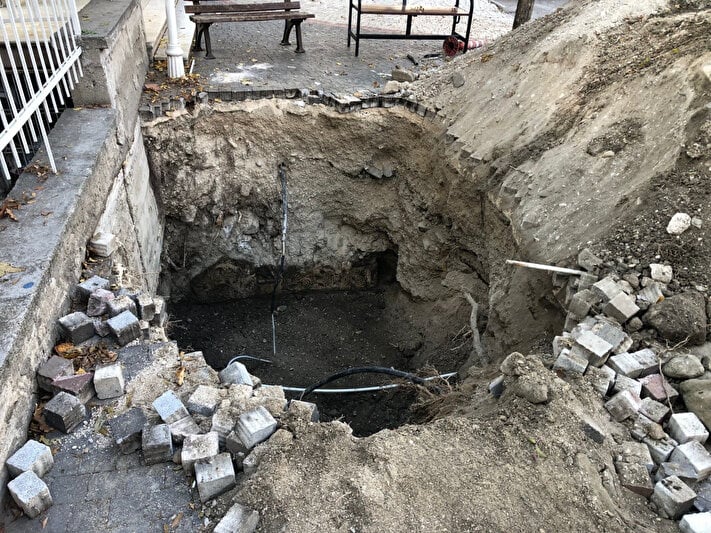
Four men posing as city workers were arrested in Isparta, Turkey, after an illegal excavation unearthed ancient artifacts, highlighting the growing problem of looting and treasure hunting in the country. The discovery of a sarcophagus and pottery fragments underscores the vulnerability of Turkey’s rich archaeological heritage, which spans Hellenistic, Roman, Byzantine, and Ottoman periods.
