
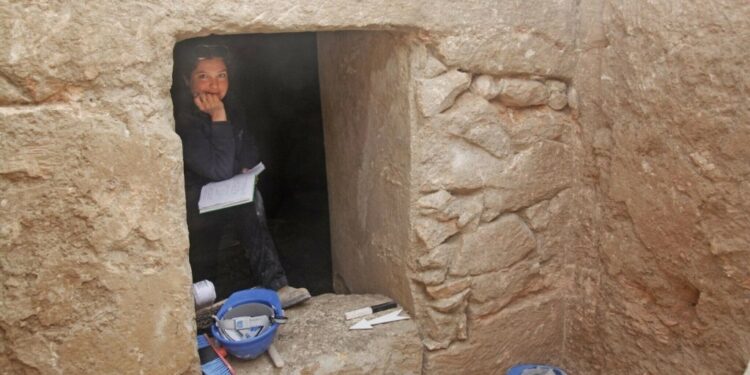
Archaeologists in Israel have unearthed the untouched tomb of an ancient Greek courtesan south of Jerusalem. The tomb, dating back to the late 4th or early 3rd century BC, contained a rare, well-preserved box-shaped relief mirror, linking the deceased to the Hellenistic period and potentially the Macedonian Empire. Such mirrors were typically dowry gifts or presents. According to excavation director Liat Oz, this is only the second such mirror found in Israel, and one of only 63 known throughout the Hellenistic world.
The tomb's isolated location at the end of a road leading to Jerusalem suggests the woman was a courtesan accompanying the army, and the mirror a gift from a soldier. Archaeologists emphasize that these courtesans played a significant companionate role beyond the sexual, sometimes even marrying soldiers.
The tomb's precise date, somewhere between the late 4th and early 3rd century BC, remains uncertain. Tel Aviv University archaeologist Guy Stiebel suggests possibilities ranging from Alexander the Great's era to the Wars of the Successors and the early Syrian Wars. Further archaeometallurgical testing is planned to pinpoint the date and shed more light on this intriguing discovery.
Stay updated with the latest news from Greece and around the world on greekcitytimes.com.
Contact our newsroom to share your updates, stories, photos, or videos. Follow GCT on Google News and Apple News.
