

Across the United States, a tradition known for its continuity rather than its change is experiencing a notable and unexpected surge in interest. Orthodox Christianity, long tied to the immigrant histories of Greek, Middle Eastern, Eastern European and Slavic communities, is drawing a new wave of young American converts who are reshaping parish life in ways few clergy anticipated.
For much of the twentieth century, Orthodox churches in America were largely built by diaspora communities who carried their faith across oceans. Their parishes functioned not only as places of worship but as cultural anchors, preserving language, identity and ritual for families establishing new lives in unfamiliar surroundings. Attendance patterns followed predictable generational shifts, with many American-born children moving to other Christian traditions or stepping back from organised religion entirely.
The pattern has begun to change. Over the past several years, clergy across multiple jurisdictions have reported record attendance at services, overflowing catechumen classes and an increase in young adults seeking formal entry into the Church. This movement is particularly visible among men in their late teens and twenties, a demographic that had previously been drifting away from organised religion in the United States for more than a decade.
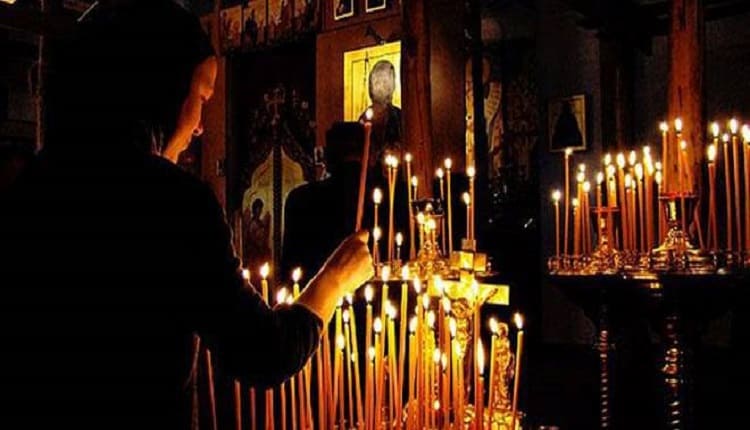
Several factors appear to be converging. Researchers studying religious behaviour note that many young adults are searching for structure, stability and a sense of rootedness in a fragmented social landscape. Orthodox Christianity offers a form of worship that emphasises continuity with the early Church, a disciplined liturgical rhythm and a distinctly sacramental worldview. The lengthy cycle of services, the use of chant, the prominence of icons and the commitment to regular fasting form a demanding pattern of life that stands in stark contrast to the casual or contemporary style associated with much of modern Western Christianity.
The appeal also reflects a broader generational shift. After years of steady secularisation, surveys in the United States indicate that a significant number of young adult men are showing renewed interest in religion, often seeking communities that take the supernatural seriously and present faith as a comprehensive way of life rather than a symbolic affiliation. In this environment, the ancient character of Orthodoxy, with its emphasis on spiritual discipline and consistency across centuries, resonates strongly.

This trend is not without its complexities. Online culture has played a role in introducing many newcomers to Orthodoxy, particularly through social media channels that discuss tradition, ritual and theology in assertive or highly stylised ways. Some commentators have expressed concern that these digital spaces sometimes promote simplified or distorted versions of Orthodox teaching, occasionally filtered through political subcultures that do not reflect the ethos of actual parish life. Canonical Orthodox jurisdictions in the United States teach that racism and extremist ideologies are incompatible with Christian belief, yet certain online communities continue to attract attention due to their provocative tone.
In reality, the day-to-day rhythm of most Orthodox parishes sits far from the noise of the internet. Liturgies unfold in ancient patterns, parishioners gather for community meals and newcomers are guided through a year-long catechumenate designed to introduce them to the beliefs and practices of the Church. Growth in many parishes has prompted practical challenges, including the need for additional clergy, expanded facilities and, in some regions, plans for Orthodox schools to support the increasing number of young families entering the tradition.
Historically, the Orthodox presence in America was shaped by immigration from regions including Greece, Ukraine, Russia, Lebanon and Serbia. Today’s shift suggests that the tradition is no longer defined solely by its diasporic origins. Instead, Orthodoxy in the United States appears to be developing into a more visibly homegrown expression, with American-born converts joining long-established communities built by earlier generations.
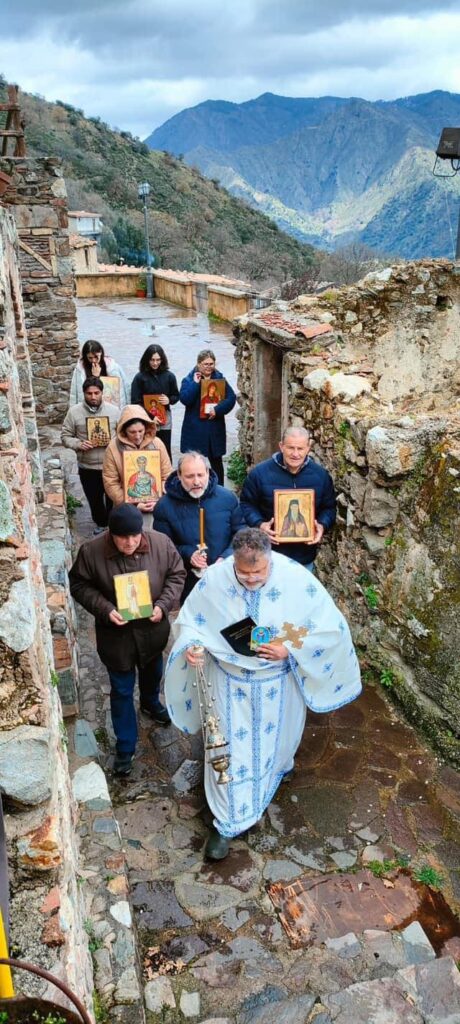

What stands out most in this movement is not its speed but its depth. Those entering the Church often describe being drawn to its sense of continuity, its disciplined spiritual practices and its insistence that sacred tradition is not a relic of the past but a living inheritance. Whether this trend marks a long-term transformation or a temporary surge remains to be seen, but its effect is already clear. Orthodox Christianity, one of the smallest Christian traditions in the United States, is experiencing a moment of unexpected growth that is reshaping parishes, challenging assumptions and quietly altering the country’s religious landscape.
As American Orthodoxy expands beyond its historical communities, it remains anchored to the same ancient faith that has guided generations of Greek and other Orthodox believers around the world. For many newcomers, the appeal lies in that very continuity. For long-established parishes, the arrival of new faces brings both opportunity and responsibility. And for the Church as a whole, this emerging chapter reflects a movement that is at once distinctly modern and firmly grounded in the oldest traditions of Christianity.
Read also Konstantinos Argiros Serenades NYC Street Interviewer [Video]
Stay updated with the latest news from Greece and around the world on greekcitytimes.com.
Contact our newsroom to share your updates, stories, photos, or videos. Follow GCT on Google News and Apple News.

