
Greece Reserves Right to Extend Territorial Waters to 12 Miles – Won't Accept Turkey's Casus Belli
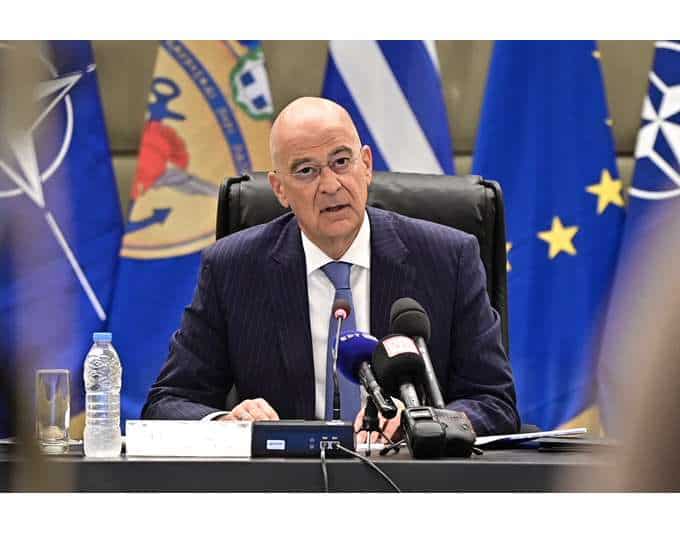
Athens maintains an open channel for dialogue with Ankara but will not bow to threats. In a candid interview with OPEN TV, Greek Defense Minister Nikos Dendias reiterated Greece's firm stance on key issues in Greek-Turkish relations, including the potential extension of territorial waters and rejection of the long-standing casus belli declared by Turkey.

Greece Ready for Dialogue, but Only Under International Law
Dendias emphasized Athens' willingness to negotiate: "Greece is prepared to sit at the table with Turkey to find solutions, provided the other side demonstrates the same genuine intent."
He explained that Greece deliberately adopts a responsible posture to preserve communication channels, awaiting the moment Turkey fully accepts International Law and engages constructively. At the same time, he warned against allowing Ankara any illusion of dominance:
"It would be the greatest mistake for Athens to let Ankara believe it can impose silence on us or force us to accept the casus belli as normal."
National, Not Partisan Line on Greek-Turkish Issues
The minister stressed that policy on Greece-Turkey relations follows a consistent national line, not partisan interests:
- The Prime Minister, Foreign Minister, and predecessors share this unified position.
- Provocations from across the Aegean will not silence Greece.
"Greece neither threatens nor makes new claims, nor seeks to revise the status quo," Dendias noted. "But it cannot remain silent in the face of challenges. If Turkey wishes to resolve differences, we will extend our hand—within the framework of International Law, not the logic of might."
Timing of 12-Mile Territorial Waters Extension Depends on National Interest
Addressing one of the most sensitive flashpoints—the extension of Greek territorial waters from 6 to 12 nautical miles—Dendias clarified:
"Greece reserves solely for itself this right, as it forms a hard core of national sovereignty. The timing is determined by a careful assessment of national interests."
He dismissed Turkish claims that the move blocks agreements, calling such assertions unsustainable under scrutiny.
On President Erdoğan and Turkish Opposition Dynamics
Contrary to common assumptions, Dendias suggested flexibility may sometimes come from unexpected quarters:
"Many view Erdoğan as the hardliner while seeing the opposition as more Europe-aligned. Often the opposite holds true. There are moments when Erdoğan's stance suggests he could be open to solutions, whereas his opposition remains far more rigid."
U.S. Role and Stability in the Aegean and Mediterranean
The minister underscored American awareness of Greece's red lines:
"The United States knows precisely what Greece can accept and what it cannot. The last thing Washington wants is instability in the Aegean and Mediterranean—something we equally oppose."
He added that Erdoğan, after years in power, understands Greece's limits and acts accordingly. Greece defines its policy independently, respecting long-standing alliances without external dictation.
Alliance with Israel in Regional Context
Dendias highlighted shared concerns driving closer ties with Israel:
"What does one expect from Israel when regional actors support the Muslim Brotherhood and Hamas? The Brotherhood represents a problem—we too have unsettled accounts with it."
Final Thoughts on Leadership and Duty
Responding to domestic commentary (including jabs from Adonis Georgiadis about "hiding" ministers), Dendias defended his record:
"I defend my work and the government's achievements to the best of my ability. Polls show strong approval for Defense. As Defense and Foreign Ministers, we carry heavy institutional responsibilities."
On any future leadership role:
"From a boy in rubber boots in Corfu whose family lost everything, to today's Minister of Defense—the journey has been long. I feel fulfilled in my current role, but if my country requires service in another capacity, I would not refuse."
This interview underscores Athens' balanced yet resolute approach amid persistent Aegean Sea tensions and the broader geopolitical landscape in 2026.
Source: Interview with OPEN TV, January 22, 2026.
Stay updated with the latest news from Greece and around the world on greekcitytimes.com.
Contact our newsroom to share your updates, stories, photos, or videos. Follow GCT on Google News and Apple News.
