
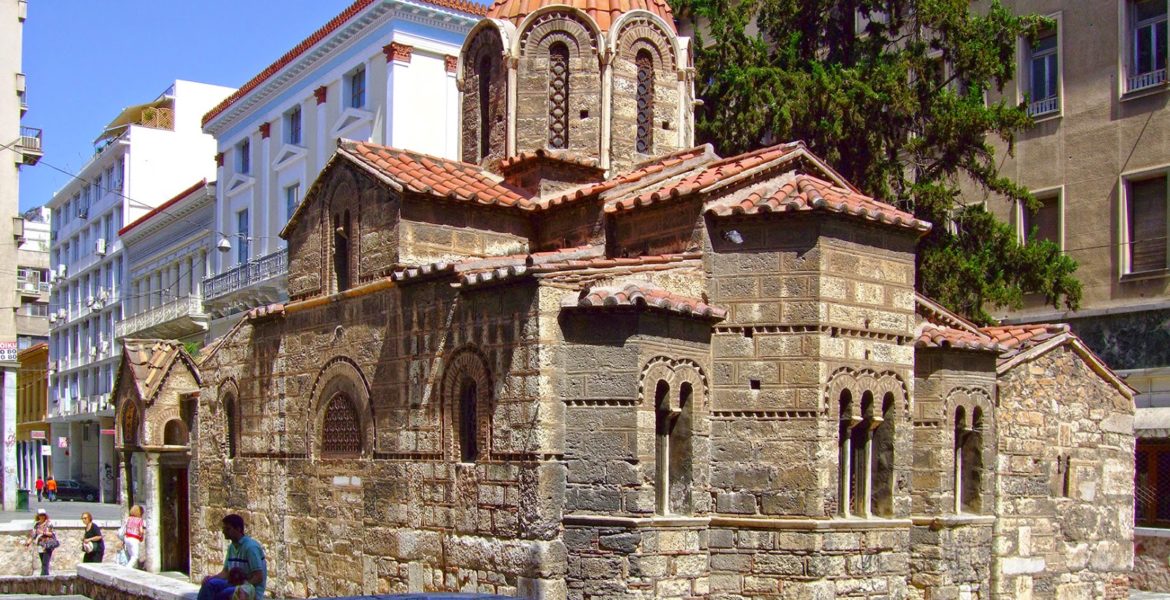
Panagia Kapnikarea is an 11th-century church dedicated to Panagia, situated in the middle of the busy Ermou shopping strip on the way from Syntagma to Monastiraki Square.
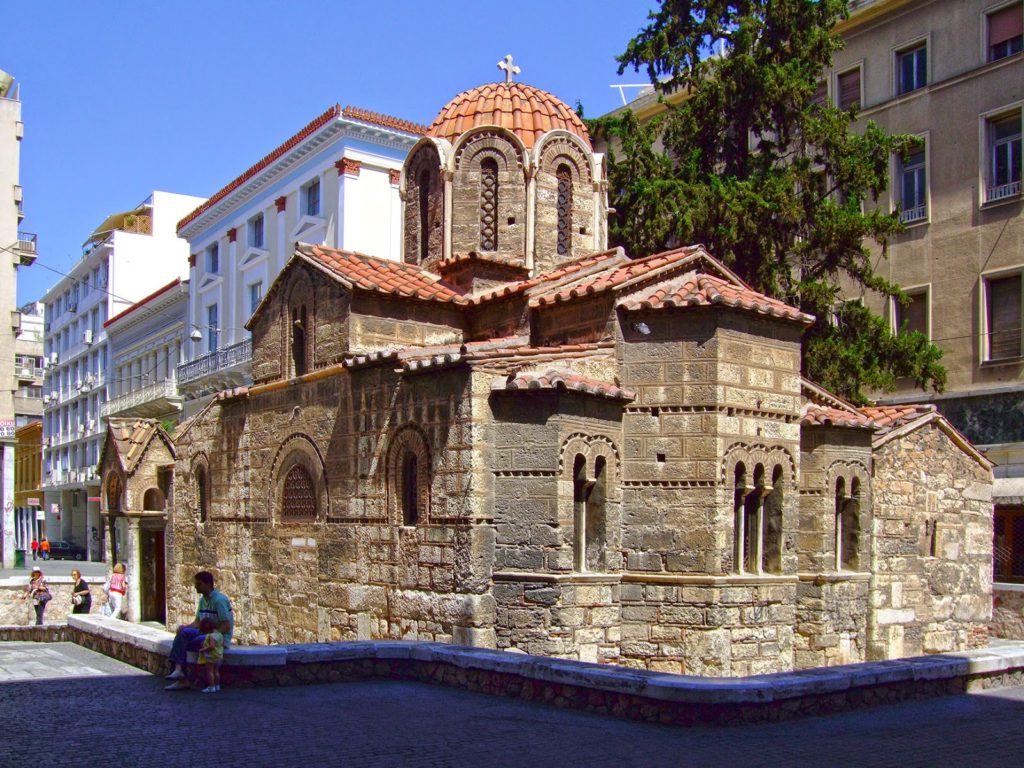
Thousands upon thousands of people walk by the church each day, which was built on the ruins of an ancient temple and, according to historians, was either connected to the goddess Athena or to Demeter.
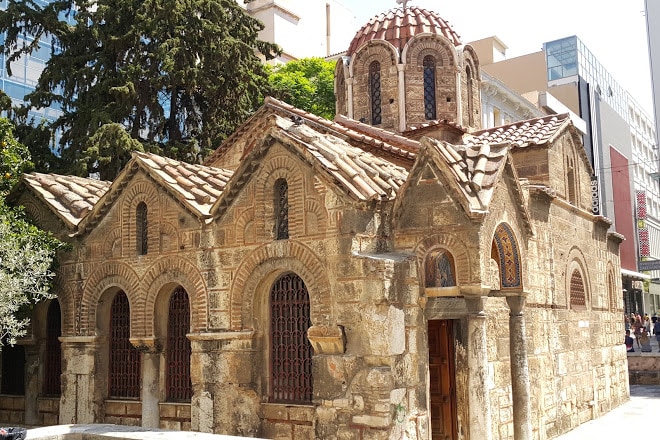
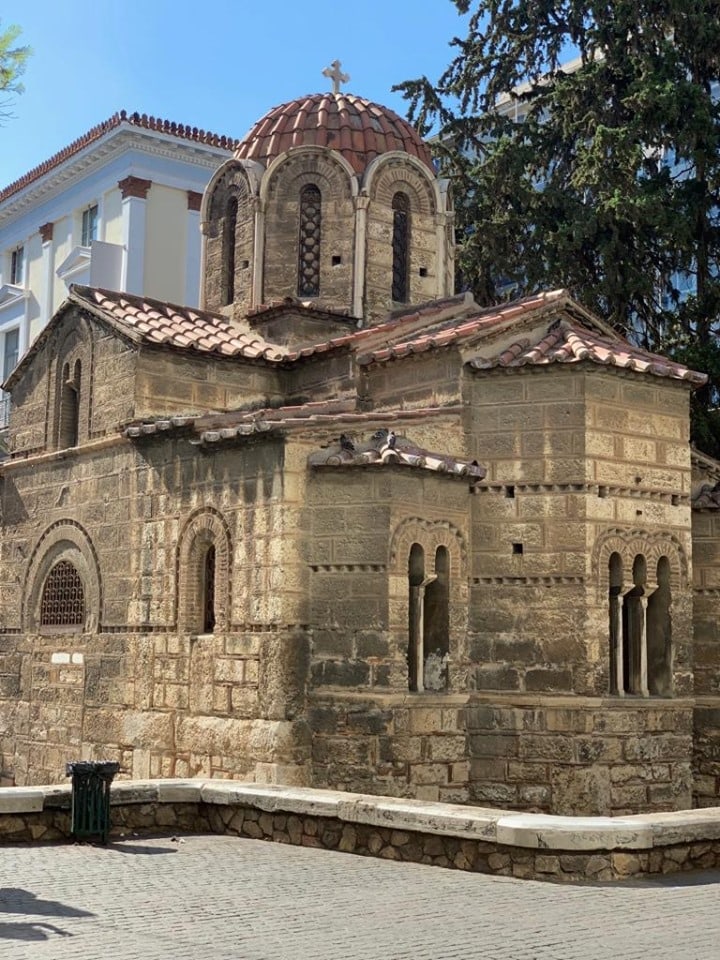
The church is dedicated to Panagia and has a unique name, “Kapnikarea” which may refer to the Byzantine tax “kapnikon”, or some say it derives from the word “kapnismeni” which in Greek, which means "smoked", due to the marks of fire that are seen on the building.
The architectural design of Kapnikarea is also special; it is a multifaceted edifice that is constituted by three different parts: the main church at the southern part, which is dedicated to Panagia and may have been the katholikon of a monastery; the chapel dedicated to Agia Varvara at the northern part; and the exonarthex at the western side.
Most of the icons inside the church are painted by the artist Fotis Kontoglou and his pupils, a school of hagiography strongly influenced by Byzantine tradition. In 1942, Kontoglou painted Theotokos Platytera at the arch of the church, which was his first monumental work. The decoration was completed in 1955 with his students' help.
The paintings on the walls of the vaulted narthex and the exo-narthex, which show Western influences, are the work of an unknown artist and date from approximately 1900. The stunning mosaic outside the church of Panagia, depicting Jesus Christ, was created by Elli Voila in 1936.

The church has a rich history, and during the Greek Independence War, it was damaged, as were most other monuments in Athens. In 1834, the year Ermou Street was constructed, authorities planned to demolish the church. This was during the reign of King Otto; it was not included in the urban designs of his architect, Leo von Klenze, but was saved after the intervention of King Ludwig of Bavaria.
Today, the church belongs to the University of Athens and continues to stand out as a unique part of the city’s history, attracting thousands of locals and tourists who walk inside each day to light a candle, say a prayer, and look around this sacred site.
On this day in 1913: Georgios Averof crushes the Ottoman fleet in the decisive Battle of Lemnos
Stay updated with the latest news from Greece and around the world on greekcitytimes.com.
Contact our newsroom to share your updates, stories, photos, or videos. Follow GCT on Google News and Apple News.
