
Along the ancient Silk Road, amid the vast steppes and deserts of Central Asia, the Greek presence in Uzbekistan is experiencing a remarkable revival. A community once considered dormant is now flourishing again, reshaping cultural life in the country’s capital, Tashkent.
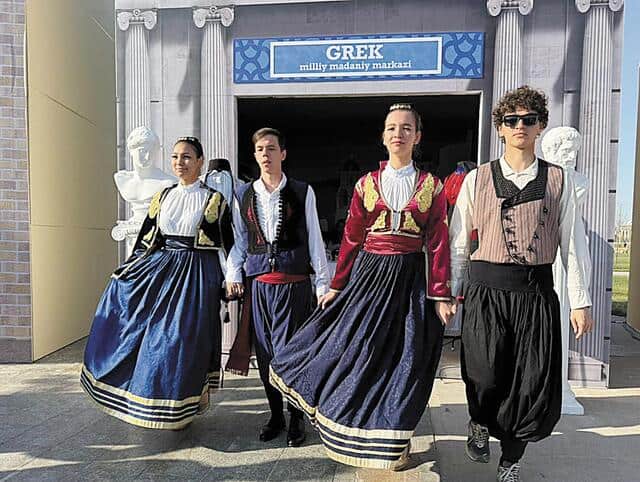
Over the past few years, the Greek element has re-emerged as a dynamic force in the city. Greek language classes launched in Tashkent attracted more than 110 students within just three months. The community has also established a 30-member choir, a music ensemble dedicated to Greek repertoire, a dance group with over 20 members, and two active theatre groups. These initiatives have cultivated a growing admiration for Greece among Uzbeks, despite the country being nearly 3,900 kilometres away.
This revival largely stems from the efforts of Thessaloniki-born architect and museologist Kostas Politis, who arrived in Uzbekistan more than two decades ago without any prior connection to the country or its Greek diaspora. Initially working on a major museum renovation programme in cooperation with UNESCO, Politis later became president of the Greek Community of Tashkent in 2020, ushering in a new era for local Hellenism.
Today, the Greek Cultural Centre of Tashkent stands recognised as one of the city’s leading cultural hubs. In recognition of his contribution, the President of Uzbekistan awarded Politis a medal for his services to the country’s cultural life. Approximately 1,300 Greeks now live in Uzbekistan, continuing to promote Greek culture at the far reaches of the world.
Speaking to Ta Nea, Politis recalled arriving in Uzbekistan 21 years ago unaware of the depth of Greek history in the region. For fifteen years, he worked exclusively as a restorer and designer before unexpectedly assuming leadership of the Greek community. From that moment, he said, a new chapter began.
Greek presence in Uzbekistan dates back far earlier than the 20th century. After the Greek Civil War ended in 1949, around 12,000 Greek political refugees arrived in Tashkent, then part of the Soviet Union. Within two years, they built 14 Greek settlements, complete with schools, cultural centres, sports teams, and musical ensembles. Education, literacy, and skills development became central pillars of community life.
The community reached its peak in the 1960s, numbering around 35,000 members and playing a vital role in Uzbek society. However, successive waves of repatriation to Greece, political changes, and the collapse of the Soviet Union led to a gradual decline. By 2019, the Greek association’s headquarters stood neglected and faced the threat of expropriation.
Upon assuming leadership, Politis led efforts to restore the building, secure its legal status, and revive the community’s cultural identity—without external assistance. Within five years, the Greek Cultural Centre was fully re-established and officially recognised by the Uzbek state as the representative body of the Greek community.
Beyond preservation, the Centre has embraced outreach. It welcomes both Greeks and Uzbeks, offering a comprehensive picture of modern Greece while honouring its historical legacy. As a result, Greece has gained notable popularity in Uzbekistan, supported by respect from local authorities, universities, and cultural institutions.
Politis emphasised that the Centre survives not because of state policy but because of its people. He stressed that Greek history and culture have left a lasting imprint on Central Asia, and the community continues to represent that heritage with pride.
Still, questions remain about sustainability without support from Greece itself. Politis called for recognition, basic assistance, and respect, underlining that Hellenism extends far beyond Greece’s borders and continues to shape the present and future of Greek identity in Central Asia.
Stay updated with the latest news from Greece and around the world on greekcitytimes.com.
Contact our newsroom to share your updates, stories, photos, or videos. Follow GCT on Google News and Apple News.
