
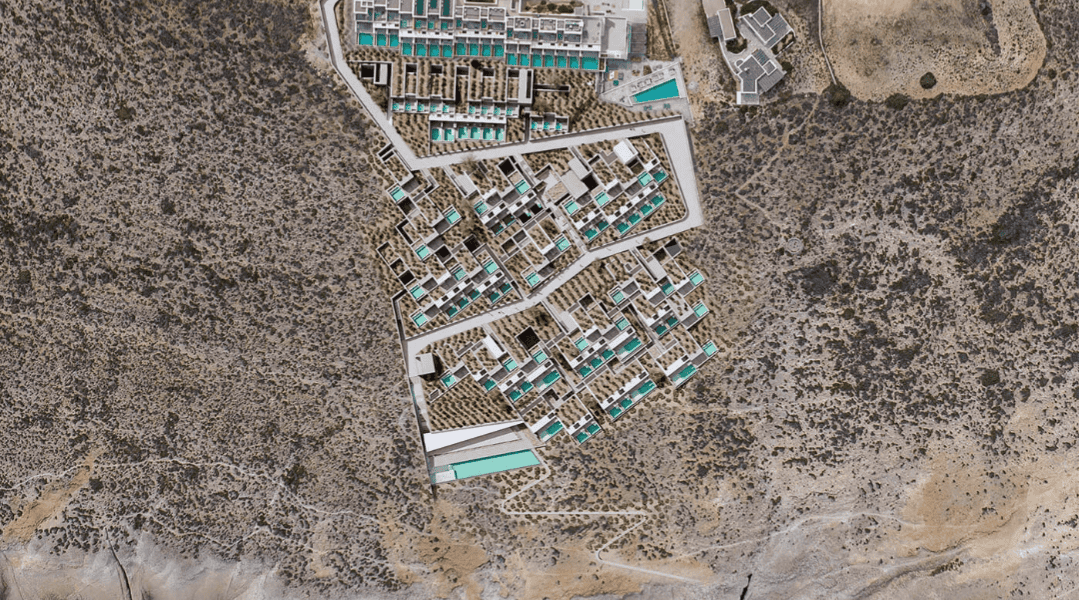
Construction at White Coast resort on Mytakas beach continues despite municipal rejection of environmental study and calls for suspension; critics highlight inconsistencies in regulatory application.
Construction at the White Coast resort—operated under the Domes brand—has accelerated in recent months, with significant concreting and infrastructure development visible on the site near Sarakiniko beach, one of Milos's most iconic natural landmarks.
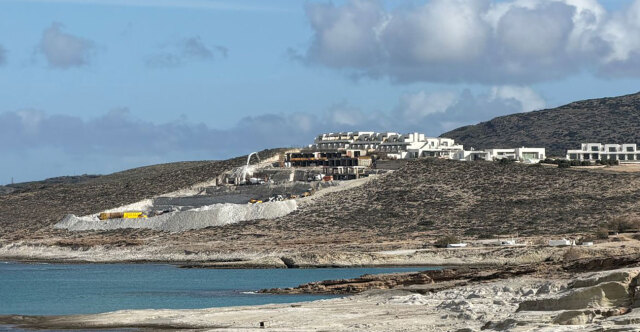
The plot is classified as grassland/forest under Greek zoning regulations, which prohibit construction on land without direct access to an approved municipal road. The White Coast site reportedly lacks such access, leading critics to argue that any existing permits may be unlawful. Environmental impact assessments for large-scale facilities in protected zones are also questioned as invalid under current legislation.
The expansion falls within an area protected by Greek Law 3937/2011 and designated as a wildlife refuge, located outside approved city planning and settlement limits. Both the Regional Directorate of Agriculture and the Municipal Environmental Committee issued negative recommendations on the project.
In January 2024, the Milos Municipal Council unanimously rejected the Environmental Impact Study submitted for the expansion.
The Municipality of Milos has not yet filed a formal suspension request, which could have temporarily halted work. Meanwhile, construction continues, with plans to expand from 30 suites to 171 and add nearly 2,000 m² of swimming pools across a 29,421.73 m² plot. Critics warn that even a future halt would leave much of the environmental damage irreversible.
For comparison, a smaller hotel project at nearby Agios Konstantinos beach was swiftly stopped by authorities, prompting questions about uniform enforcement of environmental and building rules.
The Authority for Transparency has intervened in past similar cases on Milos, including at Sarakiniko, where permits issued in protected zones without proper road access were deemed violations of the law.
Milos Mayor has stated that responsibility extends beyond the local level to national authorities, ministries, and engineers involved in approvals. He noted that municipalities possess limited powers to intervene in projects classified as “strategic investments.”
The controversy fits into broader concerns voiced by mayors across the Cyclades islands—including Santorini, Ios, Sikinos, and Folegandros—who argue that tourism-focused “strategic investments” often enable unchecked luxury development. They are calling for greater municipal involvement in licensing, stricter environmental monitoring, and reforms to investment frameworks to preserve the islands' natural, cultural, and social character.
Environmental advocates and local groups describe Milos and its fellow Cyclades islands as living communities rather than sites for large-scale commercial projects, urging a reevaluation of how such developments are prioritized and regulated.
Stay updated with the latest news from Greece and around the world on greekcitytimes.com.
Contact our newsroom to share your updates, stories, photos, or videos. Follow GCT on Google News and Apple News.
