
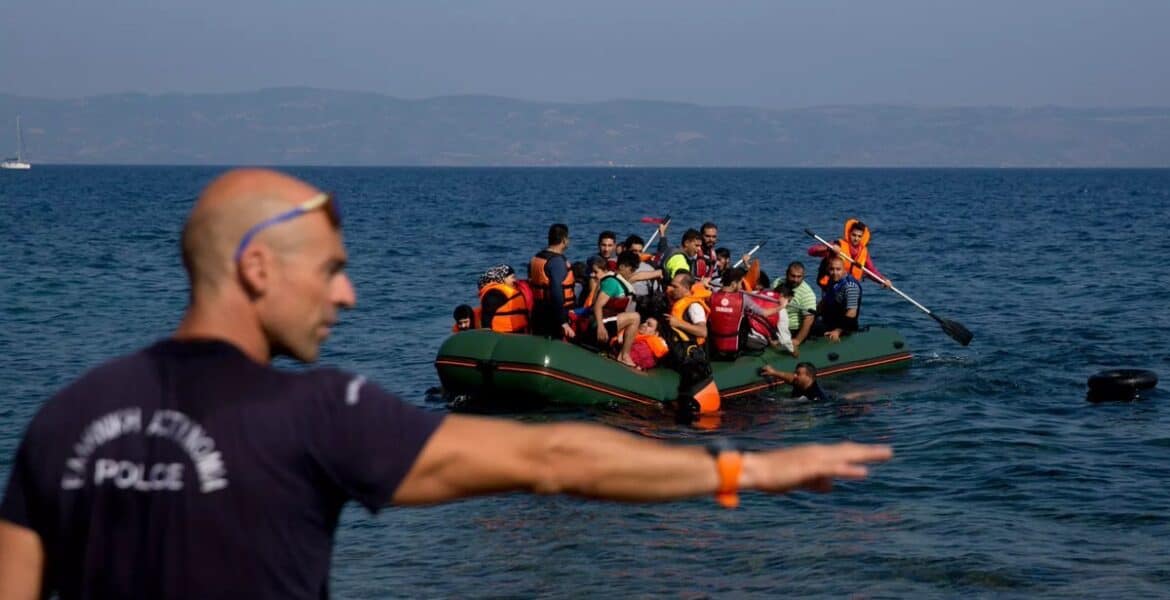
Athens, Greece's parliament is advancing a controversial new immigration bill that imposes severe criminal penalties on individuals—including members of registered non-governmental organizations (NGOs)—who facilitate the irregular entry, transportation, or stay of migrants. The legislation, introduced by the Ministry of Migration and Asylum under Minister Thanos Plevris, explicitly lists NGO membership as an aggravating circumstance, equating it to acting for profit, habitually, or in an organized group.
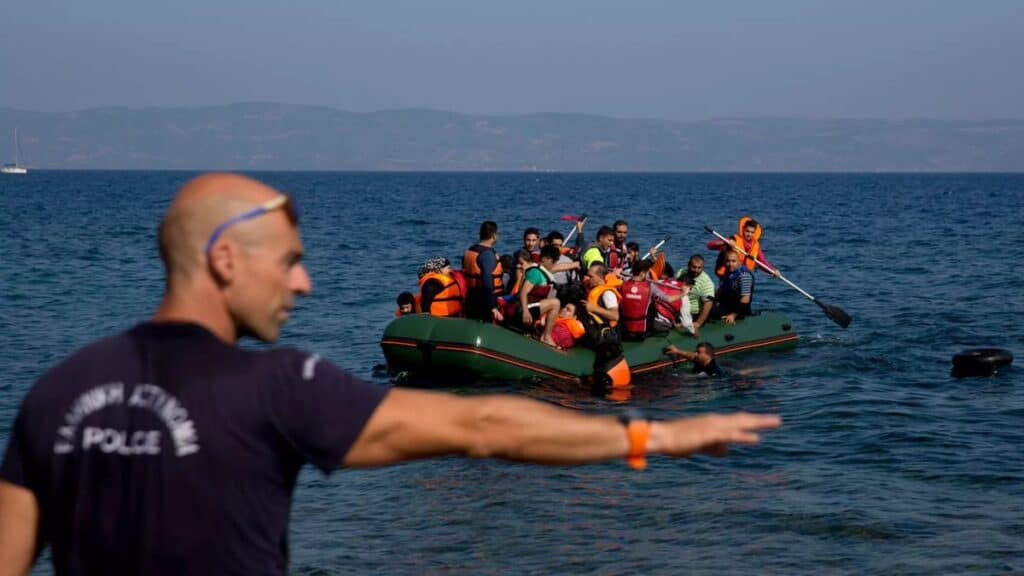
The bill amends the Migration Code (primarily Articles 24 and 25) and targets what the government describes as criminal smuggling networks and "murderous traffickers." It comes amid ongoing irregular arrivals, particularly to Crete and other islands, despite a reported 21% drop in some periods.
Key Provisions Targeting Facilitation
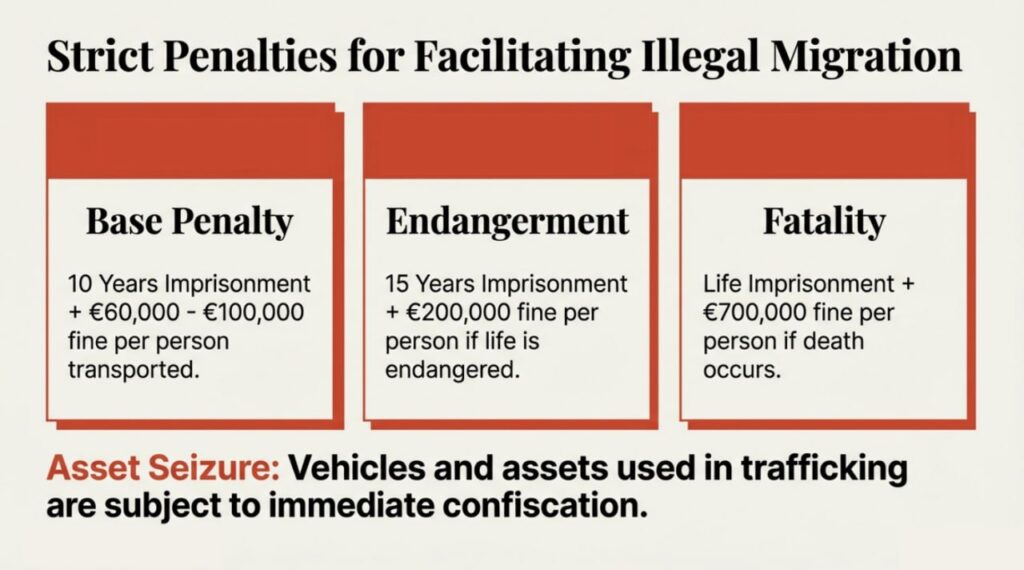
- Facilitating illegal entry or exit (e.g., assisting undocumented third-country nationals to cross borders without checks):
- Base penalty: imprisonment + minimum €20,000 fine.
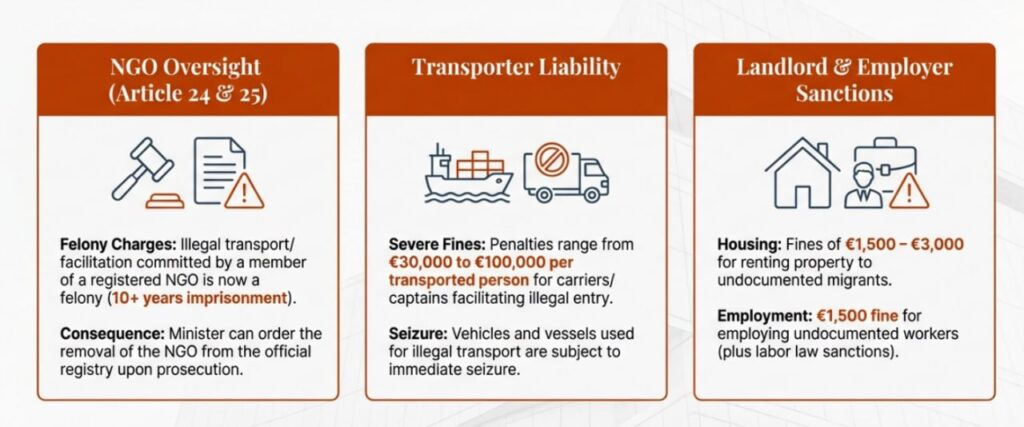
- Aggravated (including if by a registered NGO member): minimum 10 years imprisonment + minimum €50,000 fine.
- Transportation of undocumented migrants: Upgraded from misdemeanor to felony in aggravated cases → at least 10 years imprisonment + minimum €60,000 fine per person transported.
- Facilitating illegal stay (e.g., aiding undocumented migrants to remain or obstructing detection/deportation):
- Base: minimum 2 years imprisonment + €5,000 fine.
- Aggravated (including NGO membership): up to 10 years imprisonment + minimum €20,000 fine.
- Related offenses (e.g., passport/document fraud or withholding): Up to 10 years + €50,000 fine in aggravated cases involving NGO members.
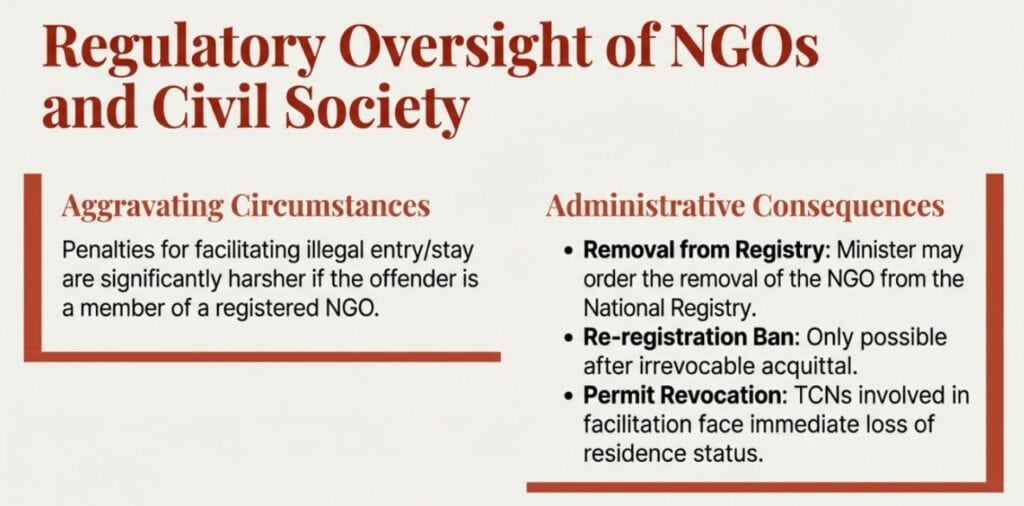
The bill also empowers the migration minister to deregister NGOs from the official registry if even one member faces charges (not requiring conviction), cutting off funding and legal operations. Residence permits for NGO members can be revoked based on suspicion alone.
Government Position
Migration Minister Thanos Plevris has defended the measures, stating they target traffickers rather than legitimate humanitarian work. “We are not criminalizing civil society organizations, but only those traffickers of clandestine migrants,” he told media. The bill pairs harsh enforcement with efforts to expand legal migration, including fast-track recruitment of tens of thousands of workers from South Asia to address labor shortages.
Strong Opposition from Civil Society
Over 56 NGOs, including Doctors Without Borders (MSF), Refugee Support Aegean, Greek Council for Refugees, and others, have signed a joint statement condemning the bill as an attack on humanitarian aid and freedom of association. They warn it risks turning legitimate activities—such as search-and-rescue, legal support, or providing shelter—into punishable offenses, violating EU and international obligations.
Human Rights Watch (HRW) labeled the proposals as demonizing civil society, arguing they conflate humanitarian assistance with smuggling and impose "draconian" penalties. Other groups describe the law as creating a "criminal hell" for refugee-supporting NGOs and undermining the presumption of innocence.
The plenary debate in parliament began in early February 2026, with passage widely expected due to the government's majority. Critics urge withdrawal of the most abusive provisions, while the government insists the measures are essential for border control and combating exploitation.
For the official draft, see the Hellenic Parliament website. The bill forms part of broader European trends toward stricter migration policies, though it has drawn particular criticism for its explicit targeting of registered NGOs.
Stay updated with the latest news from Greece and around the world on greekcitytimes.com.
Contact our newsroom to share your updates, stories, photos, or videos. Follow GCT on Google News and Apple News.


I am from the USA , what kind of parent would risk their kids life , in a little inflatable boat to cross treacherous waters. The parents should be arrested. The humanitarian aid personnel should house them and sponsor them not the state .