

A major archaeological project on the island of Ithaca is offering groundbreaking insights into its ancient past, revealing evidence of a Mycenaean-era settlement and a sanctuary dedicated to Odysseus. Led by the University of Ioannina, excavations at the site known as the School of Homer have uncovered rare artifacts, inscriptions, and architectural remains that point to Ithaca’s historical role as a cultural and religious center from the Late Neolithic through the Roman period.
Tag: Epigraphy

New research led by Associate Professor Willemijn Waal suggests that the Greek alphabet may have originated centuries earlier than traditionally believed. Using carbon dating and archaeological evidence, the study challenges the long-held view that Greek writing emerged suddenly in the 8th century BC, proposing instead a gradual development beginning in the 10th century BC — a discovery that could reshape our understanding of early Greek literacy and the transmission of Homeric epics.

A 2,600-year-old inscription in Turkey has been deciphered, revealing a dedication to the Phrygian goddess Materan, also known as the “Mother” or “Mother of the Gods,” a deity also revered by the ancient Greeks. The inscription is located on the Arslan Kaya (Lion Rock) monument, which is decorated with lions and sphinxes. This confirms a long-held theory about the inscription’s meaning, potentially ending a century of debate.
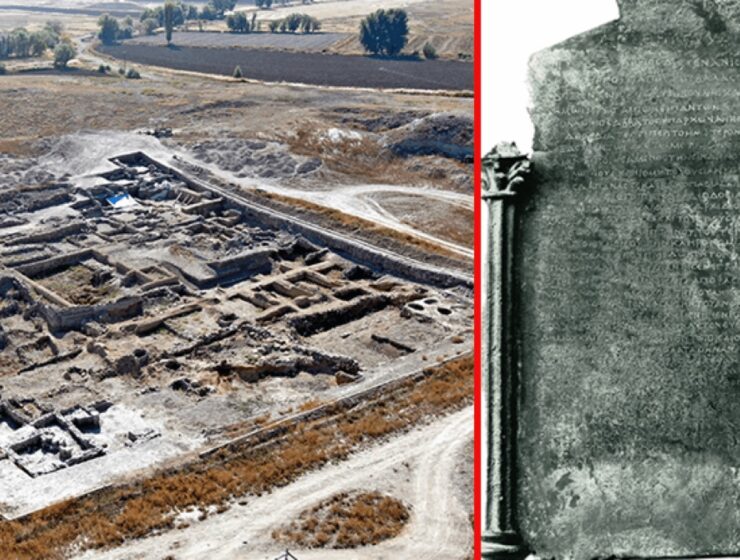
The 2000 year old Anisa Plate shows that Greek was spoken in Anatolia at that time

Tourism is a vital part of the Greek economy, accounting for one in three euros…
