
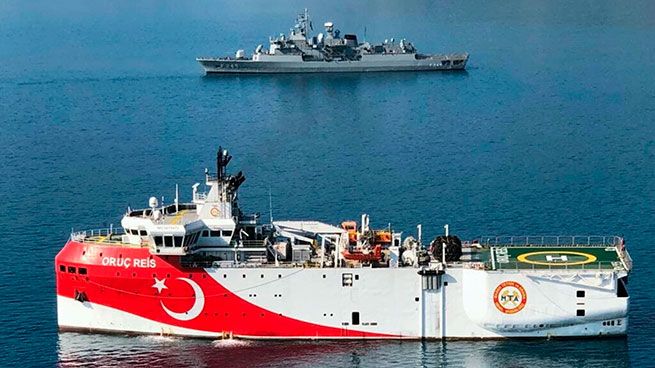
Turkey highlights seismic exploration in disputed areas south of Crete via Libya MoU, provocatively timed during PM Mitsotakis’ February 11, 2026 Ankara visit and talks with Erdoğan on bilateral normalization. Athens condemns it as a challenge to sovereign rights amid dialogue efforts.
Tag: Maritime boundaries
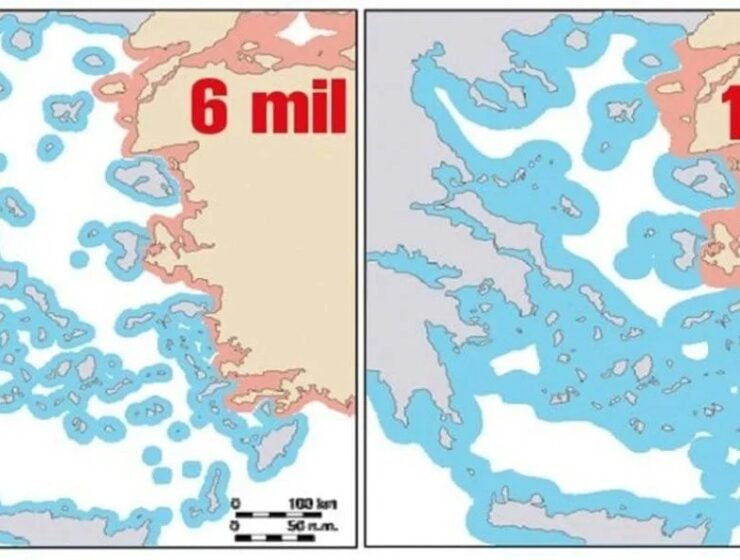
Greek FM George Gerapetritis reaffirms plans to extend territorial waters to 12 nautical miles in the Aegean, despite Turkey’s 1995 casus belli threat viewing it as a red line and potential cause for war.
Greek Foreign Minister George Gerapetritis announced plans to extend Greece’s territorial waters beyond the current 6 nautical miles in parts of the Aegean Sea, citing successful agreements with Italy and Egypt, while reaffirming Athens’ commitment to sovereignty amid Turkey’s longstanding threat of military response.

Minister George Gerapetritis reaffirmed Athens’ and the EU’s total rejection of the 2019 Turkey-Libya maritime memorandum during talks with Libyan House of Representatives President Aguila Saleh in Athens.
A U.S. State Department report highlights the lack of consensus on the extent of Greek airspace, complicating assessments of Turkish violations since 2017.

In a formal diplomatic demarche to the United Nations Secretary-General, the Republic of Cyprus has…

Greece has described Egypt’s diplomatic response to its recent maritime spatial planning initiative as “expected,”…

Greece has formally rebuffed Libya’s maritime claims to the UN, rejecting attempts to define a median line that encroaches on Greek waters south of Crete, and urging dialogue based on international law.

Greece is set to counter Libya’s Tripoli-based government’s maritime boundary claims in the Eastern Mediterranean, viewing them as Turkey’s attempt to expand influence via the 2019 Turkey-Libya deal, which Athens and the EU deem invalid. The Greek Foreign Ministry is preparing a response to affirm its maritime zones and denounce Libya’s claims.
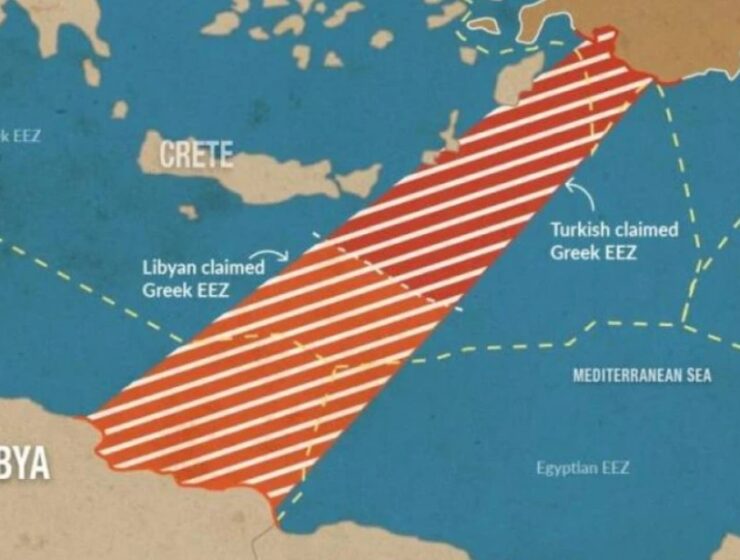
Libya, guided by Turkey, submitted a Note Verbale to the UN on May 27, 2025, claiming continental shelf boundaries up to Crete based on the 2019 Turkey-Libya MoU. The move challenges Greece’s and Egypt’s maritime rights, declaring their EEZ agreements and exploration activities illegal, escalating tensions in the Eastern Mediterranean.

A maritime dispute has resurfaced in the northern Aegean Sea after Turkey issued a counter-NAVTEX in response to Greek scientific research conducted by the vessel *FILIA* between Lemnos and Samothrace. Ankara claims part of the area falls within its continental shelf, reigniting longstanding tensions over maritime jurisdiction between the two neighbors.

Tensions are rising between Greece and Turkey following Prime Minister Kyriakos Mitsotakis’ announcement of new marine parks in the Aegean and Ionian Seas at the UN Oceans Conference in Nice. Turkey, wary of Greece’s environmental initiative, sees it as a veiled geopolitical move. *Hürriyet* reports Ankara’s concerns that Athens is exploiting ecological agendas to assert control over disputed waters, despite fragile efforts to mend bilateral ties. As Turkey counters with its own maritime conservation plans, the Aegean risks becoming a new battleground for “green” diplomacy.
Greek Prime Minister Kyriakos Mitsotakis urged Türkiye to lift a 30-year-old war threat to gain Greece’s support for accessing EU defense funds, such as the Security Action for Europe program.
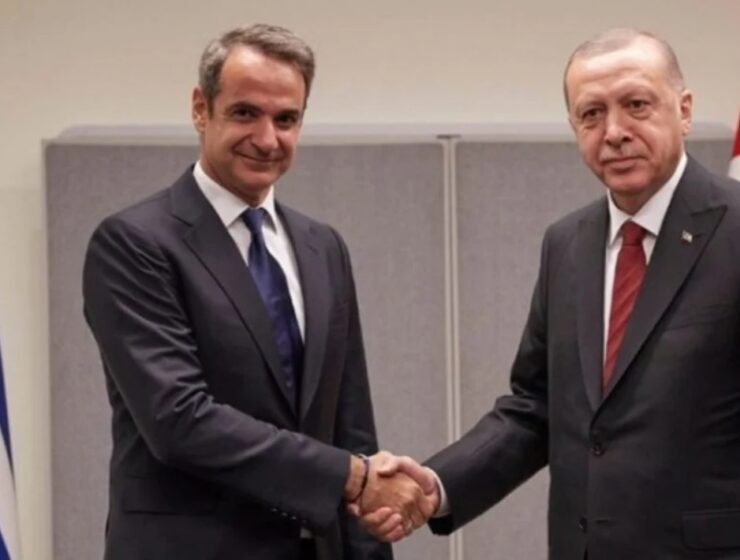
Greek Prime Minister Kyriakos Mitsotakis confirmed he will proceed with a planned visit to Turkey despite rising tensions and the arrest of Istanbul’s mayor. He emphasized the importance of dialogue with Ankara, dismissing claims that he’s seeking confrontation, and reaffirmed Greece’s commitment to regional cooperation and European-backed energy projects.

Turkey has escalated its criticism of Greece’s newly announced maritime spatial planning, calling it a violation of international law. Sources from Turkey’s Defense Ministry told TRT that Greece’s unilateral actions in the Eastern Mediterranean and Aegean lack legal basis and infringe on Turkey’s rights, vowing to protect the “Blue Homeland” with determination.

Albania’s landmark recognition of self-identification rights for its Greek minority marks a turning point in Greek-Albanian relations. This move, coupled with ongoing dialogue on long-standing disputes, paves the way for improved cooperation and Albania’s progress towards EU accession.

Greek Prime Minister Kyriakos Mitsotakis is back in Athens and facing a crucial decision: choosing the next President of the Republic. While several names have circulated, Mitsotakis is reportedly considering a surprise candidate. This comes as the PM prepares for a key trilateral meeting with Egypt and Cyprus, focusing on Turkey’s expanding role in the region, particularly concerning Syria.
In a recent interview, Turkish Foreign Minister Hakan Fidan emphasized that Turkey’s disputes with Greece encompass more than just maritime boundaries, including issues like the demilitarization of Greek islands. He called for discussions on the multiple challenges facing the Aegean, while Greece maintains that sovereignty questions remain non-negotiable.

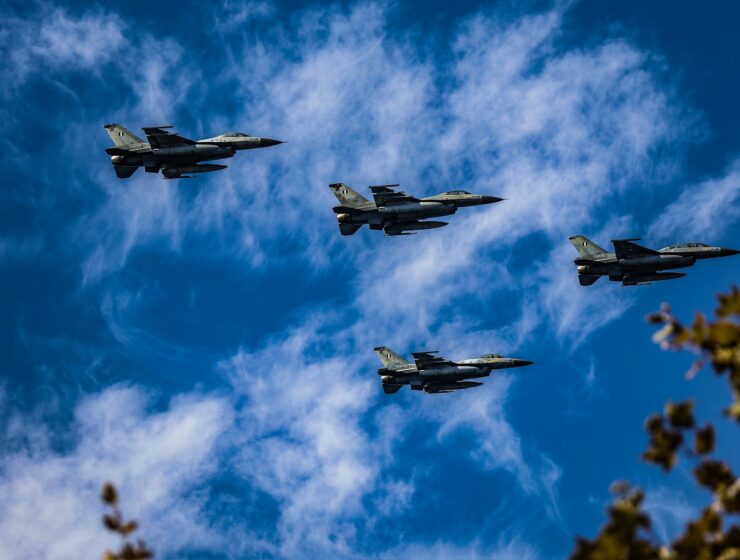
Greece and Israel demonstrated strengthened military ties in a joint air exercise south of Crete, the first since October 2023. The exercise saw 56 Greek F-16s train alongside Israeli refueling tankers, showcasing enhanced cooperation and interoperability between the allied air forces.
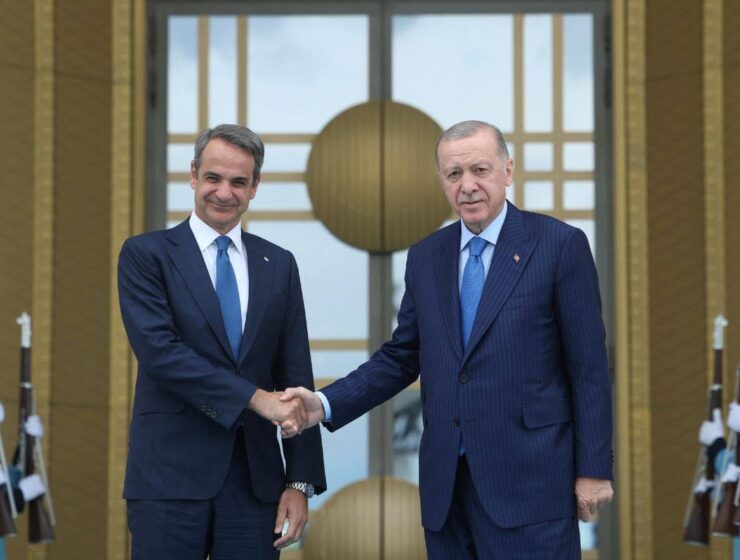
Turkey and Greece Aim to Better Ties Even as Cyprus Tensions Linger
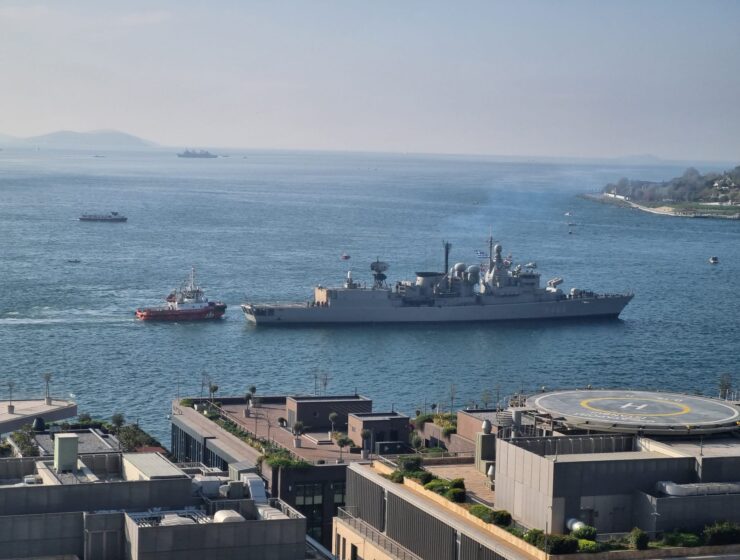
A Greek frigate flying the Greek flag has sparked controversy on Turkish social media, with some users calling it a “provocation” and “cheap Greek propaganda.” The ship is currently in Istanbul as part of NATO’s Standing NATO Maritime Group 2 (SNMG2) and is docked at the Sarayburnu port.
