

Thessaloniki celebrates its patron saint, Saint Demetrios, and the 113th anniversary of its 1912 liberation from Ottoman rule. Honoring the miracle-worker and the historic surrender, the city blends faith and heritage in vibrant festivities, with the Military Museum of the Balkan Wars preserving this legacy.
Tag: military history

Manolis Bikakis, a 20-year-old Cretan paratrooper, single-handedly halted a Turkish advance during the 1974 Cyprus invasion. Known as the “Greek Rambo,” he destroyed six tanks and a battalion, defending Nicosia airport. Despite his heroism, he was only honored posthumously in 2015.

The Hellenic Air Force paid tribute to the Greek and British pilots who fought side…

Egyptian archaeologists have unearthed one of the New Kingdom’s largest fortresses in North Sinai’s Sheikh Zayed, spanning 8,000 sqm along the ancient Way of Horus. Dating to 1550–1070 BC, the site reveals 11 defensive towers, Thutmose I’s sealed vessel, and volcanic stones from Greek Aegean islands—hinting at early Hellenic trade. A massive bread oven and fossilized dough unveil soldiers’ daily lives in this vital Egypt-Levant crossroads.

Manolis Bikakis, a 20-year-old Cretan commando, single-handedly halted a Turkish advance during the 1974 Cyprus invasion. Armed with a PAO and eight missiles, he destroyed six tanks and a battalion, saving Nicosia airport. Unrecognized in his lifetime, this “Greek Rambo” was posthumously honored in 2015.

The 4th of July, 362 BC, dawned heavy with the anticipation of battle. On the plains of Mantinea, the fate of the Greek world hung in the balance. Epaminondas, the brilliant Theban general, faced a formidable coalition: Sparta, Athens, and their allies, united against Thebes’ growing power.
Epaminondas, known for his strategic genius, famously said, “True courage is not in the absence of fear, but in the strength to conquer it.” He embodied this ideal on the battlefield that day. Employing his groundbreaking oblique phalanx formation, he concentrated his forces, shattering the enemy lines and securing a decisive victory for Thebes.

Australia and Greece came together in Athens to honour their shared military history with the Greek premiere of *”ANZAC: The Greek Chapter.”* Hosted by the Australian Embassy and the Athens War Museum, the event paid tribute to the ANZACs who served in Greece during the world wars and celebrated the enduring bonds forged between the two nations in times of conflict and compassion.

The Australian Embassy in Athens will host a public ANZAC Day commemorative service on Friday, 25 April at the Phaleron War Cemetery in Alimos, honouring the sacrifices of Australian and New Zealand servicemen and women.
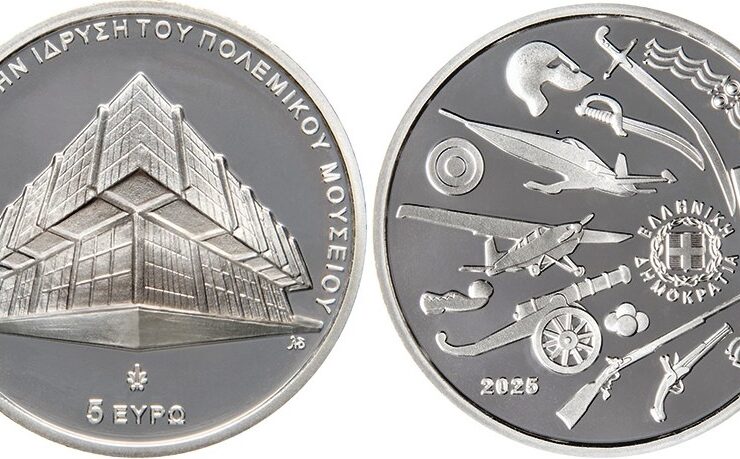
Greece is celebrating the 50th anniversary of the War Museum’s founding with a commemorative coin, honouring those who fought for the nation’s freedom. Established in 1964 and inaugurated in 1975, the Museum in Athens preserves Greece’s military history, showcasing artifacts, photographs, and the renowned Saroglou collection of weaponry. With branches in Thessaloniki and beyond, it remains a vital institution for historical memory and the unity of Hellenism.
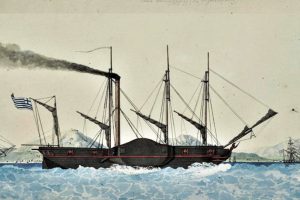
During the pivotal battle to break the siege of the Acropolis of Athens in 1827, Turkish forces attacked the fortified Greek camp in Kastella but were repelled. This conflict followed Kütahı Pasha’s victory at Kamatero, leading him to demand the Greeks’ surrender at the Acropolis. After their refusal, a fierce battle ensued, showcasing a glimmer of victory for the Greek revolutionaries.

At Arachova, in Boeotia, Greek revolutionary forces led by Georgios Karaiskakis achieved a decisive victory against a larger Ottoman-Albanian army on November 24, 1826. Karaiskakis’s cunning tactics and the harsh winter conditions contributed to the heavy Ottoman casualties and boosted Greek morale during the War of Independence.
The 4th of July, 362 BC, dawned heavy with the anticipation of battle. On the plains of Mantinea, the fate of the Greek world hung in the balance. Epaminondas, the brilliant Theban general, faced a formidable coalition: Sparta, Athens, and their allies, united against Thebes’ growing power.
Epaminondas, known for his strategic genius, famously said, “True courage is not in the absence of fear, but in the strength to conquer it.” He embodied this ideal on the battlefield that day. Employing his groundbreaking oblique phalanx formation, he concentrated his forces, shattering the enemy lines and securing a decisive victory for Thebes.

American, British, Canadian, and French leaders will commemorate the 80th anniversary of D-Day on Thursday.…
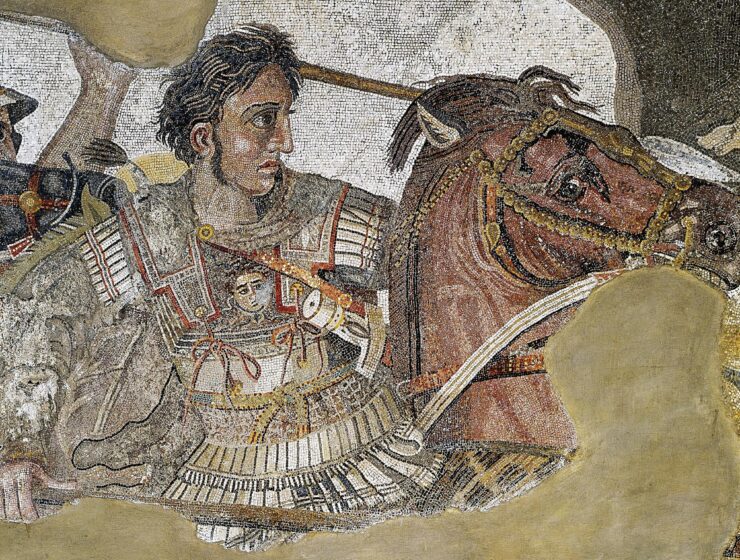
Alexander the Great Defeats Darius III of Persia in the Battle of the Granicus on May 22, 334 B.C
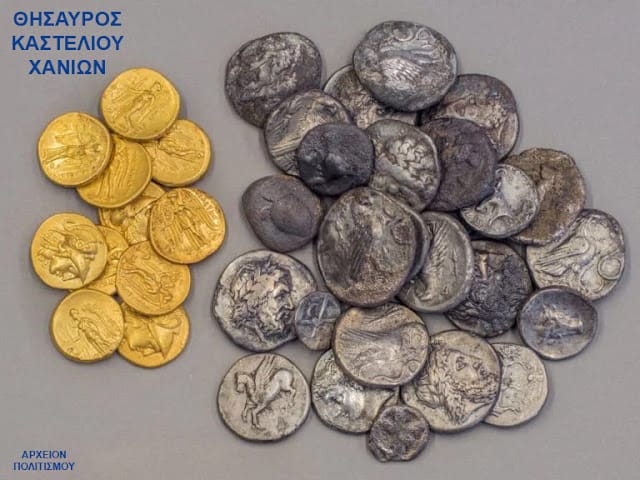
Greek archaeologists have discovered a small but interesting hoard of coins on the hill of…
