

Greece’s strong market performance and robust economic fundamentals have set the stage for potential credit…
Tag: public debt

The Greek government successfully completed its first market outing of the year with the issuance…

Greece recorded a primary budget surplus exceeding targets in 2025, highlighting the country’s strong fiscal…
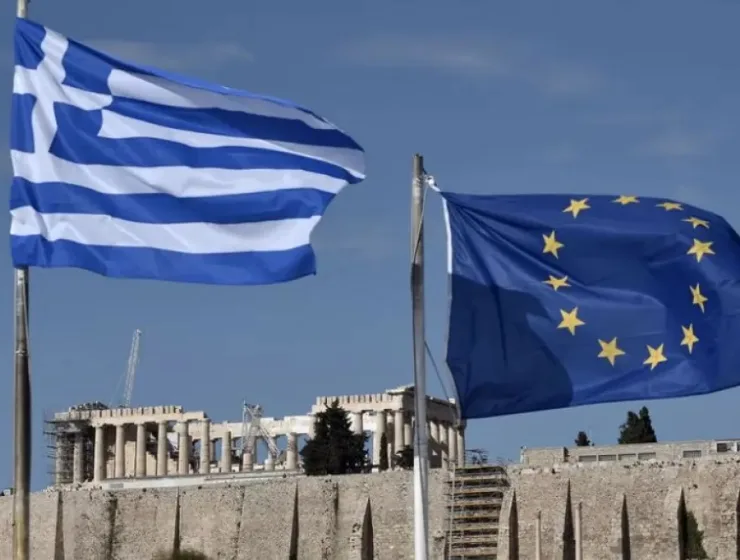
Greece has prepaid €5.3 billion in 2010 bailout loans ahead of schedule, saving €1.6 billion in interest and paving the way for its debt-to-GDP ratio to fall below 120% by 2029 as part of an ambitious early repayment plan.

Greece is taking another decisive step to strengthen the profile of its public debt, proceeding…

French news outlets on Monday prominently highlighted Greece’s decision to repay a 2010 bilateral loan…
Fitch Ratings has upgraded Greece to “BBB”, moving the country higher within investment grade and recognising its fiscal discipline, rapid debt reduction, and resilient economic growth

Greece’s economy is set to continue outpacing the eurozone average, with the European Commission forecasting steady GDP growth of 2.3% in 2025 and 2.2% in 2026. Driven by strong consumption and EU-funded investment, the country also sees declining unemployment and falling public debt, despite global economic uncertainties.
Fitch Ratings upgraded Greece’s credit outlook to positive, affirming its ’BBB-’ rating, driven by a 2024 budget surplus of 1.3% of GDP, a sharp decline in public debt to 154% of GDP, and resilient 2.3% economic growth.

Greece plans to repay its first bailout loans by 2031—ten years early—easing future debt pressures and highlighting its strong fiscal rebound, Finance Minister Kyriakos Pierrakakis announced.

IMF Managing Director Kristalina Georgieva praised Greece’s economic transformation during a meeting with Finance Minister Kyriakos Pierrakakis, calling the country a model for global progress. Highlighting strong growth, fiscal discipline, and digital reforms, Georgieva said Greece has become one of the EU’s best-performing economies.

Greece is poised to repay its first bailout loans a decade early, targeting full clearance by 2031, government officials revealed. With annual €5 billion installments, the nation aims to shed its status as the EU’s most indebted country, leveraging a €37 billion cash reserve and robust fiscal gains. Finance Minister Kyriakos Pierrakakis called the plan “realistic,” signaling Greece’s steady recovery from the 2009-2018 debt crisis that nearly upended the eurozone.

Greece has surprised Europe with its remarkable economic recovery, transforming from a debt-stricken nation to a model of fiscal stability within a decade. Once synonymous with financial turmoil, Greece is now outpacing Germany in economic growth and projecting a 3% budget surplus by year-end. While investor confidence soars, rising rents and inflation continue to strain ordinary citizens, highlighting the uneven impact of the country’s comeback.

Greece plans to raise €11 billion from bond markets in 2025 to address rising financing needs, nearly doubling its net borrowing from 2024. The increased activity follows recent upgrades from rating agencies and reflects growing investor confidence in the country’s fiscal stability. The funds will support the state budget deficit, Recovery Fund loans, and public debt servicing, as outlined in the Budget Introductory Report presented by Finance Minister Kostis Hatzidakis.
Greece is revising its 2025 budget after unexpectedly strong financial results, including a €6.1 billion surplus through October, well above the projected deficit. This surplus is largely due to robust economic growth, higher-than-expected tax revenues, and successful efforts to combat tax evasion. The government also made significant progress in repaying its debt ahead of schedule, with plans to pay off €7.9 billion in loans by December. As a result, Greece’s debt-to-GDP ratio is set to fall to its lowest level since the debt crisis, paving the way for fiscal stability and potential tax cuts.

Greece’s economy is set for robust growth, outpacing the Eurozone and EU averages through 2026, according to the latest European Commission forecast. With GDP growth projected at 2.1% in 2024, 2.3% in 2025, and 2.2% in 2026, Greece’s economic expansion is supported by the Recovery and Resilience Plan. Additionally, inflation is expected to decline, and the public debt-to-GDP ratio is set to decrease to 140% by 2026.
Greece reported a primary budget surplus of €13.489 billion for the first ten months of 2024, far exceeding the €4.667 billion target. This performance was boosted by the early collection of €3.241 billion from the Attiki Odos concession contract. The European Commission projects robust GDP growth for Greece, outpacing EU and Eurozone averages through 2026, alongside declining inflation, unemployment, and public debt levels.
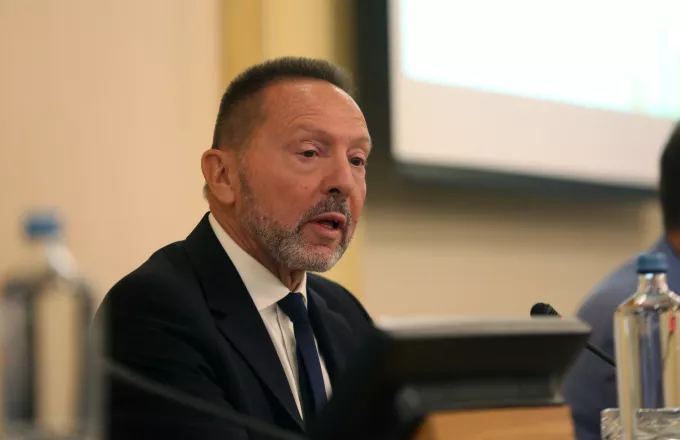
The election of Donald Trump as U.S. President could negatively impact both American and European economies if his campaign promises are enacted, warned Yannis Stournaras, Governor of the Bank of Greece and ECB board member. Speaking at a public debt conference, Stournaras highlighted potential inflation and public debt rises in the U.S., alongside growth slowdowns and euro exchange rate fluctuations in Europe. He emphasized that the ECB’s monetary policy remains unchanged until more concrete policy details are revealed.

The German newspaper Handelsblatt reports that Greece has made significant progress in reducing public debt, with the government planning an early €8 billion repayment to creditors this December. Economy and Finance Minister Kostis Hatzidakis announced that this payment aims to further decrease the debt ratio, which has fallen from 209% of GDP in 2020 to 163.9% in 2023. Forecasts from the IMF and credit rating agency Scope suggest that Greece’s public debt could drop to 139.4% and 132.8% of GDP, respectively, by 2029.

During a speech at the National Gallery, Greek Prime Minister Kyriakos Mitsotakis underscored the government’s focus on transforming the economy through increased investments and industrial growth. He asserted that Greece is on a clear path to recovery, consistently generating primary surpluses and reducing public debt at one of the fastest rates in Europe. Mitsotakis also noted improvements in public revenues and a restructured banking sector aimed at supporting economic financing.

Greece has seen significant growth in investment volume, recording the largest percentage increase in the EU. However, it still ranks last among EU countries for investment as a percentage of GDP, with only 14% compared to the EU average of 21.8%. Despite recent improvements, Greece’s public debt remains the highest in the EU, raising concerns about the sustainability of its economic progress.

Greece’s 2025 draft budget forecasts 2.3% growth, 2.1% inflation, and reduced public debt at 149.1% of GDP. Despite global challenges, the budget emphasizes resilience, with increased investments, tax cuts, and measures to boost income. Minister Kostis Hatzidakis called it a “message of optimism” for economic stability and growth.
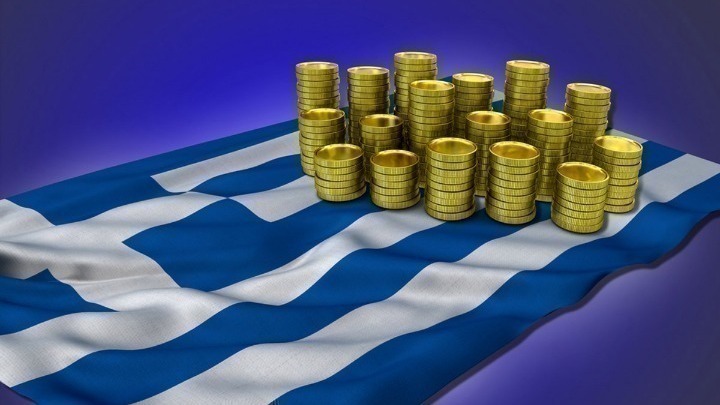
The European Bank for Reconstruction and Development (EBRD) forecasts Greece’s economy to grow by 2.4% in 2024 and 2.6% in 2025, driven by strong tourism, private consumption, and investment. Greece’s unemployment rate hit a 15-year low, and the country continues to maintain a fiscal surplus. While inflation has eased, core inflation remains high. The outlook remains positive as tourism is set to surpass last year’s record performance.
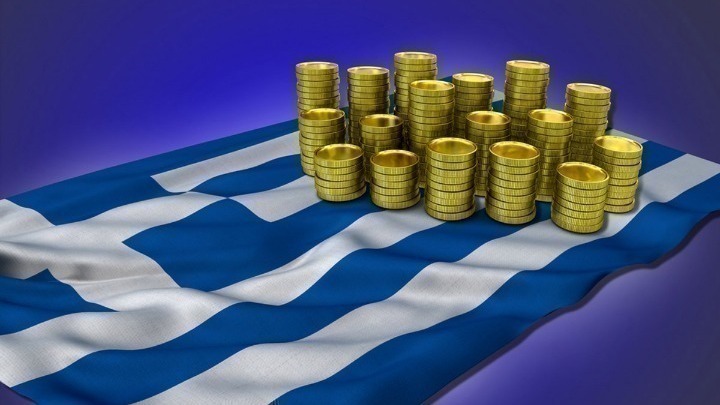
Greece has raised €9.1 billion from financial markets in 2024, nearing 91% of its annual loan program target. With a borrowing plan of €7 billion to €10 billion, the country is taking advantage of favorable market conditions. The International Monetary Fund projects Greece’s public debt will decline to 138% of GDP by 2029.

Greece has signed a €3.3 billion deal with GEK Terna for the lease of a major toll highway in Athens, part of efforts to meet a fiscal goal of €5.8 billion from privatizations this year. This agreement, involving the Attica Motorway, is expected to significantly contribute to reducing Greece’s public debt, the highest in the eurozone.

Greece’s 2025 budget will focus on supporting vulnerable groups, maintaining fiscal discipline, and continuing tax cuts. As the government finalizes key decisions, balancing economic priorities with new EU fiscal rules will be crucial. Prime Minister Kyriakos Mitsotakis is set to announce the main economic policies at the Thessaloniki International Fair in September, while the Finance Ministry plans additional support for pensioners and reductions in social security contributions.

Greece is preparing its 2025 state budget with a focus on €880 million in relief measures. The budget will include new pension increases, reduced social security contributions, and the abolition of the business levy, among other measures. With a primary expenditure cap of €115 billion and a target primary surplus of 2.1% of GDP, Greece aims to balance fiscal discipline with social policy needs.

Greece’s public debt is steadily decreasing as the economy recovers and primary surpluses return post-pandemic. By early 2024, government debt dropped to 159.8% of GDP, its lowest since 2012. Regaining investment grade status in 2023, Greece’s debt is projected to continue declining, potentially reaching 60% of GDP in 40 years with ongoing economic reforms and sustained primary surpluses.
Scope Ratings, Greece, BBB- Rating, Economic Outlook, Debt Reduction, Banking System, Structural Reforms, Investment Grade, Greek Economy, Public Debt, Economic Policy
Athens, Greece – In a resounding endorsement of Greece’s economic progress, Fitch Ratings has reaffirmed…
