
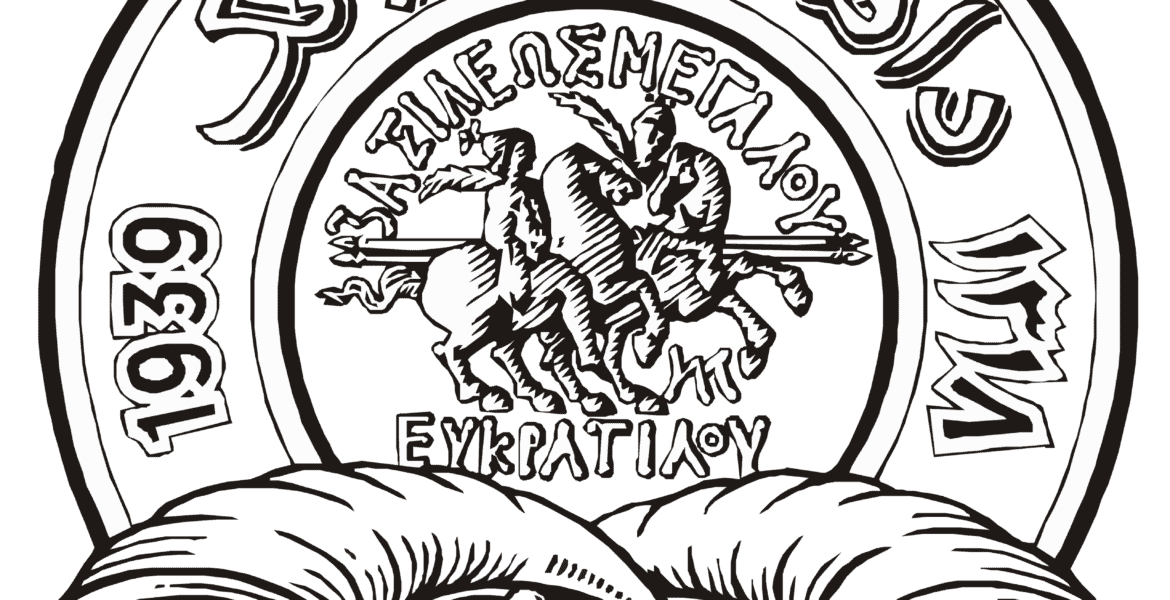
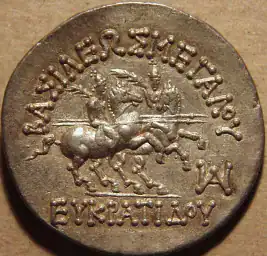
Athens — In a striking reminder of the deep Hellenistic roots that stretch across Central Asia, the official seal of Da Afghanistan Bank—Afghanistan's central bank—continues to feature an image from a 2nd-century BC silver tetradrachm of Greco-Bactrian King Eucratides I. This ancient Greek coin design remains emblazoned on Afghan banknotes to this day, serving as a quiet testament to the region's rich history of cultural fusion under Alexander the Great's successors.
The seal centers on a reproduction of the tetradrachm's reverse, depicting the Dioscuri—twin brothers Castor and Pollux from Greek mythology—shown as mounted horsemen wielding lances, clad in Phrygian caps topped with stars. The Greek inscription ΒΑΣΙΛΕΩΣ ΜΕΓΑΛΟΥ ΕΥΚΡΑΤΙΔΟΥ ("Of the Great King Eucratides") encircles the emblem, proudly proclaiming the legacy of one of the most powerful Hellenistic rulers in ancient Bactria (modern northern Afghanistan, centered around Balkh).
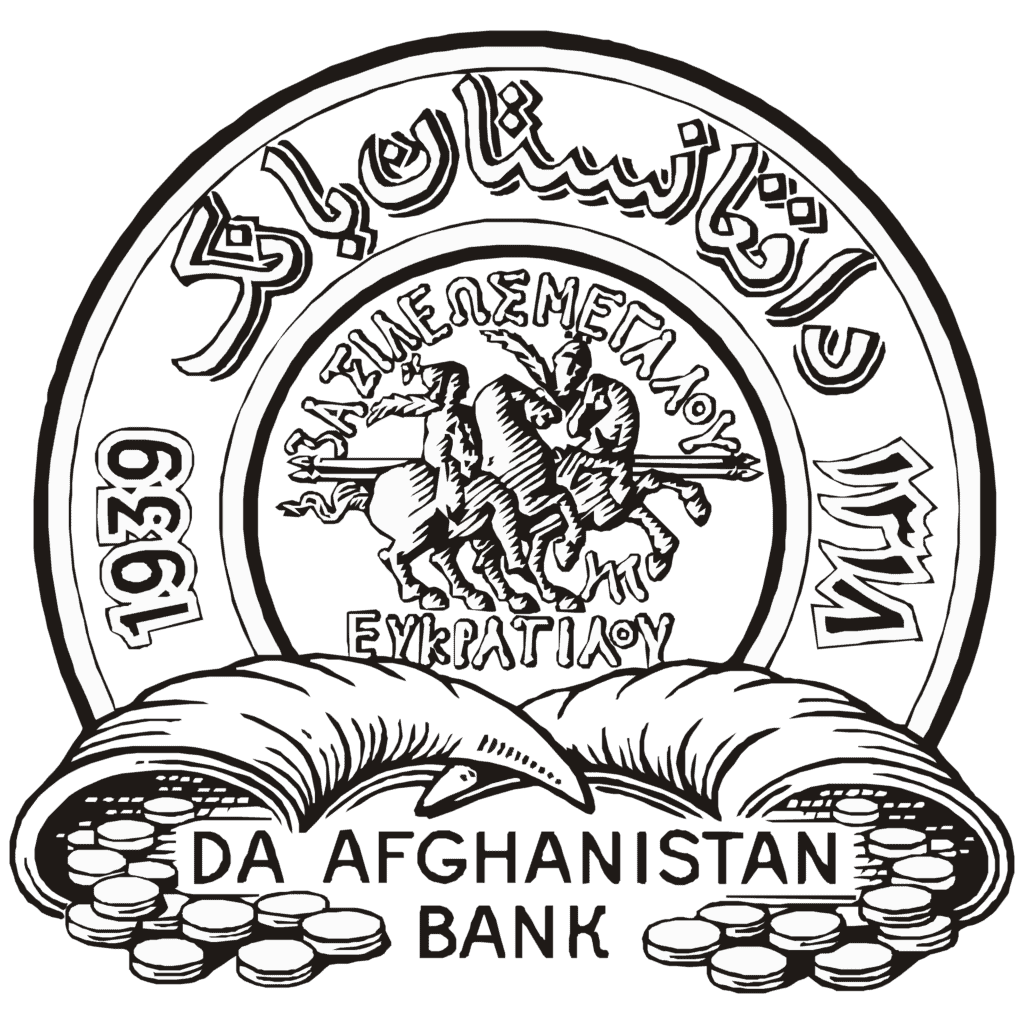
Da Afghanistan Bank, established in 1939, deliberately chose this symbol to underscore Afghanistan's profound historical ties to the classical world. The Greco-Bactrian Kingdom (c. 250–125 BC) emerged in the wake of Alexander's conquests, blending Greek art, language, and governance with local Persian and Central Asian traditions. Eucratides I (r. c. 171–145 BC), often called "the Great," expanded the kingdom significantly and minted some of the most impressive coinage of the era—coins that today highlight Afghanistan's place in the broader story of Hellenism.
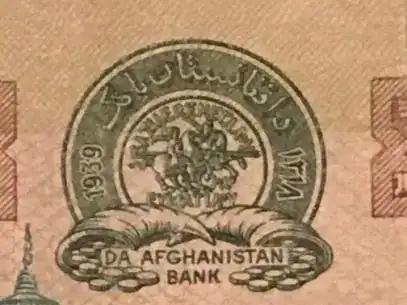
Despite decades of conflict, regime changes—including the Taliban's return to power in 2021—and economic upheaval, the bank's logo and the coin imagery have persisted on currency. Official sources, including the bank's own website and historical records, confirm the design's continuity, reflecting a deliberate link to pre-Islamic heritage amid modern transformations.
This enduring emblem stands in contrast to broader challenges facing Hellenistic legacies in the region, from the preservation of sites like Ai-Khanoum (the ancient Greek city in northern Afghanistan) to the ongoing interest in Greco-Bactrian artifacts. Recent archaeological discussions and publications continue to explore how Hellenism shaped Central Asian civilization, with Afghanistan's bank seal serving as one of the most visible living symbols.
As Afghanistan navigates its future, the presence of Eucratides' coin on national currency offers a poignant reminder: the threads of ancient Greek influence in the East remain woven into the fabric of state institutions, bridging millennia of history in an unlikely but enduring way.
Related News From Egypt to India: The cities founded by Alexander the Great
Stay updated with the latest news from Greece and around the world on greekcitytimes.com.
Contact our newsroom to share your updates, stories, photos, or videos. Follow GCT on Google News and Apple News.
