
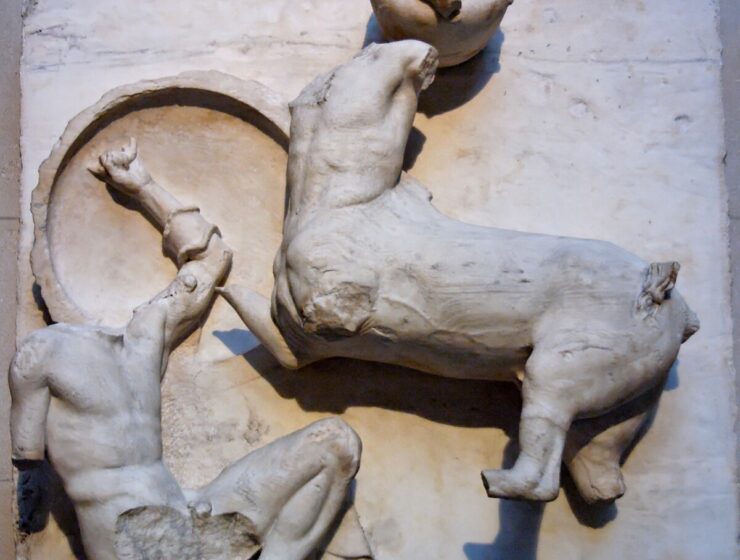
Greek PM Mitsotakis stresses the imperative of the Parthenon Sculptures return to the Acropolis Museum, citing cultural reunification and growing UK support.
Archaeology
In a rare intersection of faith and diplomacy, the Governor of Mount Athos has formally invited US President Donald Trump to visit the Holy Mountain. The gesture highlights the enduring spiritual, cultural, and geopolitical influence of one of Orthodox Christianity’s most sacred sites.
A prominent Greek-Australian advocate for the reunification of the Parthenon Sculptures, currently held in the…
A “paper war” of announcements has erupted between the Minister of National Defence, Nikos Dendias, and the Mayor of Athens, Haris Doukas, after recent changes to the law governing the cleaning and maintenance of the Tomb of the Unknown Soldier in Athens.

Archaeologists from Inrap have uncovered Greek-era vineyards in Marseille’s 15th district, dating from the 5th to 2nd centuries BCE. Located 2km from Massalia’s ancient walls, the site reveals three successive vineyards with planting pits and trenches, shedding light on the agricultural practices and economic power of the Phocaean colony.

Archaeologists have unearthed a rare statue of a pig in the ancient city of Gortyna, Crete, offering new insight into the island’s ritual and cultural traditions.

On 14 October 2025 Sydney welcomes the celebration of 30 years of film storytelling as…
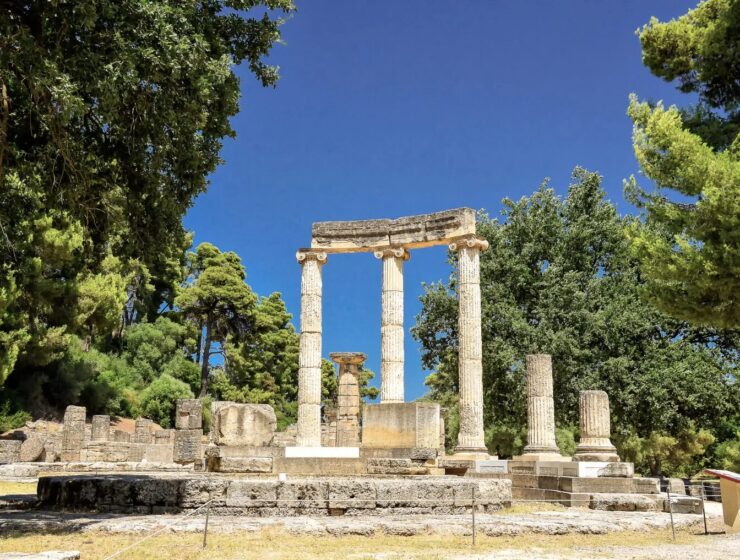
A German woman has returned an ancient artifact she stole over 50 years ago from Olympia. The limestone column capital was repatriated with the help of the University of Münster.

At the royal gymnasium of Mieza, the site where Aristotle once tutored a teenage Alexander the Great, a new phase of excavations has revealed four slender writing styluses believed to have belonged to his students more than 2,300 years ago.

Archaeologists have uncovered an 1,800-year-old agora in the ancient Greek city of Metropolis, İzmir — a site dedicated to the Mother Goddess, showcasing Doric architecture, mosaics, and cultural continuity from the Hellenistic to Roman eras.
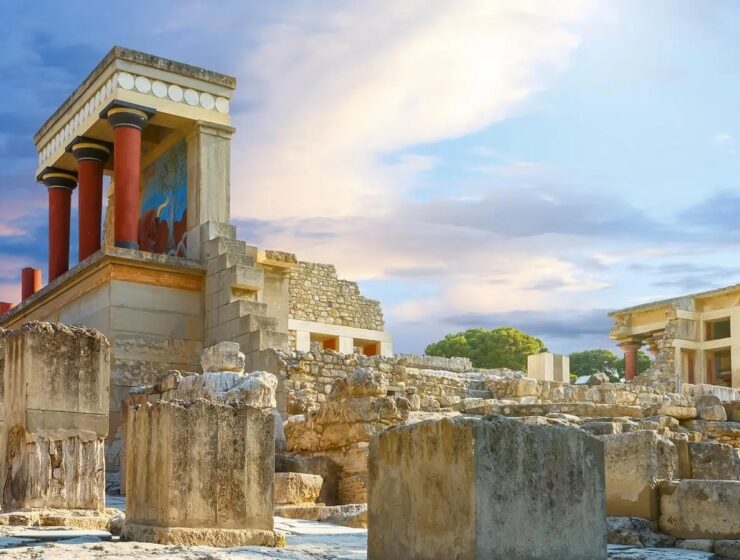
The Ministry of Culture has approved filming and aerial photography of over 100 archaeological sites across Crete, marking a key step in the digital transformation of Greece’s tourism portal, Visit Greece. These images will enhance the promotion of Greece’s rich heritage and support the Greek National Tourism Organization’s global outreach.

Greece’s cultural heritage leads the world in 2025. Discover iconic sites and vibrant traditions that make it a top travel destination.
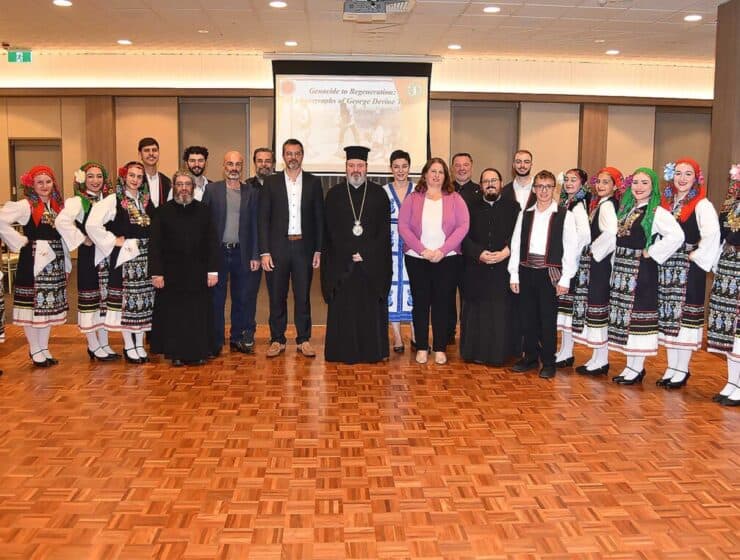
George Devine Treloar, the unsung Australian hero, was honoured at a vibrant cultural event marking Asia Minor Genocide remembrance. Featuring poignant photographs, traditional dances, and heartfelt tributes, the gathering in Kogarah united communities in celebrating resilience and shared heritage.

n Sharjah’s desert, a 2,300-year-old vase containing 409 silver coins linked to Alexander the Great was uncovered, revealing Mleiha’s role as a key trade hub and Arabia’s deep ties to the Hellenistic world.
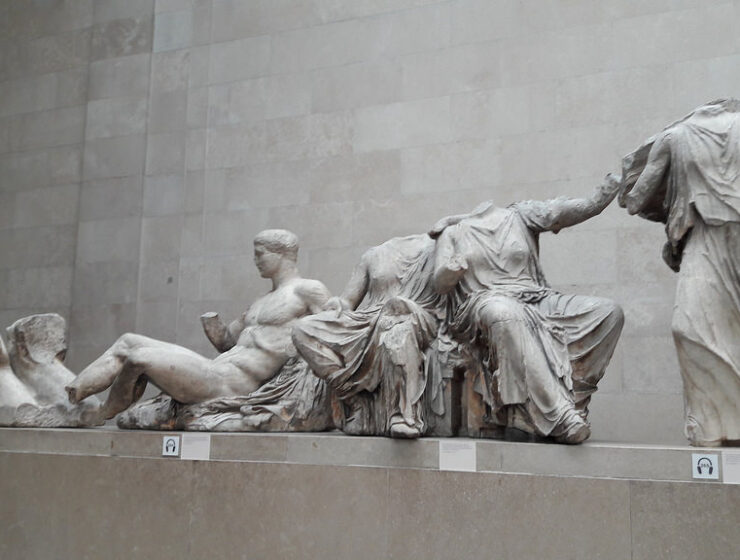
A new poll shows growing British support for returning the Parthenon sculptures to Greece, with 56% favoring repatriation and nearly one-third advocating the return of all looted artefacts in British collections.

Archaeologists in Albania have made a groundbreaking discovery: a 3rd-century Roman tomb with Greek inscriptions. The richly decorated burial chamber, believed to belong to an aristocrat, contained gold-threaded fabric, glass vessels, and dedications to Zeus (Jupiter).

Exclusive: Parthenon Marbles return to Greece gains traction as 2026 deal nears. Explore insights, advocates, and challenges.

Archaeologists have uncovered a 2,000-year-old underwater port in Asini, Greece, revealing a lost maritime hub with advanced harbor engineering. The discovery sheds new light on ancient trade networks and could reshape our understanding of Mediterranean maritime history.

A new study of 8- to 9-million-year-old ape fossils from Nikiti, Greece, suggests human ancestors may have evolved in Southeastern Europe before migrating to Africa, challenging the “Out of Africa” theory. Led by David Begun, the findings spark debate but face skepticism due to Africa’s robust fossil record.

President Trump has signed an executive order mandating classical Greco-Roman architecture for federal buildings, reviving his earlier policy and rejecting modernist styles.

Archaeologists in Ithaca confirm the discovery of the Odysseion, a sanctuary dedicated to Odysseus. New finds strengthen the island’s ancient link to the Homeric hero as the International Odyssey Conference opens.
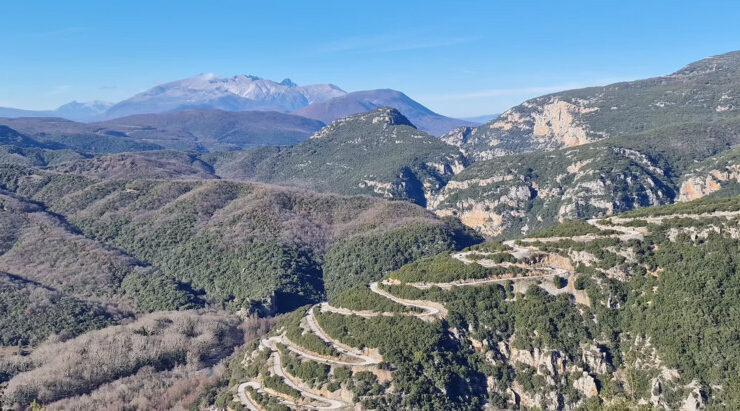
Zagorochoria is one of Greece’s best-kept secrets and now the setting for Nefeli Nine’s Zagorochoria Trekking Adventure, recently recognised by the BBC as one of Europe’s most extraordinary hiking journeys.

A 1,400-year-old plaster cross discovered on Sir Bani Yas Island in Abu Dhabi confirms the presence of an early Christian monastery, offering rare insight into Christianity’s history in the Arabian Gulf.

A 2,000-year-old Greco-Roman basalt stele has been discovered in Manbij, Syria, featuring an eagle clutching a wreath and Greek inscriptions. The funerary monument reflects the cultural blend of Roman symbolism and Hellenistic language in the eastern provinces.

Egypt has retrieved three colossal Greco-Roman statues from Abu Qir Bay, including a Ramses II sphinx, a Ptolemaic colossus, and a Roman nobleman statue.
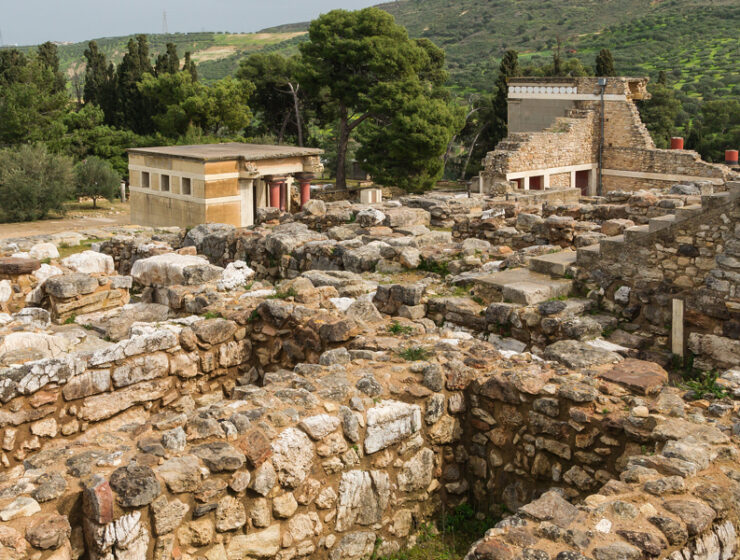
Constructed around 1700BC, Knossos Palace is the largest Bronze Age archaeological site on Crete and the most complex in Greece. During the Bronze Age, Knossos Palace was the ceremonial, religious, economic and political centre of the Minoan Civilization.

Discover the 286,000-year-old Petralona skull from Greece, a unique Homo fossil that challenges our understanding of human evolution. Learn about its dating and significance.

Archaeologists in Ulpiana, Kosovo, have uncovered a rare mosaic inscription dedicated to Byzantine Emperor Justinian I and Empress Theodora, marking the construction of a new church. This find, the second in two years at the site, confirms Justinian’s efforts to rebuild the city after a devastating earthquake and emphasizes his historical connection to the region.

Archaeologists have uncovered centuries-old frescoes in the Church of Saint Nicholas, Mesopotamos, Northern Epirus, hidden for centuries beneath whitewashed walls. The discovery, preserved by height and vivid colours, reveals a rare glimpse into Byzantine artistry.

6th-century BCE marble fragment from an Acropolis temple, featuring an anthemion design, was repatriated from Chile to Greece. Moved by Greece’s fight to reclaim the Parthenon Sculptures, a Chilean citizen returned the artifact, which may belong to the ancient Hekatompedon temple.
