
In an world* increasingly obsessed with “cultural appropriation,” trigger warnings, and cancel culture, one can’t help but imagine: What if us Greeks decided to get woke?
If "WOKE IDEOLOGY" were also legally enforceable, the ramifications would be nothing short of apocalyptic - not only for Hollywood and literature, but for global culture, governance, and everyday life!
SIDE NOTE: The truth almost no one points out: it’s cultural misappropriation, not appropriation, that’s potentially 'harmful'. Borrowing, sharing, and adapting culture is something humanity has been doing since the dawn of time. Harm only occurs when it’s distorted, exploited, abused or disrespected. Yet modern woke rhetoric often ignores this distinction, treating every act of cultural borrowing as offensive. I am surprised that this ignorance has not been called out by well known podcasters, public figures, influencers and academics that object to Woke ideology.
From democracy to theatre, from philosophy to cuisine, Greek culture has seeded the world for millennia. And yet, unlike modern activists hyper-focused on “ownership” of cultural elements, us Greeks never really fussed about who borrowed our culture, told our stories - or how.
If we did and Cultural Appropriation had actual legal force, then the results would be catastrophic. Here’s why:
Cultural Appropriation: The Greek Way
The first and most obvious arena is cultural appropriation—the lightning rod of modern woke discourse. Ancient Greeks were storytellers, myth-makers, and philosophers whose ideas have traveled the world freely. Homer’s epics, Sophocles’ tragedies, Aristophanes’ comedies—these stories have been told, retold, and adapted countless times by non-Greeks.

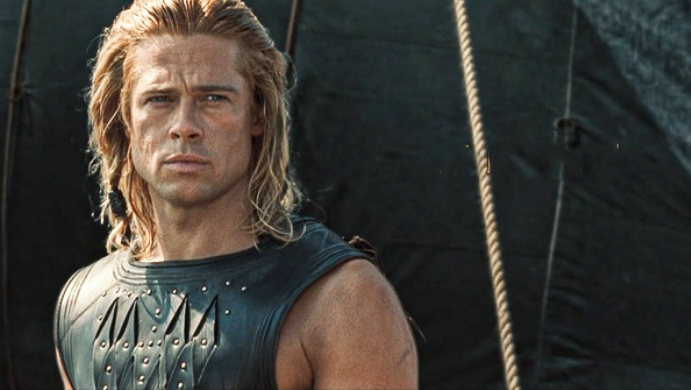
Take Hollywood: Charlton Heston played Jason, Brad Pitt played Achilles, Richard Harris played Agamemnon. None of them were Greek, yet there were no petitions, boycotts, or demands for authenticity. No one claimed any kind of harm. Cultural borrowing in the Greek sense has always been about celebration, not 'appropriation'.
In 2020, Disney faced criticism for casting Emma Stone as Cruella de Vil, a “whitewashing” controversy. Compare this to Hollywood casting non-Greeks as Achilles or Jason - Greek myths were never policed for authenticity.
The Irony of Weaponized Cultural Appropriation
Modern woke culture often fails to recognize that those policing “appropriation” are frequently guilty of it themselves—sometimes in spectacularly ironic ways. Take a recent example: an African American professor on Dr. Phil argued that "cultural appropriation is on the same level of white supremacy, because white supremacy intersectional" with even things like 'white' people wearing braided hair and dreadlocks were accused of the heinous crime of 'cultural appropriation since these hair styles were considered by some audience members as an exclusively African cultural practice.

At first glance, this might seem like a harmless critique - but the absurdity quickly becomes clear. For starters, braids are not unique to Africa - they appear prominently in ancient Greek statues, art, and culture, worn by both men and women. So by his own logic, Greek culture is equally shared and cannot be rigidly “owned.”

The irony deepens: the professor delivered his critique entirely in English, a language with deep Greek and Latin roots. Following his reasoning, only English people should be allowed to speak or write in English—making him, by definition, a cultural appropriator.
And if that wasn’t enough, he was wearing a business suit, another product of English cultural evolution. By policing others for appropriating culture while simultaneously enjoying English language and attire, he exemplified the contradictions of weaponizing cultural appropriation.
This example underscores the absurdity of strict cultural policing. Greek culture, which has thrived for millennia precisely because it was adapted globally, perfectly illustrates why such rigid rules are impractical and logically impossible.
Democracy: A Woke Minefield
Consider democracy, arguably Greece’s most famous export. Athens gave the world the idea that citizens could participate in governance. Modern parliaments, elections, constitutions—all borrow from Greek models.

Imagine if Greeks got woke: would we need licensing agreements to hold elections? Should parliaments cite Pericles every time a law is passed? Would every political debate require a “Greek culture credit” disclaimer? If Greek activists applied contemporary woke standards, the very functioning of modern government could be under legal scrutiny.
Modern debates over voting rights or reparations often hinge on historical context. Imagine if Athens demanded recognition and royalties for modern democratic systems—the irony would be palpable.
Theatre and Literature: Borrowing Without Apology
Greek theatre is the backbone of the performing arts. From Euripides to Aristophanes, their plays form the blueprint of drama worldwide. Shakespeare, Racine, Ibsen, and Brecht all stand on the shoulders of Greek dramatists. Hollywood adaptations of Greek myths are countless, and none of this borrowing has been deemed morally offensive—or required “reparations.”

If Greeks suddenly demanded strict cultural ownership, theatre companies and film studios would owe compensation for centuries of creative borrowing. Every director who staged The Iliad or Medea would face legal and moral claims. Every classroom that teaches Greek mythology would require permissions. Entire industries would collapse under the weight of unpaid cultural debt.
The 2018 backlash against Hamilton’s diverse casting shows how race-conscious modern theatre has become. In contrast, Greeks never cared whether their characters were played by outsiders.
Christopher Nolan’s recent adaptation of Odysseus brought the epic hero to a global audience, featuring diverse casting and modern reinterpretations. By woke logic, Nolan would have needed Greek “permissions,” licenses, and moral approvals—a scenario that highlights the absurdity of policing centuries-old stories.
Philosophy: Owning Ideas
Greek thinkers created the frameworks for Western thought: Socrates, Plato, Aristotle, and the Stoics provided the intellectual scaffolding for ethics, metaphysics, and logic. Modern philosophy, science, and even psychology rely heavily on their contributions.

Were the Greeks to go woke, the implications for education alone would be staggering. Professors, essayists, and authors who quote or analyze Greek philosophy might suddenly owe moral or intellectual “royalties.” Every textbook, lecture, and academic journal would require vetting for cultural appropriation. The global academy would be in chaos.
When social media campaigns target “Eurocentric philosophy,” they rarely recognize that these ideas are already global property, influencing cultures from Japan to Latin America. Imagine a Greek lawsuit over intellectual “misappropriation.”
Art and Architecture: Global Borrowing
Greek influence is unmistakable in art and architecture. Columns, pediments, friezes, and statues are copied worldwide—from Renaissance Italy to Washington D.C. Neoclassical government buildings, museums, and monuments are visual homages to Greece.

Modern woke logic would turn these homages into legal and ethical dilemmas. Would cities need Greek approval before building Doric columns? Would architects be sued for appropriating Parthenon symmetry? The entire construction and design world could face moral and financial paralysis.
In 2023, debates over Confederate statues in the U.S. showed how architecture and monuments can trigger controversies. Imagine the same applied to Greek-inspired neoclassical buildings.
Language and Terminology
Greek contributions to language are so deep that modern Western vocabulary would crumble without them. Words like “philosophy,” “democracy,” “ethics,” “logic,” and “theatre” are embedded in everyday speech. Science, medicine, and math rely heavily on Greek terminology.

A woke Greek stance could force global linguists and educators to stop using these words- or risk accusations of appropriation. Imagine classrooms censoring Greek-origin words. How would scientists explain evolution, geometry, or ethics without Greek terms?
Academic discussions about “decolonizing language” often ignore the Greek roots of Western vocabulary. Imagine banning “physics” or “ethics” because they are borrowed from another culture.
Religion and Mythology
Greek mythology permeates modern culture. From Percy Jackson novels to Marvel’s Thor (himself inspired by Norse but often blended with Greco-Roman imagery), these myths are cultural currency. Ancient Greek gods appear in video games, comic books, and theme parks.

Were us Greeks woke, Disney would need licenses for Zeus, Hades, and Athena. Comic books and role-playing games would require Greek cultural clearance. Mythology classes might need parental consent forms to “expose” students to Greek gods.
The 2021 Raya and the Last Dragon controversy over misrepresentation shows modern sensitivities about myth and culture. Imagine applying this to Zeus or Athena—every video game and movie would be under review.
Cuisine and Wine
Even Greek food is widely borrowed. Olive oil, feta, tzatziki, moussaka, and baklava have been adapted globally. Wine culture itself owes much to Greek viticulture.
Imagine if modern Greeks objected to cultural appropriation in food: Italian restaurants might be sued for “misappropriating Greek olive oil.” French bakers would face claims for using filo pastry techniques inspired by Greek recipes. Wine producers would need licensing agreements for traditional grape varieties introduced by ancient Greeks.
“Foodie cultural appropriation” debates have targeted kimchi, tacos, and curry. Imagine applying this to Mediterranean staples that have crossed borders for millennia.
Sport and the Olympics
The Greeks gave us the Olympic Games, a global institution celebrated for over two millennia. Were they to adopt a woke lens, the modern Olympics might be seen as cultural theft. Every stadium, every medal ceremony, every torch relay could require Greek approval.

Athletes would face ethical scrutiny for participating in a “borrowed tradition.” The world’s biggest sporting event could literally be canceled.
Controversies over mascots, symbols, and Indigenous representation at recent Olympics demonstrate modern woke sensitivity to cultural imagery. Now imagine Greeks enforcing rights over an ancient global tradition.
Technology and Innovation
Greek contributions to technology are less celebrated but equally foundational. Archimedes’ inventions, engineering feats, and early mechanical devices laid the groundwork for modern science and engineering.

If Greeks objected to the appropriation of ideas, engineers, scientists, and innovators could face legal scrutiny for centuries of borrowed ingenuity. Modern technology—from pulleys to levers to mechanical principles—would require Greek cultural vetting.
Modern disputes over patenting ancient knowledge are ongoing, such as yoga, traditional medicines, or agricultural practices. Greek “patents” would make these pale in comparison.
Modern Woke Culture and Greek Paradox
The modern woke movement seeks to prevent exploitation, marginalization, and harm. Yet, it sometimes fails to account for history’s natural cultural exchange. The Greeks’ legacy highlights the absurd extremes of policing every borrowed idea, story, or artifact.
If we Greeks went woke, it would expose a paradox. Woke culture champions fairness and recognition. But when applied to Greek culture, it would demand impossible restitution and oversight. The Greeks created the frameworks of knowledge, governance, art, and entertainment—yet to “protect” their culture under modern woke logic, they would need to halt the very cultural proliferation that made their legacy eternal.
Cancel culture frequently targets individuals for perceived historical missteps or modern misrepresentations. Applying this retrospectively to Greek culture reveals the impossibility of such rigid enforcement.
Culture as a Gift, Not a Grievance
Greeks never worried about who told their stories or how their ideas were used. Their culture was built on sharing, dialogue, and reinterpretation. Myths were retold, philosophy debated, and theatre adapted, because culture thrives when it circulates.
Modern woke culture sometimes treats ideas as property to be hoarded or monetized. Applying this lens to Greek culture highlights its absurdity: the most borrowed culture in history would bankrupt the global economy and stop civilization in its tracks if it demanded restitution for appropriation.
Greek culture teaches an essential lesson: culture is strongest when shared, not hoarded. Borrowing, adapting, and celebrating ideas across borders strengthens human creativity. Woke culture, when applied universally and rigidly, risks killing the very cultural exchange it claims to defend.
If Greeks went woke tomorrow, the world would not just pause - it would go broke.
-Le Grec : )
World*: Predominantly referring to the Anglo-sphere, where these ideologies find futile ground in: USA, Canada, Australia, United Kingdom, New Zealand
Stay updated with the latest news from Greece and around the world on greekcitytimes.com.
Contact our newsroom to share your updates, stories, photos, or videos. Follow GCT on Google News and Apple News.

