
A Skiathos Exhibition Rediscovers the Architect Who Reshaped How We Walk Through Athens
An evocative new exhibition on Skiathos explores the life and work of Dimitris Pikionis, the modernist architect whose sensitive designs for the Acropolis landscape turned walking into a contemplative art form.
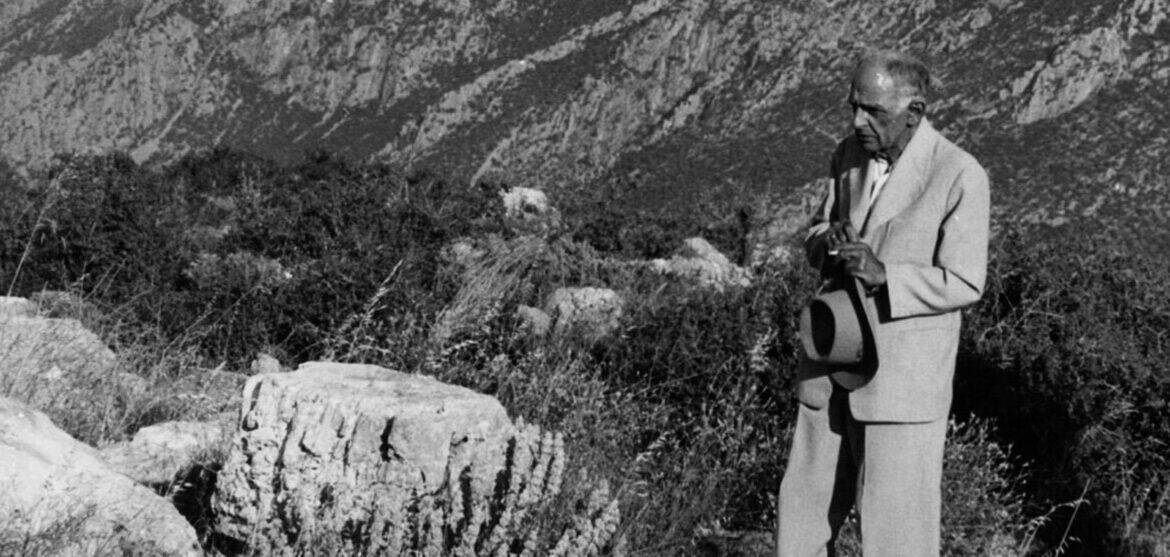
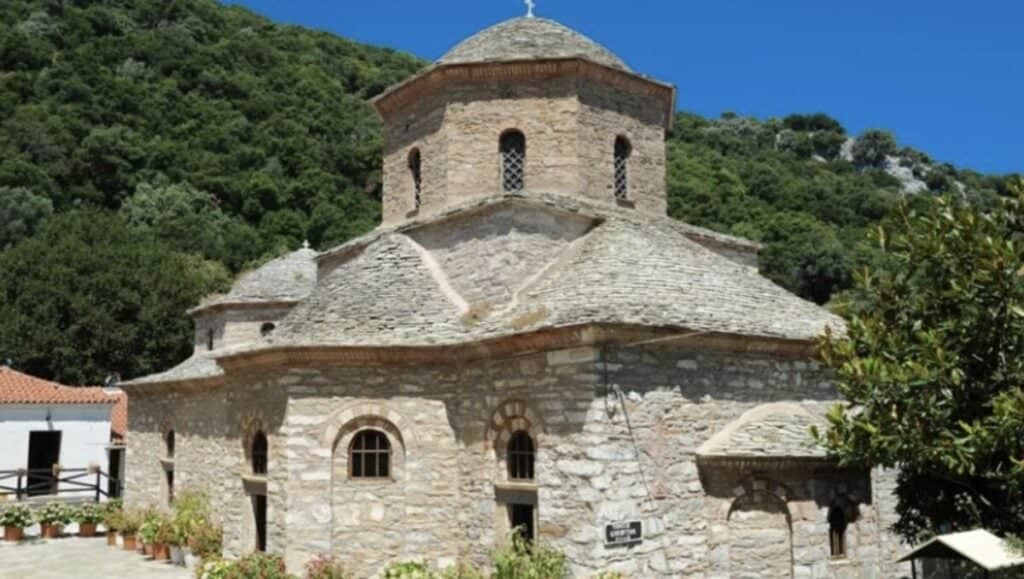
On a quiet hillside above the port of Skiathos, the courtyards of the Monastery of the Annunciation are filled with the smell of pine and the sound of cicadas. Inside, an exhibition invites visitors to rediscover the work of Dimitris Pikionis (1887–1968), the architect whose vision changed the way Greece experiences its most sacred spaces.

'Dimitris Pikionis: Shape and Form', organised by the Benaki Museum in collaboration with the Cultural Association of Skiathos, runs until 15 October. It traces the life of a man who believed that architecture should be more than function and form. For Pikionis, buildings and landscapes were carriers of memory, history and emotion – what he called a “sentimental topography.” This is the essence of what many now describe as the “poetry of place”: a way of designing that allows a site to reveal its own rhythm and story rather than imposing an external order upon it.
Born in Piraeus to a family of Chian descent, Pikionis came of age at a time when Athens was still finding its identity as a capital city. Trained as a civil engineer, he soon turned to painting, studying under Konstantinos Parthenis and later travelling to Munich and Paris. At the École des Beaux-Arts he encountered Cézanne, Klee and Rodin, whose work taught him that design could be emotional as well as rational. When he returned to Athens, he brought with him a conviction that architecture should engage with history, myth and place.
“The universal spirit had to be coupled with the spirit of nationhood.”
– Dimitris Pikionis
His early works reflected the clean lines and functional clarity of the modern movement, but Pikionis soon felt the need for something deeper. “The universal spirit had to be coupled with the spirit of nationhood,” he later said, describing the moment he turned towards Greece’s own vernacular traditions for inspiration. From this point forward, his work sought to reconcile modernity with memory – a synthesis that would come to define his most important project.
Between 1954 and 1957, Pikionis undertook the landscaping of the Acropolis and Philopappou Hill, creating a network of stone-paved paths that today feel as though they have always been there. Working closely with local craftsmen and students, he used marble fragments, salvaged rubble and stones found on site to create routes that follow the natural contours of the hills. Rather than designing every detail on paper, he allowed much of the work to be resolved in the field, improvising as the paths took shape.
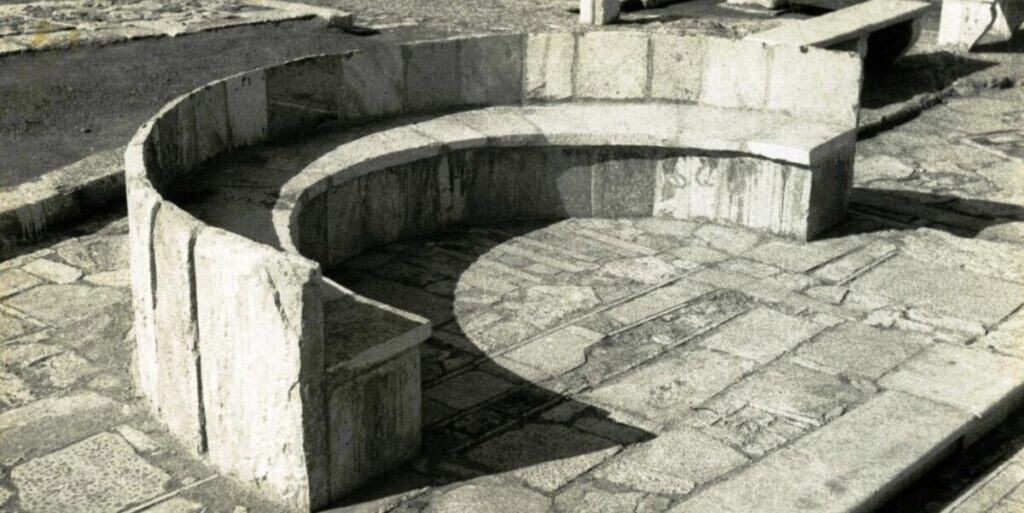
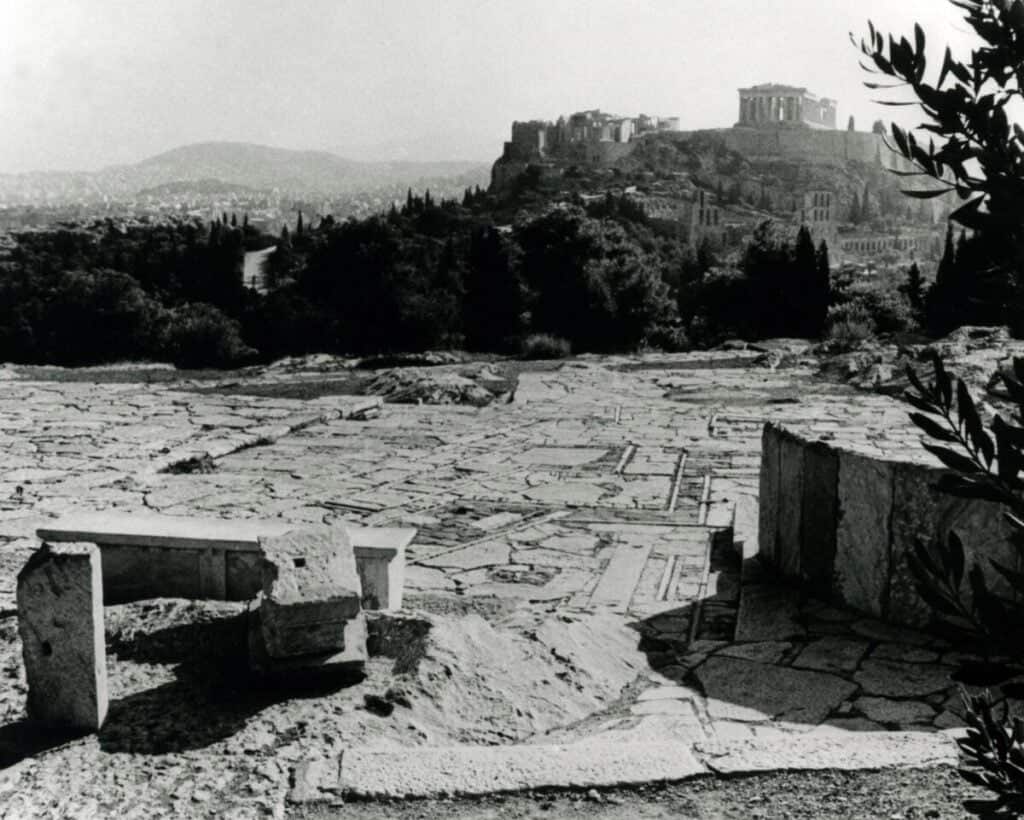
The result is less a construction than a journey. Visitors find themselves pausing at stone benches, climbing gentle inclines, and discovering framed views of the Parthenon. The British historian Kenneth Frampton once wrote of his first walk through the site: “I felt the almost literal movement of the ground as my frame was drawn by the tactile resistance of the paving, up and down the undulating labyrinth of the terrain.”
“I felt the almost literal movement of the ground as my frame was drawn by the tactile resistance of the paving.”
– Kenneth Frampton
The Skiathos exhibition brings together drawings, models and paintings that show the range of Pikionis’s work: schools and houses from the 1920s and 30s, his visionary plans for Delphi, the children’s garden in Filothei, and of course his celebrated Acropolis landscaping. Together they reveal an architect who refused to treat architecture as a neutral backdrop. For him, every project was a dialogue with its setting.
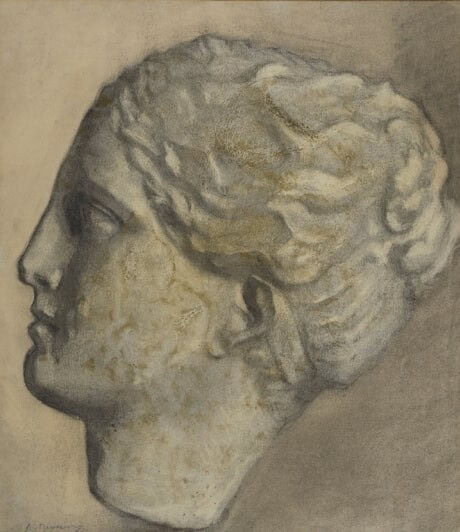
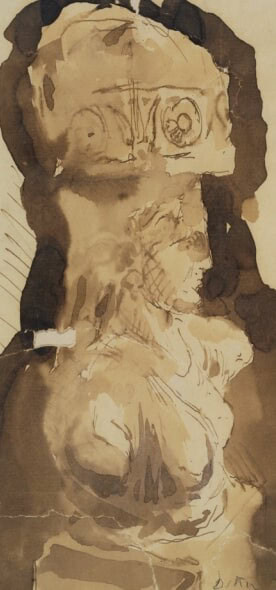

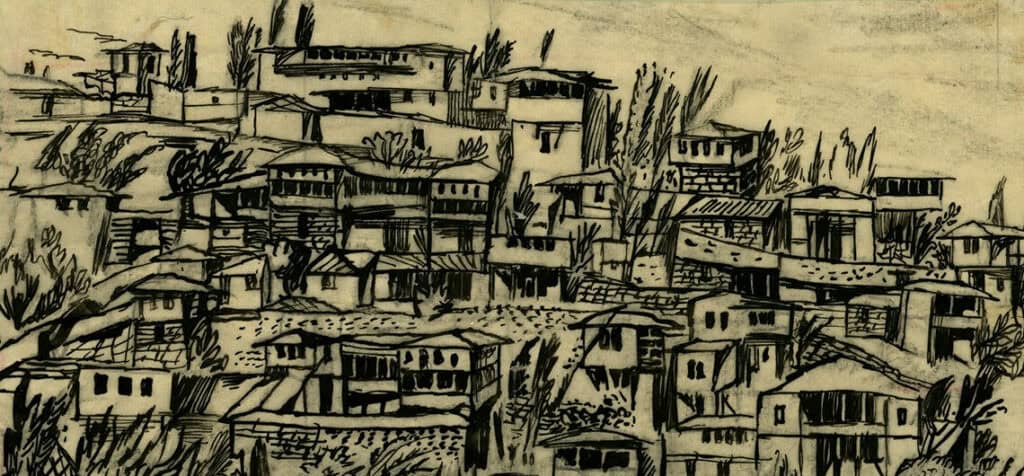
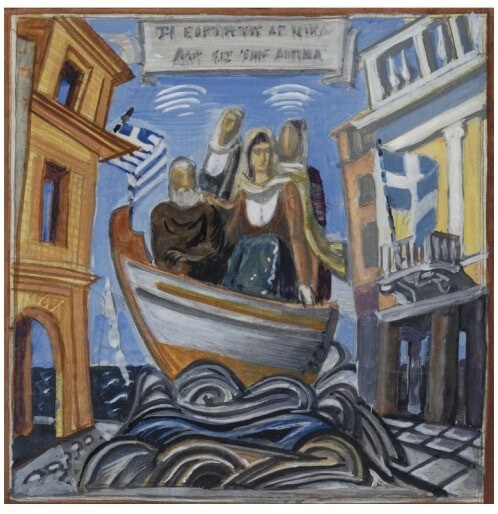
There is a particular resonance in showing Pikionis’s work at Evangelistria Monastery, where the first Greek flag was sewn and raised during the War of Independence. The setting reminds visitors that for Pikionis, architecture was always tied to the spirit of the nation - not through nostalgic imitation, but through a living conversation with history.
At a time when cities are developing faster than ever and cultural memory is easily erased, Pikionis feels strikingly relevant. His respect for context, his reuse of materials, and his collaboration with craftsmen all anticipate today’s ideas of sustainable, place-sensitive design. Later this year, the Benaki Museum in Athens will host a major exhibition titled Dimitris Pikionis: An Aesthetic Topography, focusing on his work on the Acropolis. It will give visitors another opportunity to engage with a body of work that still has much to teach about how we live with the past while building for the future.
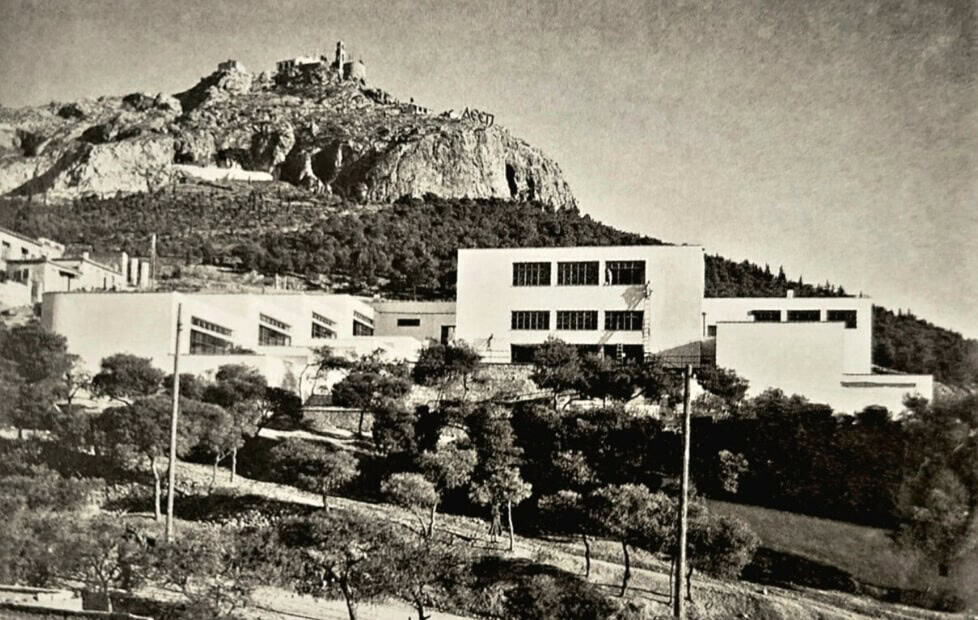
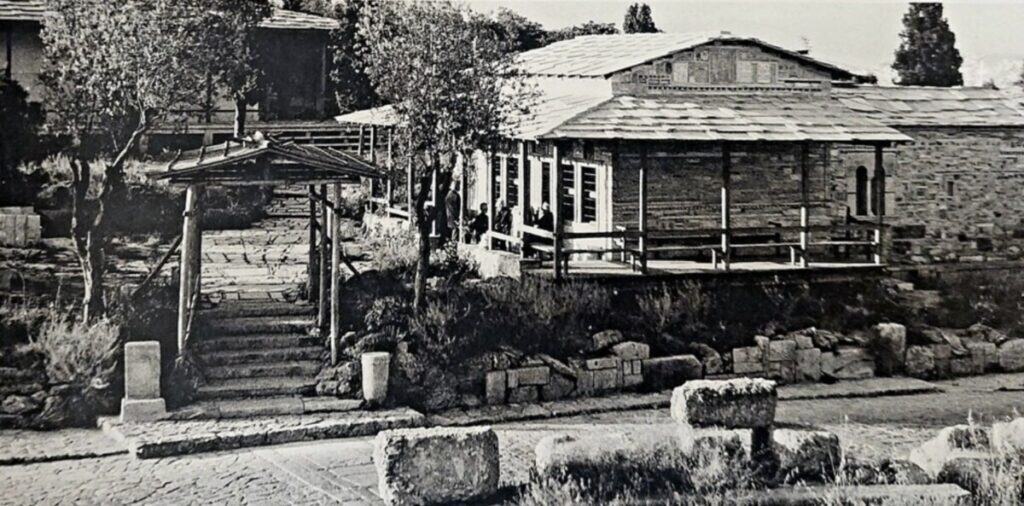
To walk a path by Pikionis is to experience architecture as something that speaks, guiding you gently while revealing what was always there. It is this ability to transform a walk into an act of seeing and remembering that makes his work truly the poetry of place.
Exhibition Details:
Dimitris Pikionis: Shape and Form
Where: Holy Monastery of the Annunciation (Evangelistria), Skiathos Island, Greece
When: Until 15 October 2025
Organisers: Benaki Museum and the Cultural Association of Skiathos
More Information: www.benaki.org
Images courtesy of the Benaki Museum
Read also The Four Humours: How Ancient Greece Shaped Our Obsession with Personality
Stay updated with the latest news from Greece and around the world on greekcitytimes.com.
Contact our newsroom to share your updates, stories, photos, or videos. Follow GCT on Google News and Apple News.

