

Greece is moving closer to the full deployment of its new-generation “smart cameras,” with the…
Tag: Dimitris Papastergiou

More than 2,500 traffic violations have been recorded in Attica within just four days, following…

Greece is actively contributing to the European Union’s push for digital sovereignty, taking part in high-level talks in Vienna that focus on technological independence, innovation, and safeguarding democracy against threats such as misinformation and deep fakes.

Greek ministers and technology experts addressed both the potential and concerns surrounding artificial intelligence during…

Greece’s government underwent a swift reshuffle on Monday as new ministers were sworn in following high-profile resignations linked to the OPEKEPE subsidy scandal. Prime Minister Kyriakos Mitsotakis appointed four new officials in a bid to stabilize his administration ahead of a key cabinet meeting, where major policy initiatives—including labor reform and a national AI strategy—were presented under the cloud of ongoing political turmoil.

Greece is developing its own AI supercomputer, with the final permit recently issued, as announced by Digital Governance Minister Dimitris Papastergiou. The country is also proposing a new AI factory in Western Macedonia and advancing projects like Daidalos and AI Factory Pharos, focusing on health, culture, and civil protection. Additionally, Greece is launching microsatellites, starting with Transporter 14, to gather data for AI-driven models in civil protection and agriculture.

On Tuesday, 107,000 citizens adopted the new personal number launched through gov.gr, as announced by Digital Governance Minister Dimitris Papastergiou.

Greece has unveiled a new *Personal Citizen Number* that will serve as a lifelong, unified ID for all public sector interactions. Announced by Prime Minister Kyriakos Mitsotakis, the number will be integrated into updated police ID cards and aims to simplify bureaucracy, improve data accuracy, and modernize the state’s digital infrastructure.

Greece launched “Kids Wallet” on May 5, 2025, a state app enabling parents to monitor children’s screen time and verify their age online. Integrated with government services, the voluntary tool aims to protect minors, aligning with EU efforts to enhance digital safety amid rising concerns about online exposure.
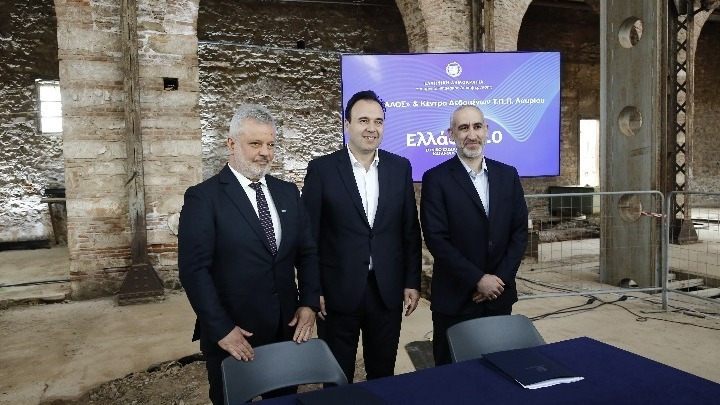
In a historic move, Greece has launched the construction of “Daedalus,” a state-of-the-art supercomputer set to position the nation as a leader in artificial intelligence. Announced by Digital Governance Minister Dimitris Papastergiou at the Lavrio Technological Cultural Park, the €58.9 million project—funded by the EU’s NextGenerationEU—will deliver a computing powerhouse with 89 Petaflops of performance, ranking among the world’s top systems by 2026. Housed in a revamped industrial heritage site, “Daedalus” will drive innovation in AI, healthcare, and sustainability, marking a bold step into the Fourth Industrial Revolution.

Greece has been chosen as one of two host nations for the European Union’s secure satellite telecommunications programme, GOVSATCOM. This critical initiative will see a hub established in Attica, providing secure communications for EU member states and reinforcing Greece’s role as a key player in European security and innovation. The hub is expected to attract significant investments in space technology, boosting Greece’s geopolitical standing and technological ecosystem.

Gov.gr Ranks 2nd Among 74 Companies for Customer Experience, Highlighting Digital Progress in Greece
Gov.gr has ranked 2nd in customer experience among 74 companies in a recent survey by Braincandy, maintaining its top position in the public sector. The ranking highlights the success of Greece’s digital transformation, with the platform providing citizens with easy access to government services. Minister Dimitris Papastergiou emphasized the government’s commitment to digitalizing all state procedures by the end of its term, with Gov.gr also leading the way in integrating Artificial Intelligence through its digital assistant, mAigov.

Greece is rolling out a comprehensive National Strategy to protect minors from internet addiction, with measures including a parental control platform, age authentication tools, and new legislation in collaboration with European partners. Prime Minister Kyriakos Mitsotakis emphasised the importance of parental involvement and proposed setting the “digital adulthood” age at 15. The initiative aims to create a safer online environment for children and address the challenges of excessive social media use.

Digital Governance Minister Dimitris Papastergiou announced that Greece will install 1,000 traffic cameras across the country by the summer of 2025. The first 388 cameras will be placed in the Attica region at high-risk junctions, with the goal of improving road safety. The new system will also allow fines to be sent directly to offenders’ mobile phones, along with a digital platform for submitting objections.

As AI technology advances, there’s a pressing need to develop language models that can fully understand and process Greek. This initiative, led by Greece’s Digital Governance Ministry, aims to enhance AI applications for Greek-speaking users, addressing challenges faced by non-English speakers.

The Gov.gr Wallet has been awarded “Digital Transformation of the Year” by the World Innovation, Technology and Services Alliance (WITSA) at its annual conference in Armenia. This top honour recognises the General Secretariat for Information Systems and Digital Governance’s efforts to enhance digital services in the public sector, accepted by General Secretary Dimosthenis Anagnostopoulos.

Greece and Cyprus have ratified a Memorandum of Cooperation on digital transformation, aiming to create a unified digital infrastructure. The agreement, supported by a majority in the Greek Parliament, will facilitate mutual recognition of digital documents, streamline citizen transactions, and promote collaboration on digital governance initiatives between the two countries.

The Gov.gr Wallet, hailed as “the start of a new era” by Digital Governance Minister Dimitris Papastergiou, will allow citizens to consent to the disclosure of their personal data to public and private entities. This new digital service aims to eliminate the need for commonly requested certificates and reduce bureaucracy, with plans to extend its functionality to energy providers and further enhance cybersecurity measures.

Greek Minister of Digital Governance Dimitris Papastergiou assured on Friday that Greece had experienced relatively minimal impact from the recent global IT outage affecting Microsoft systems, despite significant disruptions reported worldwide.
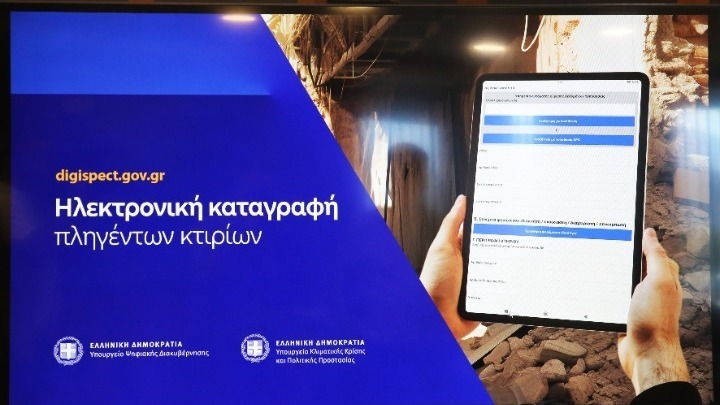
Digital Governance Minister Dimitris Papastergiou and Deputy Minister Christos Triantopoulos launched “Digispect,” an app to streamline inspections of buildings damaged by natural disasters, enabling faster, safer assessments by civil engineers.

By the end of the year, citizens will be able to conduct key transactions with the Church of Greece online through gov.gr. The move will digitize procedures for marriage licenses, baptism certificates, and even divorce proceedings, eliminating bureaucratic hurdles and allowing citizens to access these services from the comfort of their homes.

Open Cosmos and the European Space Agency have signed a contract for a High-Resolution Optical Constellation as part of Greece’s National Satellite Space Project.

Greece is set to enhance the experience of its visitors with the launch of “mAiGreece,”…

Greece is set to enhance its digital governance with the launch of an AI application…
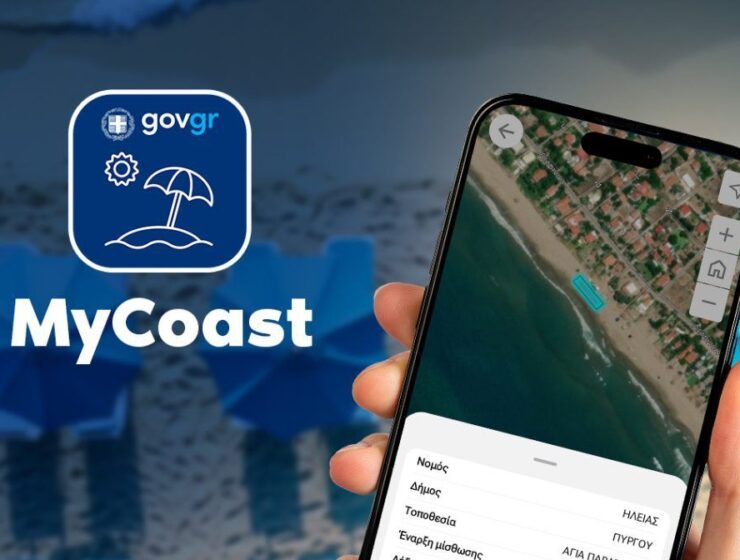
In a bid to empower citizens and safeguard the integrity of its coastline, Greece has…

The issue of cyber security and the digital state, along with cyber threats, is of…
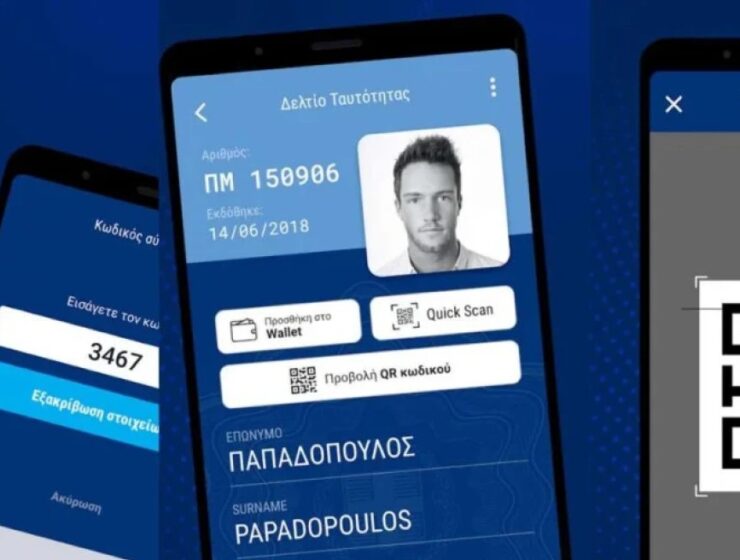
In six months, the car registration license and the passport will be added to the…

It took just two minutes to pinpoint the precise location of a plume of smoke…
