

Archaeologists in Turkey have discovered an ancient Roman pool in the city of Tyana which…
Tag: Roman Empire

A rare wooden statue of Hercules has been discovered in a Roman-era refuse pit on Ibiza, preserved by groundwater in remarkable condition, according to La Voz de Ibiza.

An 1,800-year-old silver amulet found in a Frankfurt grave, inscribed with 18 lines of Latin text, reveals the earliest evidence of Christianity north of the Alps. Dating to 230–270 A.D., the “Frankfurt Inscription” challenges the timeline of the religion’s spread in the Roman Empire, showcasing a man’s devotion to Jesus Christ in a time of persecution.

Archaeologists have uncovered an 1,800-year-old agora in the ancient Greek city of Metropolis, İzmir — a site dedicated to the Mother Goddess, showcasing Doric architecture, mosaics, and cultural continuity from the Hellenistic to Roman eras.

A 2,000-year-old Greco-Roman basalt stele has been discovered in Manbij, Syria, featuring an eagle clutching a wreath and Greek inscriptions. The funerary monument reflects the cultural blend of Roman symbolism and Hellenistic language in the eastern provinces.

A rare Greek graffito found in Jordan’s Black Desert, 35km east of Azraq, offers insights into early nomadic Christians. Discovered in 2010 by Rafe Harahsheh, the inscription on a basalt pebble reads, “Remember Toulos, son of Ietouros, who wrote this,” reflecting a blend of personal commemoration and presence in the remote region during the early centuries AD.
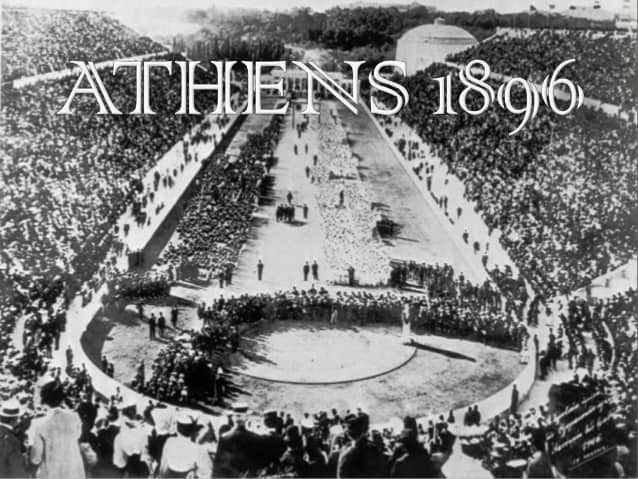
On April 6, 1896, the Olympic Games were reborn in Athens, 1,500 years after Roman Emperor Theodosius I banned them in 393 A.D. to curb pagan traditions. At the opening ceremony, King Georgios I of Greece and 60,000 spectators welcomed athletes from 13 nations to the Panathenaic Stadium. The ancient Olympics, first recorded in 776 B.C. at Olympia during a festival honoring Zeus, had thrived for over a millennium, expanding from foot races to include wrestling, chariot racing, and the pentathlon, before their suppression under Roman rule.

A stunning study of Octavian’s victory monument in Nicopolis, Greece, reveals how massive ships gave him the edge in the 31 BC Battle of Actium, birthing the Roman Empire. Recent excavations, including niches dug in late 2023, confirm Cleopatra and Antony’s fleet was outsized and outmaneuvered—secrets unveiled after 2,000 years, with ongoing research and conservation enhancing this historic site’s story.

The term “barbarians” originally referred to the myriad tribes and peoples living beyond the fringes…
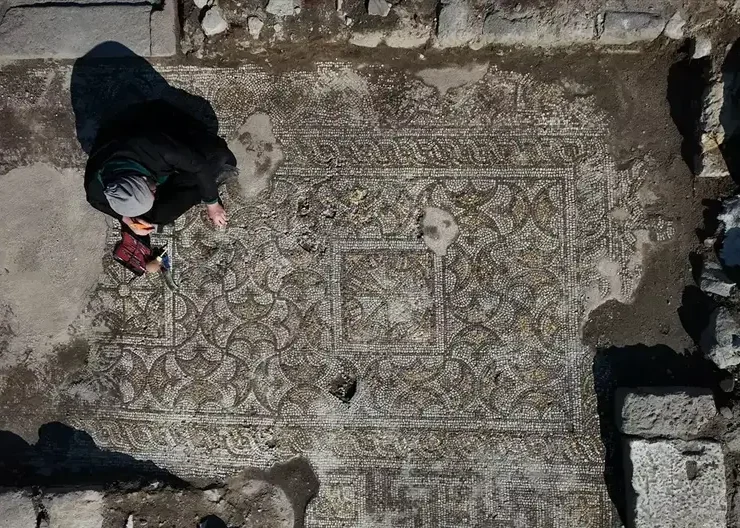
Archaeologists have uncovered the “Mosaic House,” a Greco-Roman residential complex in ancient Pergamon, blending Greek and Roman influences. The site features intricate mosaics and offers new insights into the city’s rich cultural heritage.

A headless bronze statue, possibly of Greek origin, will be returned to Türkiye by the Cleveland Museum of Art after being confirmed as looted from the ancient city of Bubon. The statue, potentially depicting Roman Emperor Marcus Aurelius or a Greek philosopher, is valued at $20 million and is part of a larger collection of repatriated antiquities recovered by the Manhattan District Attorney’s Office.
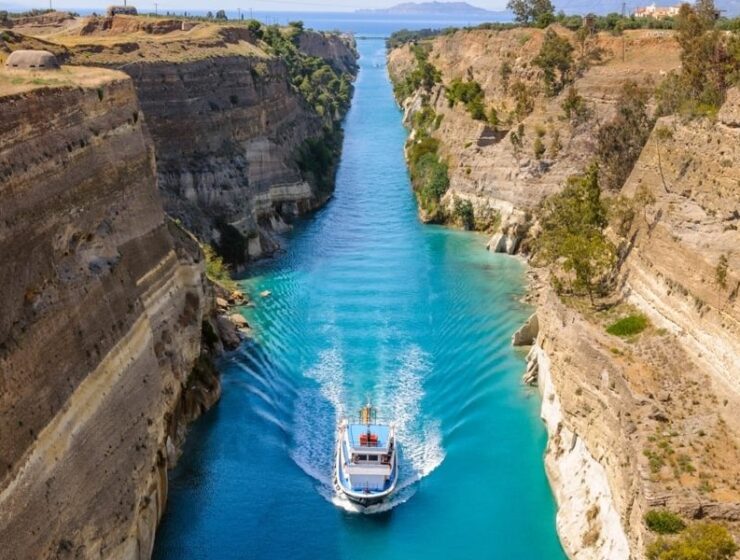
The Corinth Canal is a remarkable engineering feat in Greece, connecting the Gulf of Corinth with the Saronic Gulf through the Isthmus of Corinth. Although the idea dates back to the seventh century BC, it wasn’t realized until the late 19th century. Today, it serves more as a tourist attraction than a commercial waterway, with its narrow path challenging modern navigation but offering a unique spectacle for visitors.

Polycarp, the bishop of Smyrna, was a prominent Christian leader in the second century CE.…
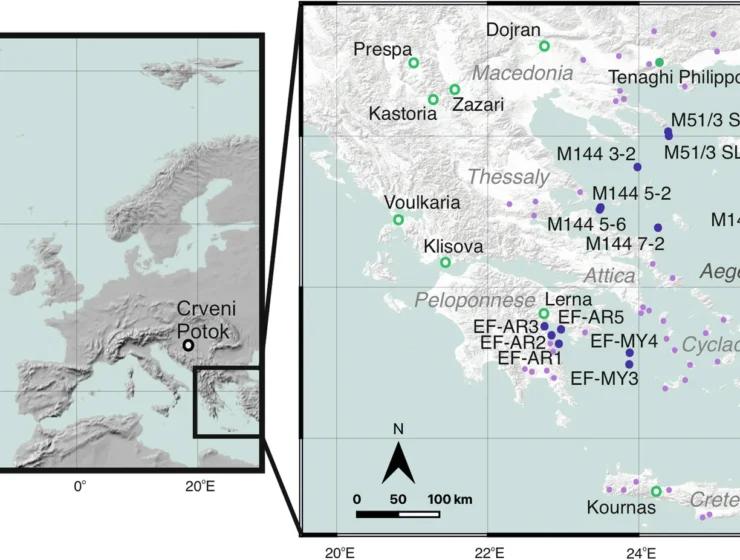
New research suggests that human-caused lead pollution in the Aegean Sea began 5,200 years ago—1,200 years earlier than previously thought. A study analyzed sediment cores from land and sea, linking lead contamination to historical human activity. The findings reveal a major pollution surge around 2,150 years ago, coinciding with the Roman Empire’s expansion into Greece and intensified gold and silver mining. This marks the earliest recorded marine lead pollution, highlighting the environmental impact of ancient societies.

A nearly 2,000-year-old Greek papyrus uncovered in the Judean Desert has revealed a fascinating corruption trial in the Roman Empire, shedding new light on legal practices and Jewish history. The document, the longest of its kind found in the region, details a criminal case involving two men, Gadalias and Saulos, accused of sophisticated tax fraud, including forged slave sales to evade Roman taxes. Discovered in 2014 by Professor Hannah Cotton-Paltiel, the papyrus offers a rare glimpse into Roman judicial proceedings on the eve of the Bar Kokhba revolt, providing valuable insight into the complexities of Roman law in the provinces.

Saint Nicholas is honored as the patron saint of the Hellenic Navy, which forms a crucial part of the Hellenic Armed Forces with around 30,000 active personnel. Known as Nicholas the Wonderworker for his numerous miracles, Saint Nicholas was a Greek bishop in the Roman Empire during the late third century. He is also the patron saint of a variety of groups, including sailors, merchants, archers, children, and students.
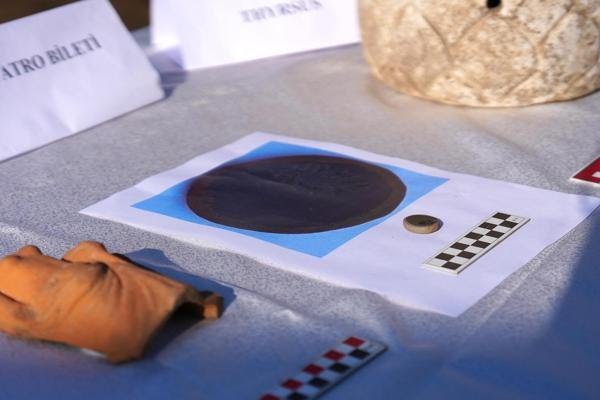
Three Roman-era artifacts—a terracotta theater ticket, a figurine of Aphrodite, and a Thyrsus motif—have been unearthed at Prusias ad Hypium, a Hellenistic city in Düzce, Turkey, shedding new light on the city’s rich history and its flourishing period under Roman rule. Ongoing excavations continue to reveal remarkable treasures, with the ancient theater poised for restoration as a 10,000-seat cultural and arts center.
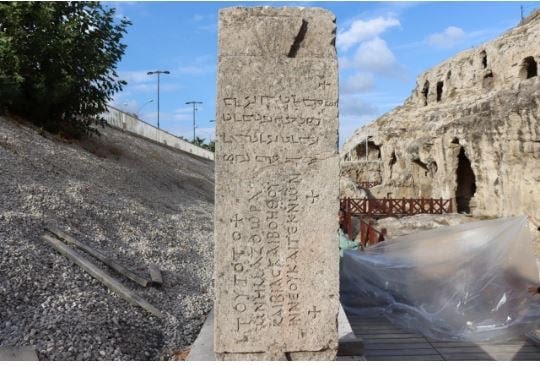
2,000-year-old tombs unearthed in the ancient city of Edessa (Antioch) in present-day Turkey reveal a rare inscribed tablet detailing the family history of those buried within, offering valuable insights into the region’s cultural past.

A remarkably crafted head of the Greek goddess Tyche, dating back to the Roman era, has been unearthed in Plovdiv, Bulgaria, offering exciting new insights into the ancient city of Philippopolis.

The Thessaloniki Metro, completed after over two decades, unearthed a hidden city beneath modern streets. Over 300,000 artifacts reveal a captivating glimpse into Thessaloniki’s rich past, from Roman mosaics to a Hellenistic cemetery, transforming the metro project into an unparalleled archaeological journey.

A 1,600-year-old bronze amulet depicting King Solomon spearing the devil has been unearthed in Hadrianopolis…

A gold plaque inscribed with Greek letters has been discovered at the ancient Apsaros Fortress in Georgia, offering new insights into the religious practices of Roman soldiers. The plaque, believed to be an offering to the war god Jupiter Dolichenus, strengthens evidence that the fortress was located near a temple dedicated to this deity. Archaeologists believe the soldiers may have left the offering seeking divine favor in battle, reflecting the widespread veneration of Jupiter Dolichenus across the Roman Empire.

Archaeologists have uncovered a remarkable 2,400-year-old Greek theater at the ancient site of Alexandria Troas in Turkey. This impressive structure, believed to seat between 10,000 and 12,000 spectators, adds to the region’s rich archaeological heritage, which includes the legendary city of Troy. The ongoing excavations are led by Erhan Oztepe from Ankara University, with support from Turkey’s Ministry of Culture and Tourism.

Archaeologists have discovered a fully preserved marble statue from the Roman era in the ancient city of Odessos (modern-day Varna, Bulgaria). The sculpture depicts a middle-aged man dressed in a toga, holding a scroll, and a Greek inscription identifies him as G(ai) Marius Hermogenes.

A 2,000-year-old Greek inscription unearthed in the ancient city of Anemurium, Turkey, honors a champion wrestler named Kaikilianos, offering a fascinating glimpse into the city’s vibrant sporting culture during Roman times.

Archaeologists in the village of Stobreč have unearthed a monumental 2,000-year-old Greek rampart, or defensive…

Hailed as the “greatest discovery since the Dead Sea Scrolls,” a nearly 1,800-year-old mosaic from Megiddo, Israel, featuring an inscription mentioning Jesus in ancient Greek, has made its US debut at the Museum of the Bible in Washington, D.C. The exhibit, “The Megiddo Mosaic: Foundations of Faith,” offers a rare glimpse into the lives and beliefs of an early Christian community.

Perched upon a strategic hill overlooking the Albanian plains, the Acropolis of Apollonia offers a poignant glimpse into the enduring influence of Hellenic civilization. This archaeological treasure, situated near the modern city of Fier, marks the location of Apollonia of Illyria, a once-thriving Corinthian colony founded in the 6th century BCE. More than just a defensive stronghold, the Acropolis served as the cultural and religious heart of Apollonia.

A recent dive into the depths of the Mediterranean Sea has unveiled new “hidden treasures” from a 2,000-year-old shipwreck, captivating archaeologists with fresh insights into this ancient maritime mystery. The expedition, focused on the famed Antikythera shipwreck in the Aegean Sea off Greece, uncovered a wealth of approximately 300 artifacts, including fragments of marble statues, hinting at a precious cargo lost to the sea. Adding further intrigue, a second shipwreck was discovered roughly 650 feet from the Antikythera wreck.
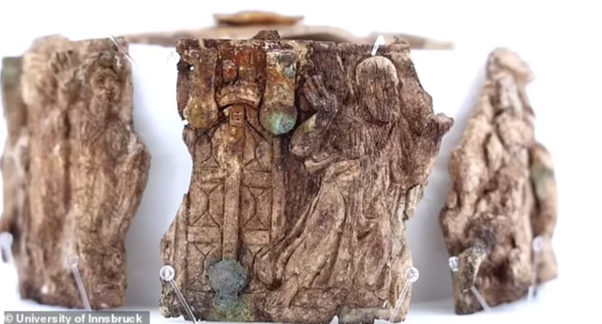
Archaeologists from the University of Innsbruck discovered a 1,500-year-old ivory box with Christian motifs in southern Austria. Found in an early Christian church, the relic depicts Moses receiving the Ten Commandments and the ascension of Christ. This rare find offers insight into early Christian art and history.
